

News
Flawless Germany dominate Denmark to seal World Championship title at China 2026
05 Jul. 2026
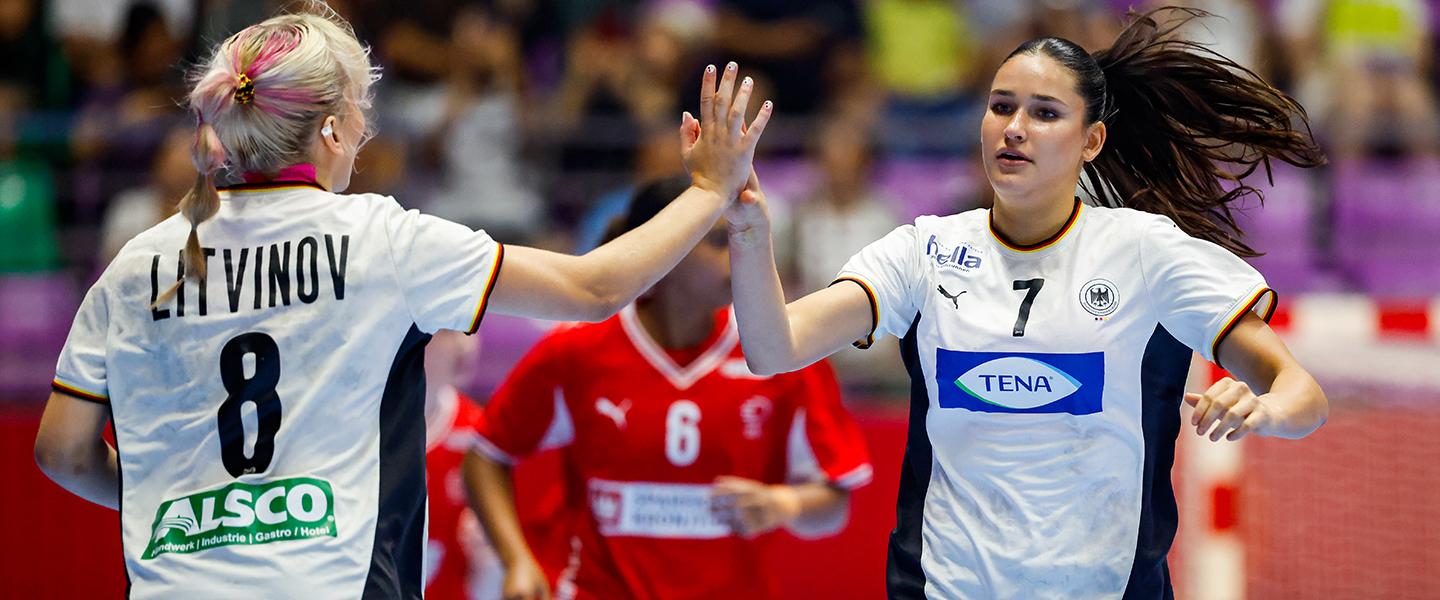
Germany's depth and experience provided the perfect launchpad for an excellent performance in the final of the 2026 IHF Women's Junior World Championship against Denmark, with their eighth win at China 2026, 33:26, securing Germany the second title in history at this age category.
Final
Germany vs Denmark 33:26 (15:14)
The only two undefeated teams at China 2026. The top two attacks, with only three goals separating them after two matches. And two of the three best goalkeeping units in the competition.
The recipe for the final at the 2026 IHF Women’s Junior World Championship was always going to be a cracker and a cracker it was, providing some fantastic viewing, both for the team’s fans, but also for the handball aficionados, with relentless action on the court.
While Germany were reigning European champions and have always found a way to win at China 2026, Denmark were no pushovers and provided some excellent matches, despite their own share of wobbles, like the draw against Montenegro in the main round or the hard-fought overtime win against Spain in the semi-finals.
Yet it was Denmark which had the better start, as the top goal scorer of the competition, Kirstine Emilie Hoppe, was absolutely unstoppable. By the fifth minute, Hoppe already had three goals under her name, breaking through with ease while also converting two power shots.
Germany looked to have no answer, especially as in the attack the efficiency was 15% lower than Denmark’s, with left back Marlene Tucholke missing too much. However, what Denmark won in the shooting battle, they conceded in the turnover one, as Germany started bouncing back after their 2:5 start.
Soon, thanks to the cold-hand efficiency from left wing Chiara Rohr, who scored four out of four, Germany came back and tied the score, 7:7, after 12 minutes, in a fast-paced match, which basically starved both teams out of energy, forcing the two coaches to rotate their side.
Where Denmark really won the battle, though, in the first half was between the posts, as Freja Fonseca Nielsen had nine saves for a 41% saving efficiency, while Lena Marie Lindemann had only saved two shots by the 26th minute.
But as Lindemann started raking up saves, the flow of the match quickly turned. Down two goals in the 17th minute, 10:12, Germany used a 5:1 run, spanning across 10 minutes, to wrestle back the lead, 15:13, but at the break the two teams were separated by a single goal, 15:14.
It was more of the same in the second half, especially as Fonseca Nielsen continued to provide some otherworldly saves, including some key one-on-ones, which boosted her output to 45% in the 39th minute – with 14 saves in total.
By that time, the match has cooled down in term of attacking output, but Germany were still up ahead by a single goal, 18:17, after Denmark missed the chance to take the lead twice, with costly misses.
It was always going to be about which team has the biggest depth and the biggest energy resources left in the tank after seven matches at China 2026 and, by the looks of it, that team was Germany.
Denmark’s attack started spluttering – Hoppe scored only one goal between the sixth and the 42th minute and her stamina was almost gone in the second half – which prompted Germany to take control of the match.
In just three minutes, they built a three-goal lead, 21:18, as Lena Marie Lindemann saved three shots, while Germany scored two open-goal shots, with their opponents constantly deployed a seven-on-six attack, in the hopes of scoring easier.
But even without Hoppe in the line-up, Denmark were not done. A 3:0 salvo helped them tie the score, 21:21, but once again they turned the ball over when they were supposed to go one up, offering plenty of relief for Germany, which once again converted two open-goal shots to get ahead, 23:21.
A comeback from Denmark looked to be on the horison, but, in the end, Germany were too strong, providing too much firepower in defence. Time after time, Denmark hit a wall, as Rohr (eight goals) and Litvinov (five goals) led Germany to a 33:26 win.
Germany secured their second title in history at the IHF Women’s Junior World Championship, after the one in 2008, when they also beat Denmark in the final.
For Denmark, this is the ninth medal – having won two titles, four silver medals and three bronze medals in their history in this age category.