

Murray and Australian wheelchair handball: ‘Capable, committed and ready to challenge’
15 Jul. 2026
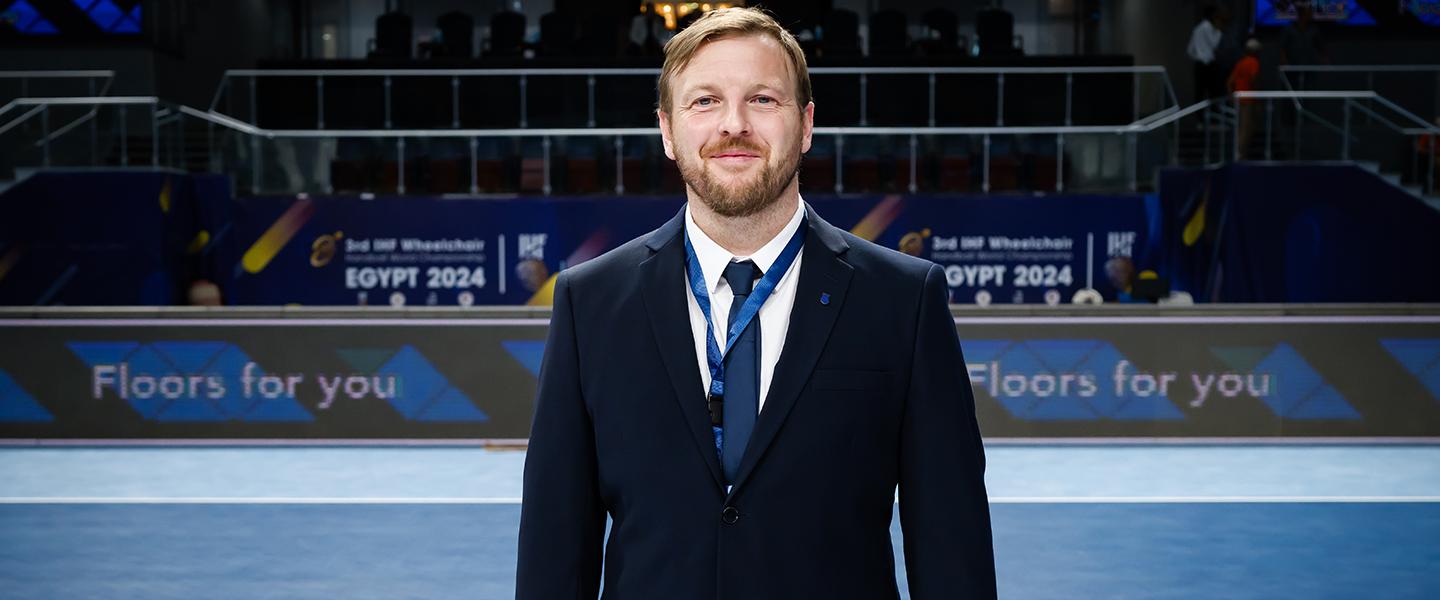
For this seventh edition of International Handball Week, ihf.info hears from individuals across the six IHF continental federations involved with multiple disciplines of the sport, including beach, indoor and wheelchair.
For this feature, we head to Oceania (OCHF) and speak to Dr Eoin Murray from Handball Australia in his role as head coach of their wheelchair handball team.
The fourth edition of the IHF Wheelchair Handball World Championship is just two months away with 12 nations invited to compete at Spain 2026.
Australia are one of these teams, and they have never competed in an official continental or global wheelchair handball event before taking to the court in Granollers in September, but that does not worry head coach Eoin Murray.
“We were incredibly excited when the opportunity came to compete in Spain and are determined to make the project a success. Luckily, we have a cohort of enthusiastic players and volunteers working hard to prepare the team for this very high level of competition,” said Murray to ihf.info about the upcoming global event.
“We haven’t played any games yet as it is just too difficult for us to get anywhere together. We can barely get the team together in the country as our team are from all over Australia – Perth, Sydney, Canberra, Melbourne and Brisbane. Anyone who has ever been in Australia will tell you that this is a huge geographical spread which means logistics are a major issue. For example, the flight time from Perth to Sydney is around six hours but actually, this International Handball Week will be the first time we have the whole team together.”
A history and a resurgence
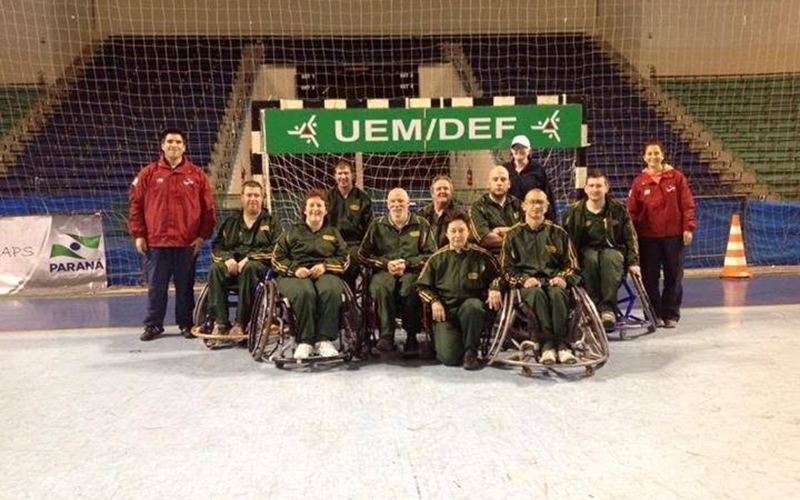
While the 2026 team has yet to meet fully in person, wheelchair handball does have a heritage in the Oceanic country. A national side competed at the unofficial 2013 world championship in Brazil with clubs existing in the country around the same time.
“There is a proud history of wheelchair handball in Australia through some amazing pioneers of the sport,” says Murray. “But the years after 2013 saw the sport struggle with logistical issues and effectively disappeared until a couple of us interested people decided to bring it back two years ago, starting with running ‘Come and Try’ days all over the country.
“This year we made a decision to get a national team together and our first order of business was to ensure that wheelchair handball became the third equal discipline of the sport at Handball Australia alongside indoor and beach and to the huge credit of Handball Australia, they accepted enthusiastically.”
The love of handball and the journey it takes you on
And it is Murray’s love of all forms of handball, his background and personal interest which means there could not be a better-placed person to help the renaissance of wheelchair handball Down Under.
Originally from Ireland, Murray played a variety of sports at different levels, coming to handball relatively late at the age of 18 (“mostly to get out of the rain”). He went on to play for the Ireland national team for more than 10 years and played for various club sides around the world.
After stopping playing in the early 2000s, Murray moved into coaching at all indoor handball club levels – including at the IHF Super Globe for Sydney University – before moving into the national team realm, starting with the Singapore men’s and women’s teams, then New Zealand women.
He then got a role with the Australian men’s national side and is currently head coach of the women’s national side as well as head of the women’s ‘High Performance’ (HP) programme – giving his time for free as a volunteer.
This coaching journey has also seen Murray work his way up to becoming an IHF A Licence holder and IHF Commission of Coaching and Methods (CCM) Lecturer which has led to him becoming the Oceania representative on the IHF CCM as well as a member of the IHF Wheelchair Handball Working Group. Academically, Murray has completed degrees in coaching and sports science and is about to finish his doctorate (PhD) in elite parasport.
“When I heard of wheelchair handball I knew I had to get involved; it was two of my biggest passions coming together – handball and parasport,” said Murray, who worked with the Australian Para Archery team in the lead up to the Paris 2024 Paralympic Games and as a coach advisor to Paralympic sport coaches at the New South Wales (NSW) Institute of Sport in Australia.
“I got involved with the IHF Working Group early on and since then, have been working hard to establish wheelchair handball in Australia, and – as part of the WHWG – developing the sport across the globe.”
Identifying talent
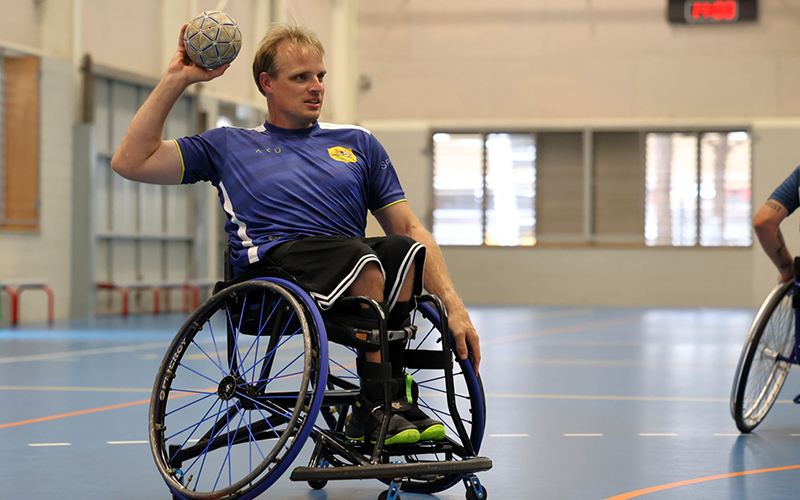
Closer to home, Murray utilised his passion, knowledge and contacts to help identify and bring talent into the new Australian national team.
“Australia is an extremely strong nation in parasport with investment in Paralympic sports and athletes so our first job as wheelchair handball coaches was to find out which sports had good crossover with our sport and where their strong athletes were,” he explained.
“Our athletes have come from basketball and the wheelchair versions of two of Australia’s most popular professional sports – Aussie Rules Football and Rugby League, but, as I said, our team are from all over Australia so most of our players come together only infrequently as the sport is still in its infancy here with just one very established club, UTS Handball Club in Sydney.
“We have run wheelchair handball events as part of our indoor national championships where we have introduced para-athletes and our handball community to it, but even though we do have a couple of 2013 veterans, most of our squad only started the sport recently so they won’t be the most experienced at the world championship.
“However, they are excellent athletes with huge experience in other sports and learning incredibly quickly and will be very difficult to beat.”
A challenge in Spain
To prepare for Spain 2026 Murray and his squad will play internal matches at home together at a number of camps in the city of Melbourne, with non-camp work taking place remotely under the guidance of coaches online.
Once in Spain, Australia will look to have some friendly matches against their opponents ahead of the championship, an event which will feature an Egyptian side looking to defend their title and the United States of America ready to gain revenge and full of confidence after winning the recent ‘Euro Hand 4 All’ in France.
“One of our biggest inspirations is drawn from the USA team who were in a similar situation to us at the last world championship in Egypt two years ago and finished second,” explains Murray, looking ahead to the teams Australia are likely to face in Spain.
“Since then, they have grown from strength-to-strength and their team management has given us some key advice and support over the last year. Egypt are of course very impressive, but they will have very stiff competition from a number of countries this year including the European countries, plus Brazil, Japan and us.
“I believe the level of competition will be even higher this time around but our expectations are to create the best possible environment for our athletes to perform, enjoy the experience and feel supported throughout the whole event. We want to be competitive in every match, represent Australia with pride and show that although wheelchair handball is still developing here, our athletes are capable, committed, and ready to challenge strong teams.”
Looking ahead
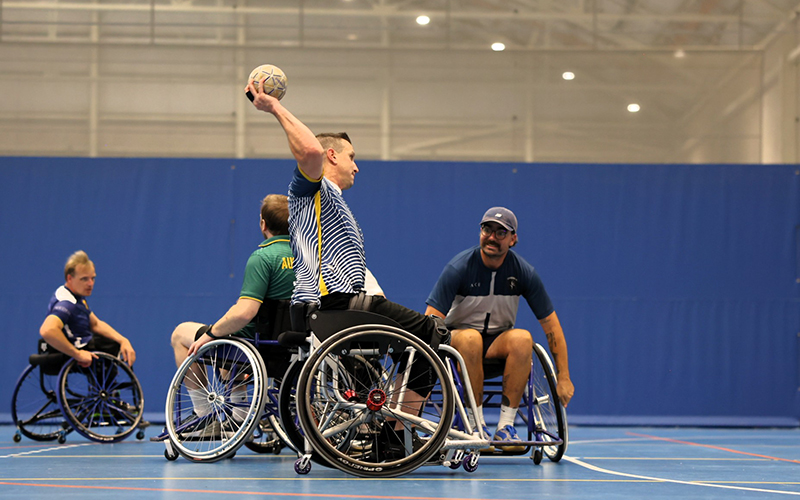
And that development shows no signs of abating with plans ahead to ensure wheelchair handball can be a presence on the Australian sporting landscape and a lot more work from Murray and his colleagues to come with wheelchair handball trying to break through on the biggest of stages.
“Over the next year, our priority is to build a strong and sustainable foundation for wheelchair handball in Australia. That means supporting the athletes we already have, creating more opportunities for new athletes to try the sport, developing coaches and classifiers and helping clubs and state bodies understand how wheelchair handball can become part of the wider handball pathway,” he explains.
“We don’t see this world championship as a one-off national team project, this is part of the pathway to an established, accessible discipline in Australia. Over the next five years I would love to see wheelchair handball grow not only in Australia, but across Oceania.
“This part of the world has an enormous depth of para-athletic talent, and we have a real opportunity to help make the region a centre for wheelchair handball development. For the sport globally, the dream is clear: I would love to see wheelchair handball become a Paralympic sport and see the world’s best wheelchair handball athletes on the court here with us at the Brisbane 2032 Paralympic Games in Australia.”
Photo credits: Bronwyn Thompson (Handball Australia) / Facebook