

News
A World Championship dream for a gritty nation: Talented Tskhovrebadze leads Georgia's charge for Germany 2027
16 Mar. 2026
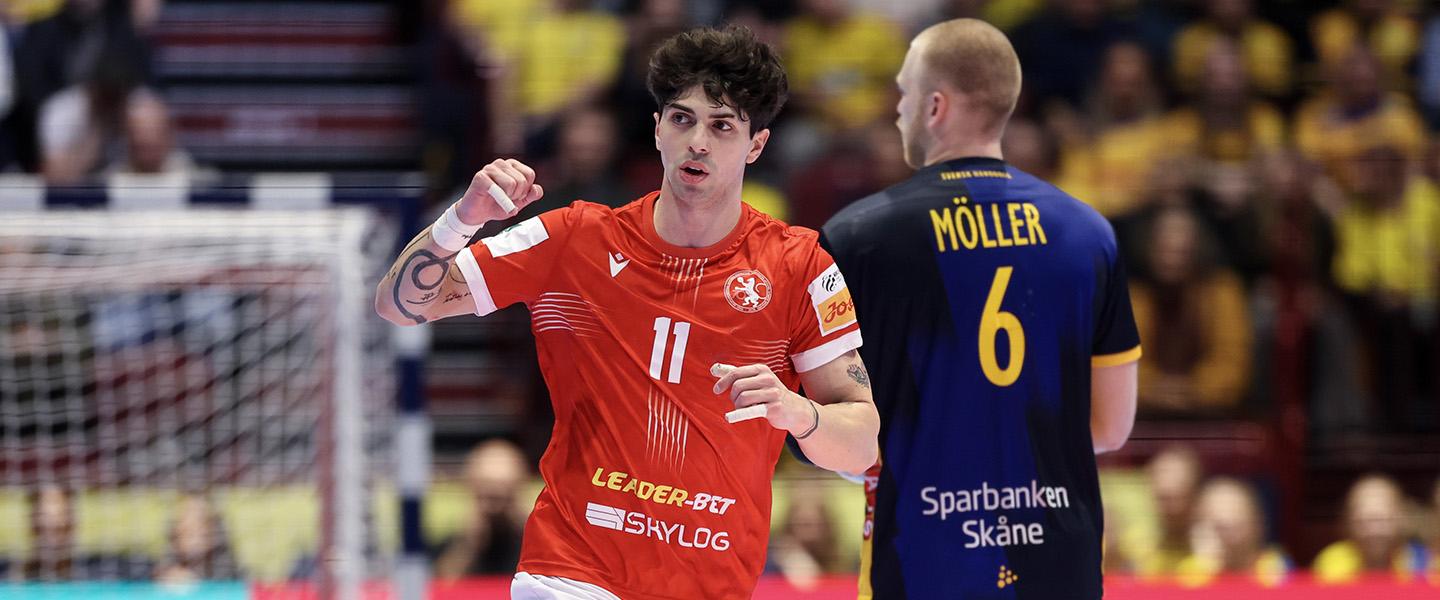
It was 2019 and Georgia were making history. Seven matches played, seven wins secured, a perfect, unstoppable run that culminated in the trophy at the IHF Men's Emerging Nations Championship. Just two years earlier, they had finished eighth in the very same competition. The transformation was nothing short of remarkable.
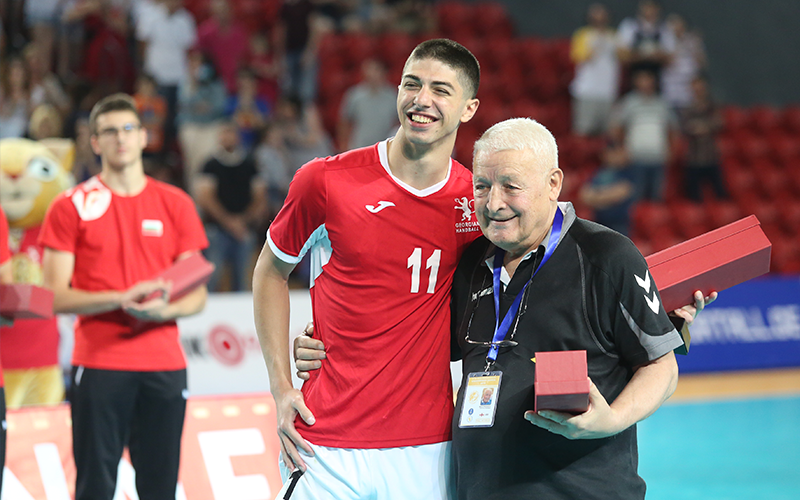
But among a team riding the crest of a historic wave, one player shone brightest of all. At just 18 years old, right back Giorgi Tskhovrebadze was impossible to ignore, putting 51 goals past the opponents, the team's top scorer in six of the seven matches, and the tournament's MVP award resting firmly in his hands.
The handball world had already been taking notice. In 2017, Tskhovrebadze had been signed by Montpellier Handball, one of the most storied clubs in the sport, featuring in the youth academy of the French giants who had lifted the EHF Champions League trophy just one year prior in 2018.
Two years later, Georgia featured at the Men’s IHF/EHF Trophy and did it again. A second title under their belt, and once more Tskhovrebadze wrote his name across the tournament, with 36 goals, top scorer of the competition, and a place in the All-Star team as the finest right back on the court. Georgia were no fluke. And neither was he.
Over the past two editions of the Men’s EHF EURO, Georgia were between the 24-team line-up each time, and finished 18th in 2024 and 20th in 2026, securing their maiden win at their debut, but losing all three matches in January, 29:32 against Croatia, 29:38 against Sweden and 26:31 against the Netherlands.
Yet Tskhovrebadze proved a hit, scoring 11 goals against Sweden and the Netherlands and seven against Croatia, for a grand total of 29 goals, which put him on the second place in the top scorer standings after the preliminary round.
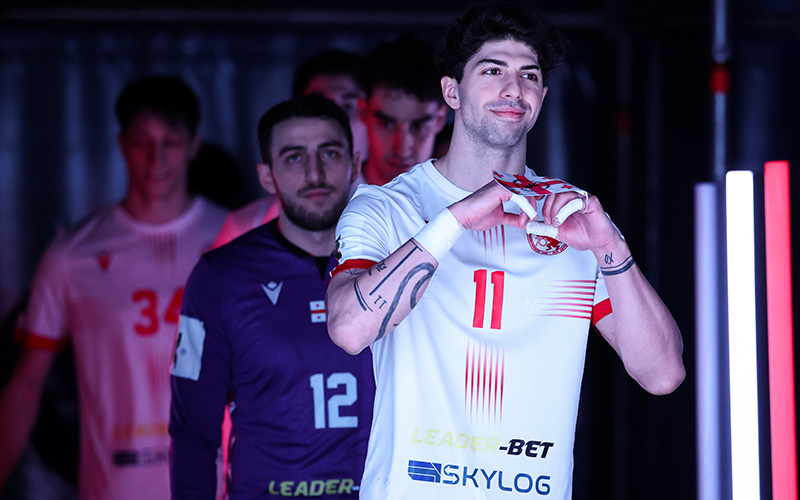
“Handball is now getting a little more recognition in Georgia, but honestly, it is not yet where it should be. Croatia and us, we are somewhat similar in terms of population and how people live. But of course, handball is really popular in Croatia. The whole country knows every handball player. It is still not like that in Georgia. We still do not have a really strong domestic championship where players can develop. If we want to have a really good team, we need younger players to go and learn in European clubs, in France, in Croatia, somewhere they can learn how to play high-level handball. That is still missing in Georgia,” says the right back.
“But I see that the federation and the government are doing things to help Georgian handball move forward. We are still far away, but we have really good players and we are more mature as a group now. We can play good games against anyone. Sometimes we have a bench depth problem, and because we are a small country, sometimes referees are not very favourable towards us. But I understand that. I think we have made big progress and we have a lot of room to improve.”
In Georgia, football and rugby are more popular. The football team made its debut in the European Championship in 2024 and made it to the Round of 16, ending up on the 15th place. The rugby team took part in six World Cups, winning at least one match in four out of the six editions they played in.
But Tskhovrebadze fell easily in love with handball, starting playing six he was six years old, alongside one of his teammates in the national team, Nikoloz Kalandadze, who is one year his junior and is the son of the coach of the national team, Tite Kalandadze.
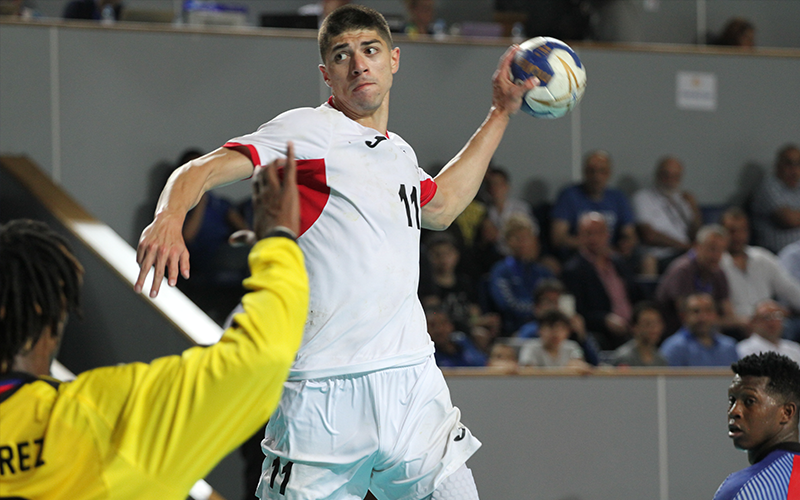
“My current national team coach, I actually started playing handball with his son. We were teammates when we began. I was around six years old. We started in a school where we had sports lessons, sometimes football, sometimes basketball. One time I had a basketball lesson and the teacher was my coach's wife. One day, he came to training, saw me, and afterwards spoke with my family. And from that moment, I went into handball. Most of the players in our current national team, we all played in one club together in Georgia when we were young. The club was called Pegasus, the first club established in Georgia. He still runs it. We grew up together, and that also helps with our connection on the court,” says Tskhovrebadze.
If you did not see the Georgia right back in action, go to YouTube or Instagram and search his name. You will be treated with an array of highlight reels – in-flight goals, powerful hip shots, or the right back taking flight after using both of his legs to jump and create a fantastic hang time in the air, basically improving his ability to dominate the opponents’ defence.
At only 25 years old, he is four goals shy of the 400-goal mark for the national team in only 56 apperances, which means Tskhovrebadze has scored over seven goals per match for Georgia, an otherworldly average.
And this talent came through Georgia’s approach of teaching players to never be afraid to express themselves on the court, a trial-by-fire approach, one that really created a team that believes in its ethos, its quality and its gritty nature, scoring at free will even against the top sides in the world.
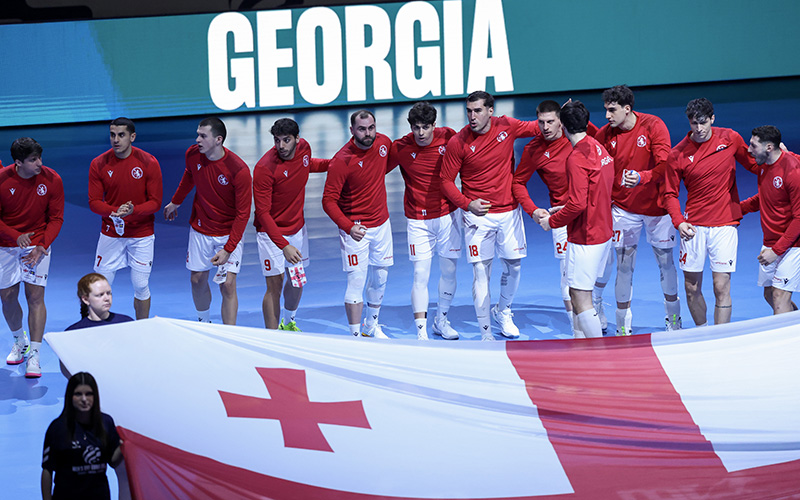
“I think mostly when we were younger, we had room to try things out. Our coach was really creative in that way. It also depends on what kind of environment you grow up in. Some coaches do not want players doing creative things, they want them to be like robots, to follow a system. We had enough freedom to try our own ideas. I was always watching other players and wanting to imitate them, but in my own way. What I do is what I do, everybody has their own way. I started playing at a high level when I was 15 or 16 and went to Montpellier. I think they had a great school there. Even before I arrived, I already had those technical shots - in training we would always work on shooting mechanics: how to shoot from the top, from the bottom, how to jump properly,” says the right back.
The shot after jumping with both legs on the ground? That is a totally different story, one which Tskhovrebadze really enjoys telling with a smile on his face.
“But the funny story is about the jump shot off both legs. I was using it when I was younger, but not as effectively and not as much as I do now. It actually came from the 2024 European Championship. I played the entire tournament with a tear in my adductor. I physically could not jump off one leg, every time I tried, I felt it badly. So I started jumping off two legs and it worked. It just came naturally out of necessity. That is the real origin of it.”
However, not everything was a walk in the park for the right back. At 17 years old, he was snapped up by Montpellier Handball, and for a teenager still making his first steps in handball, being thrown in a totally new environment, where he did not speak the language, was a huge test.
One which made Tskhovrebadze battle-tested, as he slowly made a name for himself in European handball.
“I did not speak a single word of French when I arrived. I learned it while I was there, I am fluent now. But in France, especially in a sports environment, nobody speaks English. They want you to learn French as fast as possible, especially when you are a young, unknown player who has not yet done anything. They make sure you learn quickly. Of course, it was difficult. I had quite hard times there. Some players were afraid of losing their position because of me and tried to block me. Honestly, even knowing all of that, if I had the chance to go again, I would still go. I learned so much there, mentally, physically, everything. It prepared me in ways I could not have found elsewhere,” says the right back.
After that experience, which included a one-season loan to Switzerland, at Pfadi Winterthur, the Georgia right back signed for VfL Gummersbach in the German Bundesliga, scoring 92 goals in his first season and 69 goals in his second season, adding 36 more in the EHF European League Men.
Since last summer, he has been featuring in Croatia, at RK Zagreb, where he scored 46 goals, being his team’s fourth best scorer in the Machineseeker EHF Champions League.
“You learn different kinds of handball everywhere you go. French handball is played one way, German handball another way entirely. And if you want to be a top player, you have to be adaptable. It is really hard for young players to understand this. Sometimes in a big team, they change your position, they put you on the bench for long stretches, and you have to be ready. If you get five minutes, you have to perform, because they will not forgive you for mistakes. That is the reality. It is physically hard, psychologically hard, mentally hard,” adds Tskhovrebadze.
“But I think handball is like that. It is a demanding sport. You have to be physically capable and very clever. I am not two metres tall, I do not have certain physical advantages. So I have to find my own way. And I think that is true for everyone - it is what separates a superstar from a regular player. The superstar, even on a bad day, finds a way to help the team.”
Yet being from Georgia has its downsides, at least for Tskhovrebadze. Nevertheless, he feels that he needs to work harder to prove himself.
“That is just the reality, yes. If you are from these big countries, you have way more room to improve and way more opportunities to play for big teams. The pathway is clearer. But I think if you really want something, it does not matter where you are from. You just have to work harder than other people, sometimes much harder. And never give up. Never back down from achieving what your dreams are. Even now, at 25, there is always a new challenge. A new coach, a new team, something going on. And I can see - because I am from Georgia - that sometimes, no matter how well I play, I feel I am being overlooked. But that is my experience and I deal with it,” says the right back.
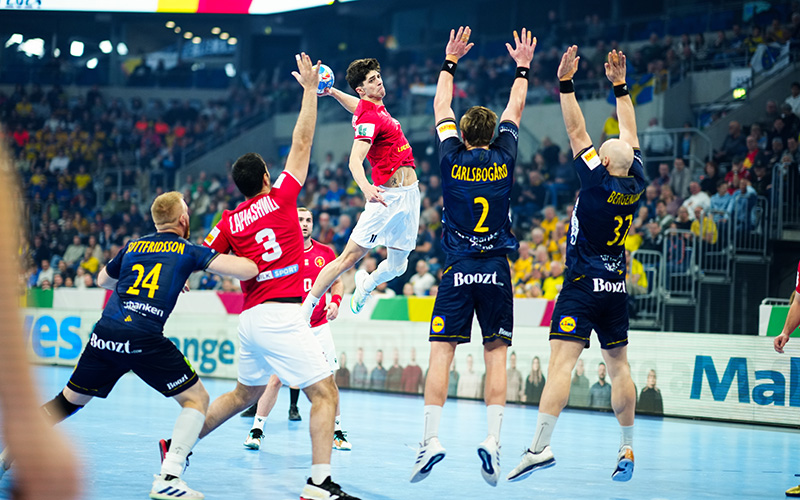
However, Tskhovrebadze has really shined at a national team level and is preparing to lead Georgia once again when they play this week in the Qualification Europe – Phase 2 for the 2027 IHF Men’s World Championship.
Georgia will be favoured against Israel in this doubleheader, but their path towards Germany 2027 will get more difficult in the next phase when, provided they emerge victorious this week, Georgia are due to face Spain.
“I will say that, yes, I played the last two European Championships and I really want to play at a World Championship as well. We have some injuries, but we have to first make sure that we can beat them in these two games. We go step by step. I do not want to talk too much about the future, what can or cannot be. Step by step. And of course, it will be a really big thing for our generation to be able to play at a World Championship,” says Tskhovrebadze.
For Georgia, Germany 2027 might come too early. But with their strong core and an experienced team, they might just dream about the future. And Tskhovrebadze will be there to reap the rewards of his hard work.
“Every small achievement is still an achievement and it is noticed in Europe. But of course, if you have a bigger achievement, like qualifying for a World Championship, reaching the knockout stage of a European Championship, qualifying for the Olympics, that is seen much more widely and appreciated much more. Winning the Emerging Nations was a small step forward. Every small win is a small step forward for us,” concludes the right back.
Credit photo: EHF / kolektiff / Jozo Cabraja, Eva Manhart