

The turn that changed everything: Shinnosuke Morooka and Japan's road to a first final
20 Sep. 2026
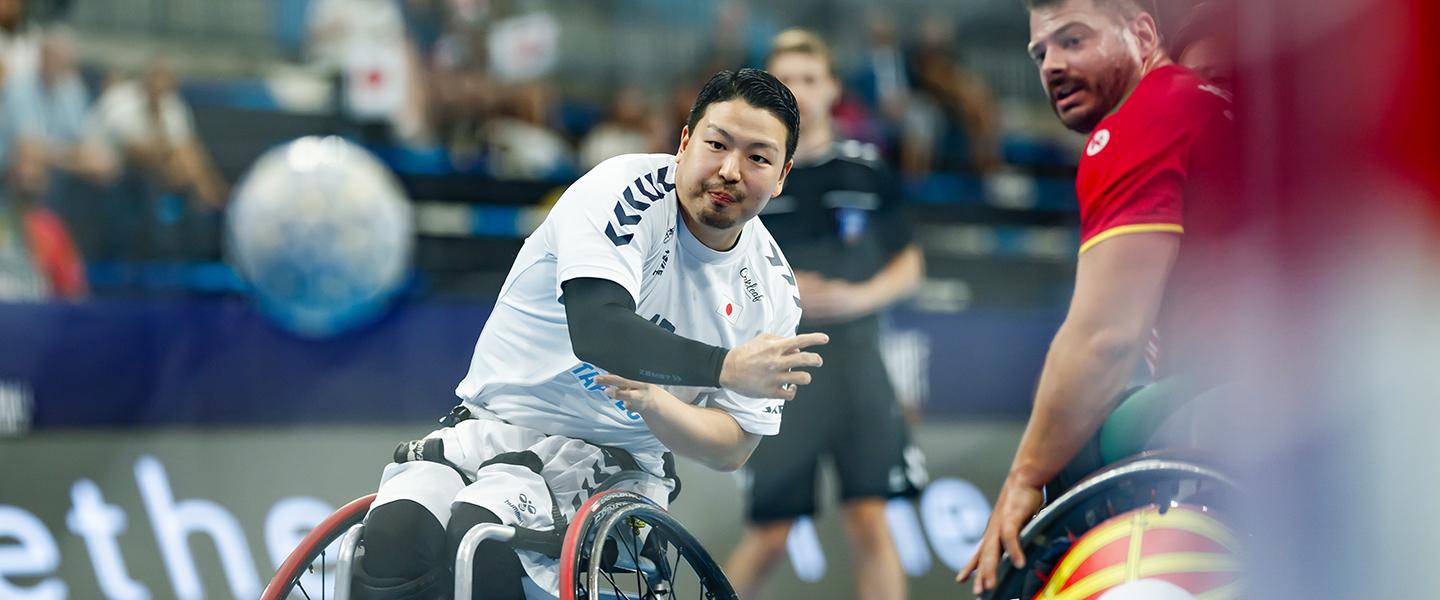
Twelve years ago, Shinnosuke Morooka was relearning how to move. A car accident when he was only 20 years old had left him with an injured left leg and a damaged right arm, the kind of injury that quietly closes doors on a sporting life at the highest level.
But Morooka, in the traditional fighting spirit of Japanese people, didn't let the door close. He was already a handball player and needed another challenge. And he found wheelchair handball, which provided him a refuge for his love od sport. On Sunday in Granollers, Morooka will roll onto the court for a gold medal that Japan have never come close to touching before.
Getting there took a car accident, a decade of relearning his own body, and a competition in which Japan simply refused to lose, learning from their previous losses, which saw them finish fifth at the 2024 IHF Wheelchair Handball Championship in Egypt.
Two years ago, Morooka finished as the tournament's second-highest scorer, one point shy of Egypt's Magdy Talaat Abdo Abbas, who edged ahead of him only in the final, scoring late in the second set.
It was enough to mark him out as a player worth watching, and enough for Japan's federation to build the next two years of preparation confident that they have enough talent. He now holds an athlete contract covering both wheelchair handball and wheelchair basketball, a dual arrangement that Japan Handball Federation's High Performance Director, Kohei Kashiwaba, has pointed to as proof that the sport can start supporting the players who carry it.
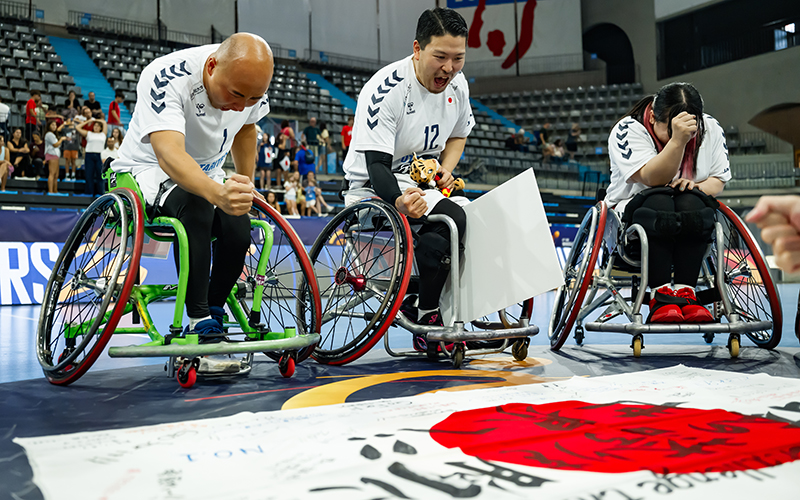
That support has been repaid in Granollers. Morooka arrives at this final as the tournament's third top scorer, with 34 points, and as the player Japan has consistently turned to when a set needs deciding.
Japan haven't dropped a single match on their way here. Two wins in straight sets in the group phase against the United States of America and Australia set the tone, and then came the quarter-final against Egypt, the reigning champions, in a rematch of the same fixture that eliminated Japan two years earlier at the same stage.
This time the outcome flipped. Egypt took the first set comfortably, 10:6, with Japan resting Morooka in the opening minutes. He came back onto the court and so did his team, dragging the second set away from Egypt 11:9 before closing out a tense third set 5:4, sealed when Egypt's last attack sailed wide of the goal. Morooka scored nine points in that match alone.
Asked about that comeback afterward, he focused on the preparation Japan had for this competition.
"We have been preparing for two years. Even after we lost the first set, we were not afraid. We believed that we could win the game, and most of all, we made it clear what our role would be if we won," said Morooka.
The semi-final against Portugal offered less drama but the same result. Japan won both sets by a single point apiece, 10:9 and 11:9, with Morooka contributing eight points and penalty specialist Leo Onuki converting every attempt he took from the line. Portugal had chances in both sets and couldn't quite convert enough of them. Japan didn't need many chances. They just needed the right ones, and they kept finding and converting them, doing just enough to power away.
Morooka has spent years playing wheelchair basketball alongside handball, a pairing that roughly half of Japan's current squad shares, and Kashiwaba has described it as a deliberate strategy - cross-training that sharpens the wheelchair handling and court awareness that make Japan's fast style possible in the first place. Speed has always been the identity of this team.
What's changed since Cairo is precision: fewer wasted possessions, fewer easy points conceded, a team that now finishes what it starts and shines in attack. They have the largest number of points scored so far, 95, nine more than any other side.
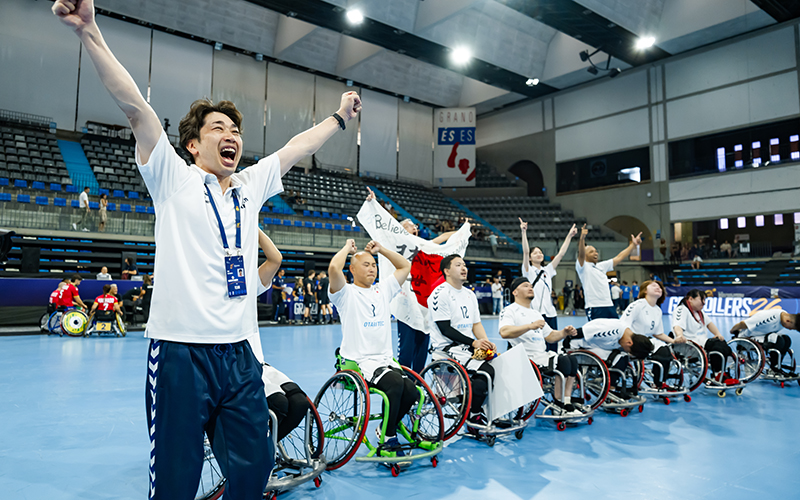
But Morooka is careful to spread the credit elsewhere when he talks about his own scoring.
"The teammates paved the way for us and spread the court for us," he said. "I am very grateful for that. I am a player who is asked to score points for the team, so I will do my best to score points in the final match."
He's also talked, more than once, about wanting Japan to look like they're enjoying themselves on court, a mix of ages and backgrounds who trust each other enough to say what they think out loud.
"We want to show everyone that we are having fun, that we are showing our play," he said, before adding that Japan wants to bring exactly that character into Sunday's final. Just check some of Japan's highlight reels from this edition of the IHF Wheelchair Handball Championship to see what they bring to the table. Fantastic passes and shots behind the back, a lot of speed and tactical nous. They look a complete side, much improved from the fifth place from the previous edition.
Reaching the final is already a record for Japanese wheelchair handball, but the final on Sunday brings them the chance for history. A chance to become the first Asian side to win the title, against a Spanish team playing in front of its own crowd in Granollers.
"We are here because of our predecessors. We were able to be here because of everyone's hard work and because of the people who supports us in Japan. We are now a team with a different age range and different genders and we have become a team where everyone can say what they think. We are determined to win," concludes Morooka.