

A true team with plenty of comebacks: Inside Germany's title-winning campaign at China 2026
05 Jul. 2026
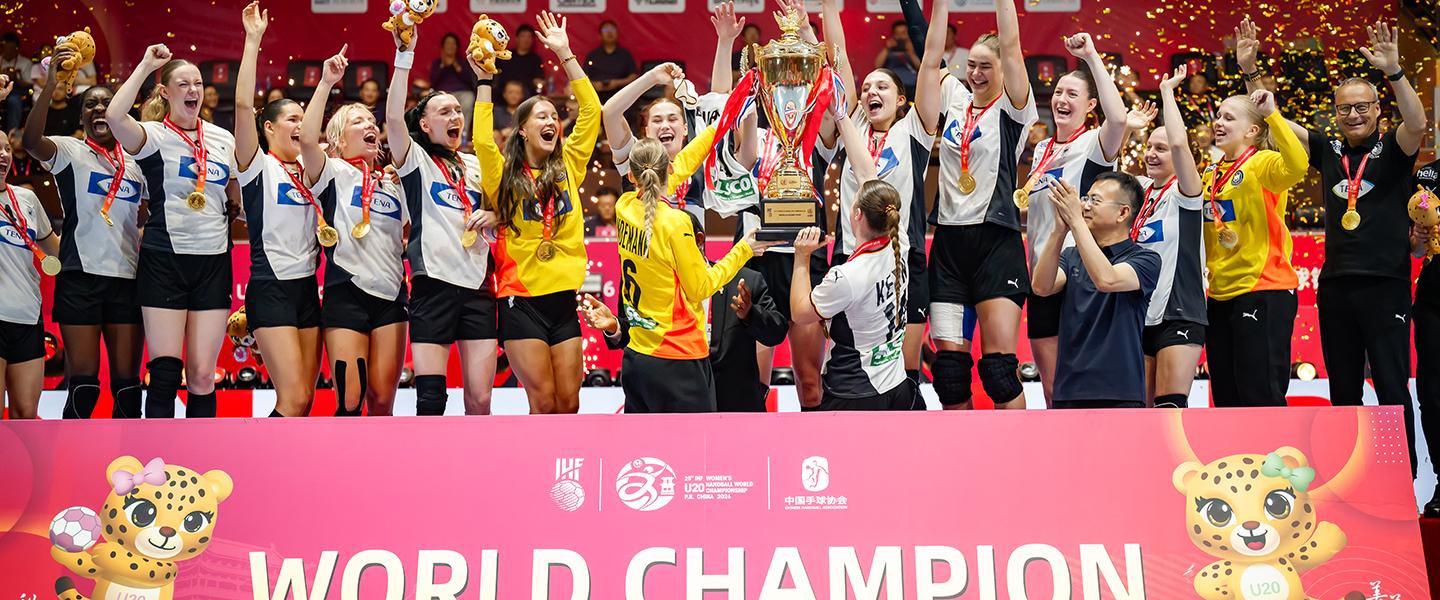
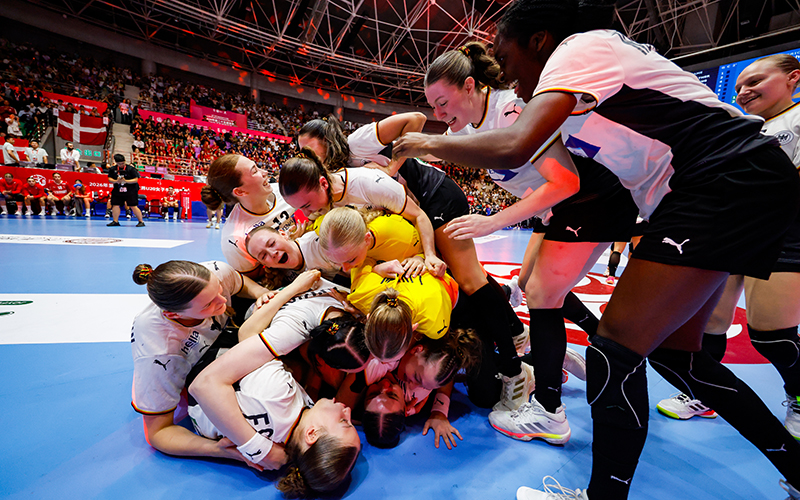
As the clock was winding down and the German attack was passing the ball in Denmark’s half, the possibility became reality and the reality was cemented in their minds.
18 years after Germany won the IHF Women’s Junior World Championship title, they were once again crowned world champions, with a truly golden generation, which has grown immensely over the last two years.
At the 2024 IHF Women’s Youth World Championship, which was also played in the People’s Republic of China, they finished fifth, after conceding a 23:25 loss against France in the quarter-finals.
Since then, they became European champions and world champions by totally dominating their opposition. At the W19 EHF EURO 2025 and the 2026 IHF Women’s Junior World Championship, Germany won 15 out of the 16 matches played and drew the other one.
“This team is really the best team I ever trained because they have so much passion for the game and they have so much self-confidence in close moments. They are so professional in their young age that I'm really happy for them that we can win the title after the European Championship,” said coach Christopher Nordmeyer.
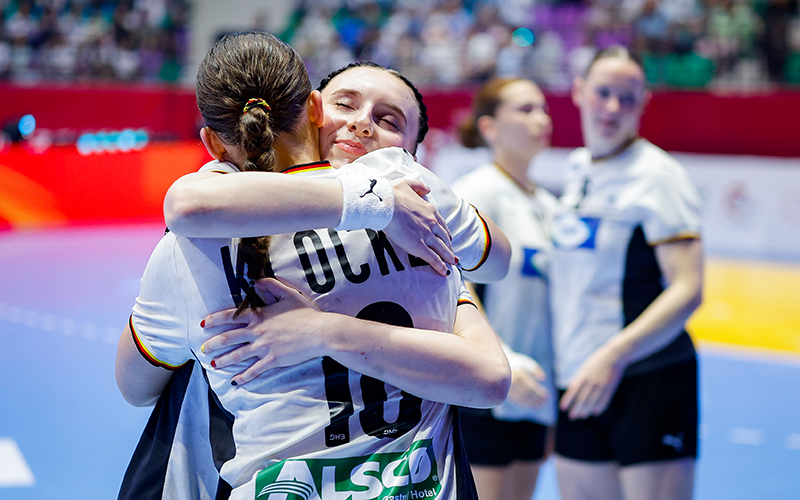
But maybe the most important thing Germany proved at the 2026 IHF Women’s Junior World Championship, where they entered as one of the favourites, is that every player had their role.
Whether it was the MVP of the competition, centre back Ruslana Litvinov, or the All-Star left wing Chiara Rohr, every member of the team had her role.
For example, in the semi-final against France, right back Aida Mittag failed to score with any of her three shots. Two days later, in the final against Denmark, Mittag had four goals, but three of them came between the 20th and the 27th minutes, when Germany were fighting to mount a comeback after being two goals down.
Right wing Farrelle Njinkeu scored four goals, all coming between the 48th and 55th minutes, when Germany pulled away from 24:22 to 30:25.
“I think if you want to win such a title, you cannot play with eight players because it's too many matches in a short amount of time. To play with only eight players in eight games in 12 days is not possible. But if you choose to play only some of the players in crunch time, I think this is not the way to go. That's the reason that we decided to let them all together play in difficult moments, no matter what's the score,” said Nordmeyer.
And Germany had plenty of difficult moments throughout the competition. In the main round match against Spain, Germany were down five goals, 16:21, with 22 minutes to go. They were down four goals, 21:25, with 15 minutes to go.
And they still won, 29:28, with line player Aylin Bornhardt and Rohr scoring in crucial moments to lift their side to the win.
Then, Germany were down five goals, 12:17, in the quarter-final against Norway, with 25 minutes to go. Until the end of the match, Norway scored five more goals, with Lena Marie Lindemann shining for her side between the posts, with 16 saves and a 42% saving efficiency.
In that match, Marleen Kern scored two crucial goals in a 7:0 unanswered run for Germany, which turned the match on its head.
In the semi-final against France, Germany were down once again three goals, 16:19, in the 34th minute, but Bornhard and Njinkeu combined for 17 goals between them, Litvinov threw in seven assists and Germany secured a 36:31 win.
“We won this world championship title as a team, in which all 16 players can be important. Everyone has made an outstanding contribution to this gold medal,” added Nordmeyer.
And then there was the final against Denmark, a do-or-die match, against a side which also had plenty of experience and again took a flying start, leading 5:2. 10 minutes in, Denmark were up 7:5, with the top scorer of the competition, Kirstine Emilie Hoppe, scoring four goals.
By the end of the match, Hoppe had four goals, not scoring in the next 50 minutes, with Germany constantly shifting their approach in order to create problems for their opponents.
By all means, it was Germany’s sheer depth which managed to tilt the balance. Irrespective of the mistakes they made, the missed shots and the wasted opportunities, Germany waited patiently to force their way and produced a flying finish to the match, with their players clearly fresh and Denmark’s out of steam.
“The load was not only on the shoulders of one or two or three players. For me, it's not a secret. You can see it clearly. But for me, it's the reason why we can win this title,” added Nordmeyer.
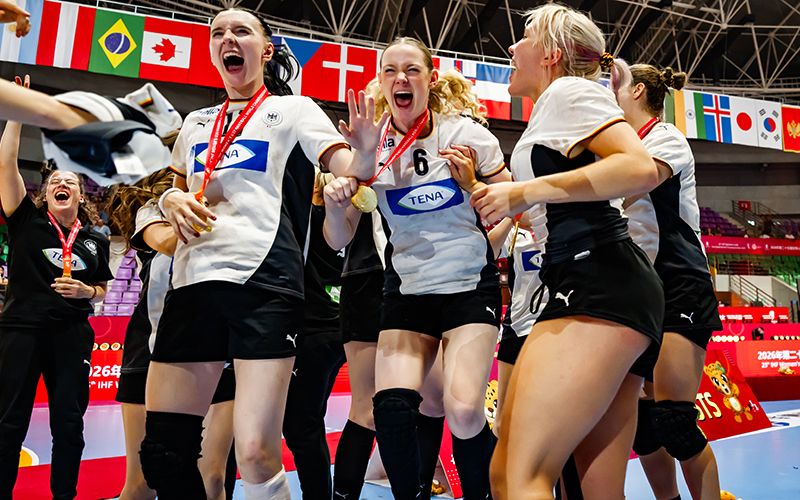
With grit, talent and strength, Germany rode an unexpected eight-match winning streak, adding more trophies to their cabinet. Over the last years, the men’s junior team were crowned world champions in 2023, the men’s youth team won the world title in 2025 and the men’s Under-17 team clinched the inaugural edition of the World Championship in this age category in 2025.
But now, it is time for these players to make the step to the senior category, where Germany were silver medallists at the 2025 IHF Women’s World Championship. Are they ready?
The senior national team coach, Markus Gaugisch, was Germany’s head of delegation in this competition and watched closely the dynamics, the comebacks and the growth of this generation.
“Markus did so many things for me and for the team and for the preparation of the team. With his spirit, it's incredible that we have him here. He was here to help us and it was not his duty. For him, it was very important to be here to see these girls in this moment. That's the reason why I think some of them have chances to get up to the national senior team,” concludes Nordmeyer.