

A statement of intent: How China engineered historic campaign at Romania 2026
03 Aug. 2026
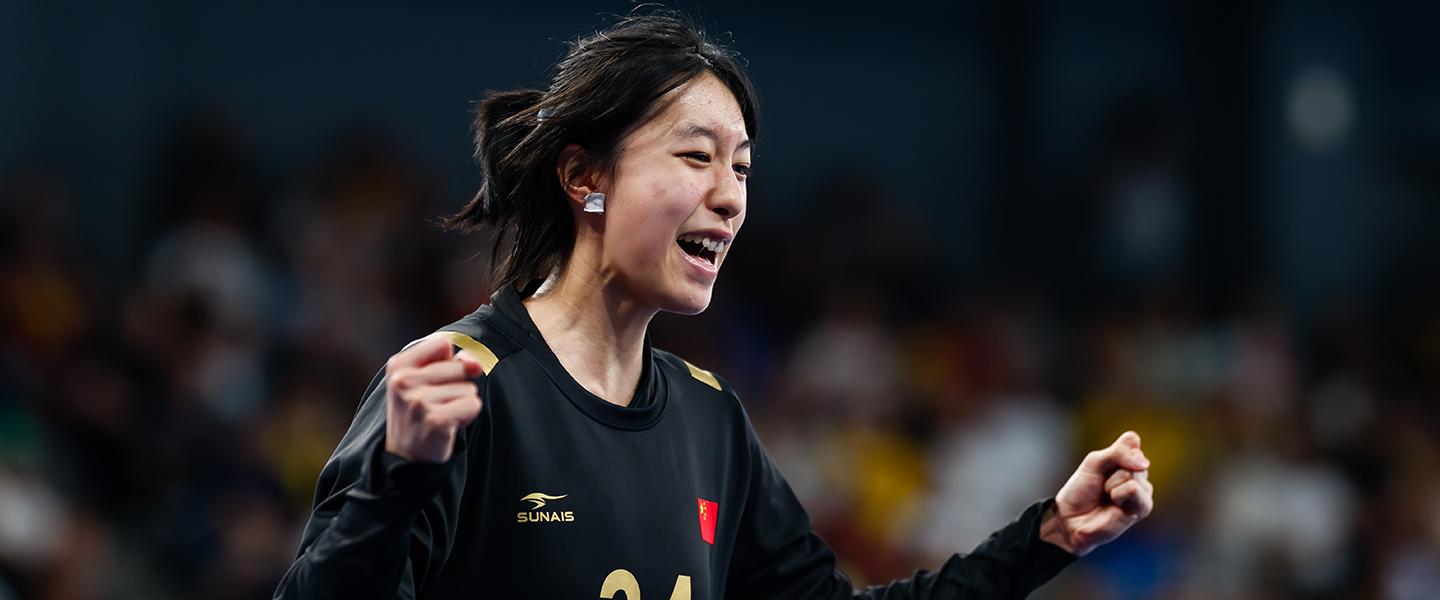
The final whistle against Sweden barely had time to fade before the realization hit. They were close to a quarter-finals spot at the 2026 IHF Women’s Youth World Championship, the first-ever berth for the Asian side for the knockout phase of the competition.
By the time it became official, they weren't even in the Pitești Arena to hear it. Nearly three hours later, Hungary and Romania played out a draw in the day's last match , the result that made China's passage mathematical.
Two wins made it possible, and neither was a scrape. China took Romania apart on their own floor, in front of a crowd that had come to cheer the opposite result, then went toe-to-toe with Sweden and came out ahead. A top-10 finish, for the first time in the tournament's history, built on beating two European sides back to back.
There's a version of Chinese handball that older fans still remember: bronze at the Los Angeles Olympics in 1984, fifth place twelve years later in Atlanta. At the Women's World Championship, eighth in 1990, ninth in 1986 - a program that once belonged in the sport's upper tier. Then came the long stretch of quiet: 11th in 2001, 12th on home soil in 2009, and not much to shout about in between.
However, the resurgence has been on the cards since they got more and more interested and put in the hard work over the past years. They hosted the 2024 IHF Women’s Youth World Championship and finished 15th, losing by only six goals against Denmark, 22:28, and by three goals, 24:27, against Norway.
That same generation carried the momentum forward, finishing 14th at the 2026 IHF Junior World Championship - hosted, again, on home ground - and closing it out with a win over Austria in the Placement Matches 13-16.
Now, in Romania, it's paying off in full. The youth pipelinw which was being assembled has arrived and is playing some of the best handball a Chinese team has produced in a generation.
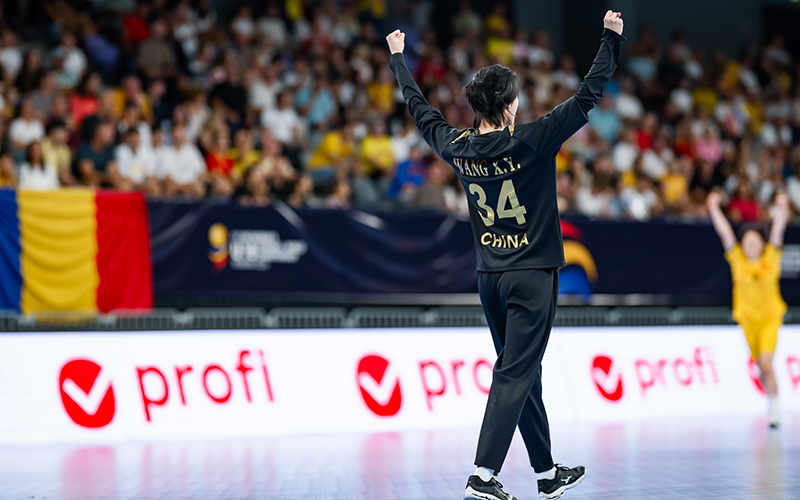
The surprise is big, especially as China displaced two powerhouses of the continent – Sweden and Romania – which traditionally produce good results in the younger age categories. Sweden were world champions in 2010, and Romania secured the title in 2014, constantly managing to find a place between the top 10 teams in this competition.
However, this time around, it is China’s turn to enjoy such an honour and the success has been steeped into an outstanding gameplan. The Asian side is still disciplined, but now they have taller and stronger players.
Their rhythm of passing is fast and they know the ins and outs of the game, with the players boasting a fantastic handball IQ and the ABCs of the sport.
Back Jingwen Zhang is the second best scorer, with 36 goals, after four matches, and the top assists provider, with 23. China have the fifth best attack, with 142 goals scored, and the second best counting out Egypt, Croatia and Czechia, which all scored at least 55 goals against Fiji.
They also have the joint-lowest number of turnovers – 47 – and the third largest number of saves – 58 – as well as the sixth best average saving efficiency – 38.1%.
“Romania and Sweden are both very strong teams. First of all, we want to thank our coaching staff, and also my teammates for all their hard work. Romania and Sweden are very strong sides, and if we have the chance in the future, I hope we can play them again,” said China’s goalkeeper, Xiaoyan Wang, after the win against Sweden.
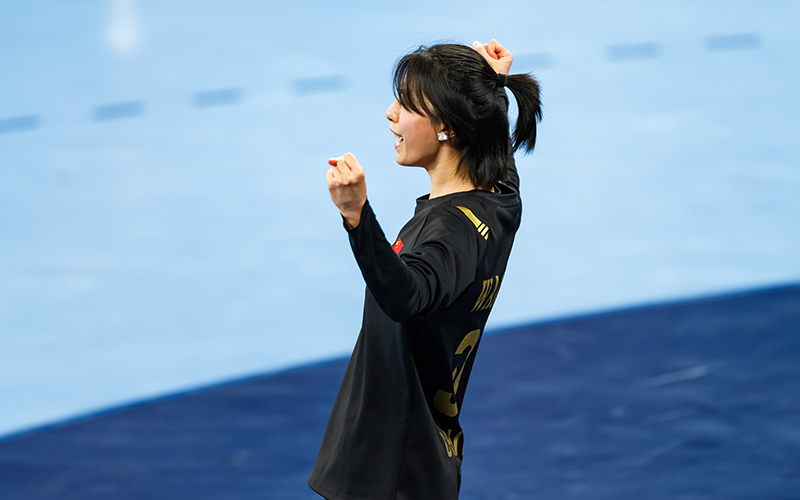
Wang has been one of the rising stars of the competition, with absolutely superb performances at Romania 2026. Against the hosts, in China’s 31:24 win, she saved 18 shots for a 44% saving efficiency, being named the Player of the Match.
Against Sweden, Wang was substituted early, after failing to stop any of the first five shots, but then came back and provided some key saves in the second half, finishing the match with nine stopped shots and an efficiency of 32%.
These saves also fueled the confidence in herself and the goalkeeper who was congratulated by Katrine Lunde on IHF’s Instagram page was key once again in delivering China’s win.
“Handball in China is becoming more and more popular now. For example, in the Jiangsu province, basically every city has a handball team,” says Wang.
Indeed, 13 of the 16 players in the team are playing for clubs in that province and seven of the 16 players at Romania 2026 were also featuring at the 2026 IHF Women’s Junior World Championship, where China finished 14th.
Wang herself was in the squad, saving 12 shots for a 27% saving efficiency, having featured 63 minutes and 47 seconds in total, being the third-choice goalkeeper in that team.
But at only 18 years old, she is brimming with potential and can be a cornerstone for the China team in the future, as they aim to be better and better.
“We will put even more effort into the games. We have already achieved the best result in the history of Chinese handball at this age category, and in the upcoming matches we will work even harder to improve our final position,” adds the goalkeeper.
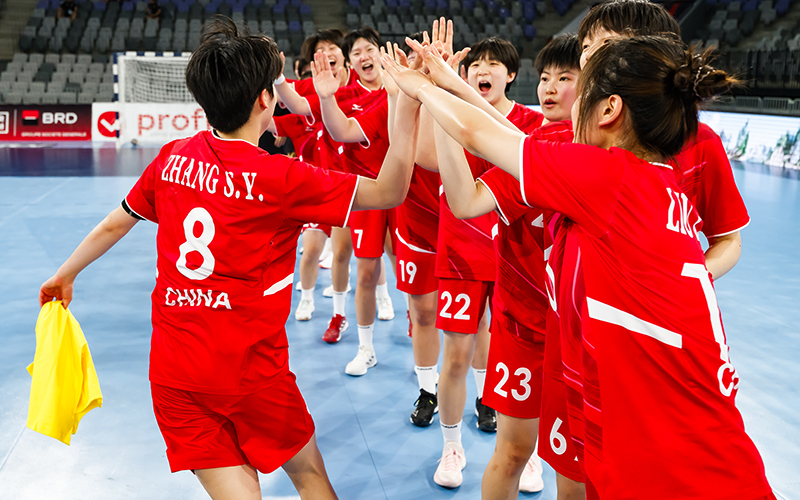
Starting handball aged nine, coincidentally nine years ago, Wang resembles a young Lunde in her moves between the posts.
And build towards the ultimate dream.
“My handball dream is that, although Chinese handball is not highly ranked internationally yet, I want to reach the Olympic stage.”
China have not been on the Olympic stage since 2008, when they were hosts in Beijing, being always behind Japan and the Republic of Korea over the last decades.
But with this kind of potential, they might be onto something in 10 years’ time.