

Saudi Arabia coach Dimitroulias: "Asia has become one of the key pillars of world handball"
13 Jan. 2026
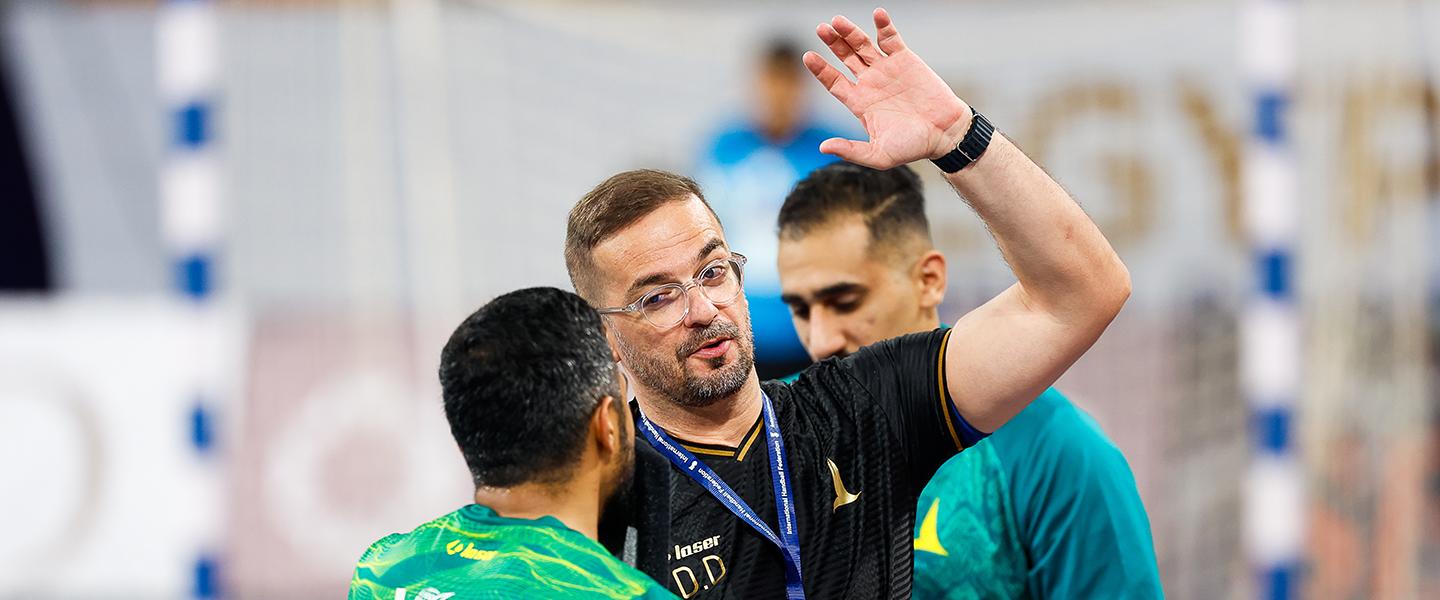
In the past 24 years, Saudi Arabia have finished on the podium at the AHF Asian Men’s Handball Championship – the continent’s premium competition – four times: in 2002, 2008, 2012 and 2022.
However, they ended up on the ninth position two years ago, in Bahrain, their worst result since 1991, and missed out on a place at the IHF Men’s World Championship, prompting some changes in the coaching staff.
Erlingur Richardsson was replaced with new blood, but the new coach, Isidoro Martinez, spent less than a few months before being replaced by another European.
This time, the Saudi Arabia Handball Federation appointed Dimitris Dimitroulias, a Greek coach, who brought to his new position a wealth of experience not only from his native Greece, where he won the EHF European Cup twice, the Greek league five times, and the Greek Cup twice, but also from a highly successful tenure in Saudi Arabia.
In his career, the Greek coach has previously led Greek sides Diomidis Argous, the women's team of PAOK Thessaloniki and AEK Athens, as well as HC Kaerjeng, in Luxembourg. Over the past three and a half years, he steered Saudi side Khaleej Club to 16 domestic and international titles, including the one in the AHF Men's Club League Championship in 2024, while finishing as runners-up in 2025.
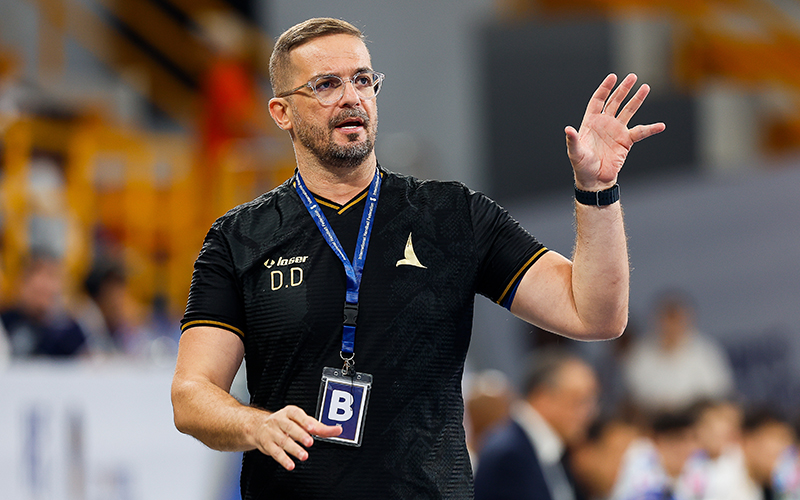
“Saudi Arabia, and Asia in general, are different from Europe in many ways. The lifestyle, the mentality - there are many differences, but not in a negative sense, simply different. There are also many positive aspects. In handball, the biggest difference is the physicality compared to Europe. The understanding of handball is very good, though. The players read the game, and in Saudi Arabia there has been high-level competition for many years, with a lot of quality players and coaches coming through,” says Dimitroulias.
“So it was not difficult to find a common handball language and build a playing style. The challenge at the beginning was more about mentality - they had to accept me. Once that happened, it became very enjoyable to work with them every day.”
Dimitroulias provided some excellent results through his guidance for Saudi club side Khaleej, which finished sixth in 2022, sixth in 2023 and fifth in 2024 at the IHF Men’s Club World Championship, while also winning the Asian Club League Handball Championship in 2024 and finishing as runners-up in 2025, after losing the final by a single goal, 26:27, against Emirati side Sharjah SC.
While Khaleej had their share of foreign players – including Egyptian stars Karim Hendawy or Hassan Kaddah or Serbian left back Petar Nenadic – their core was formed of Saudi players, which makes Dimitroulias uniquely positioned to understand the domestic handball landscape.
“This work at club level was definitely the main reason I was offered the national team job. I did not hesitate much, because I know the players, I know the mentality and I felt I was the right person at this critical moment, when the team needs to take the next step,” says the Greek coach.
However, he will face a hefty challenge in the current edition of the AHF Asian Men’s Handball Championship. With only four Asian teams earning safe passage to the 2027 IHF Men’s World Championship, it makes reaching the semi-finals of the 2026 edition a prerequisite for Saudi Arabia to return to the world handball flagship competition for the first time since 2023.
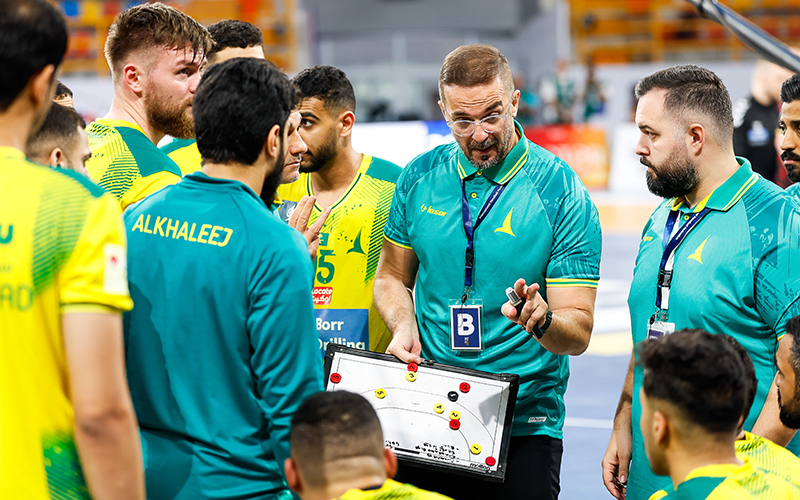
Yet finishing ninth in the previous edition meant that Saudi Arabia was in the third pot for the draw of the preliminary round, which, in turn, brought the hardest possible group, as they will face Japan, the Islamic Republic of Iran and Australia in Group D, with two teams progressing to the main round.
15 teams will line up at the start of the 2026 AHF Asian Men’s Handball Championship, with powerhouses like Qatar, Japan, Bahrain, the Republic of Korea or the Islamic Republic of Iran ready to rise up to the challenge. The competition will take place in Kuwait between 15 and 29 January.
“The competition ahead could hardly be more difficult. Because we did not reach the top eight at the last championship, we were placed in Pot 3 and received the toughest possible draw, with Japan and Iran in the same group. One of these three strong teams will miss the main round, so for us the tournament starts with a final: the match against Iran on 15 January. Our objective must be clear - qualification for the World Championship, regardless of the difficulties. The friendlies we played showed that we have the quality to achieve this, but now we will need experience and character. These matches demand tactics and physical strength, but also strong mental skills, so we are preparing a lot on that side,” says Dimitroulias.
In fact, the Greek coach highlights the mental aspect as the biggest outlier between the Asian handball and the one played in Europe.
“The mental aspect is indeed a major difference from Europe. Keeping a team mentally stable throughout 60 minutes is not easy for any Asian side. Players tend to be more emotional, which can lead to very strong moments but also very difficult ones. I always try different methods to stabilise our performance,” adds the coach.
Nevertheless, Dimitroulias is upbeat about the prospects of Saudi handball and the Asian handball in general.
“Saudi handball has clearly grown. The league today is very different from when I arrived almost four years ago: the level is higher, the players are more tactically aware, and the big matches offer not only atmosphere and spectacle, but also sophisticated tactics. The same applies in other countries: in Kuwait many clubs now have big budgets and sign top European players, and Qatar remains a major power with a very strong league. From my point of view, Asia has become one of the key pillars of world handball, both financially and in terms of sporting development,” concluded the Greek coach.