

A remarkable rise for Alejos and Spain to Wheelchair Handball World Champions
21 Sep. 2026
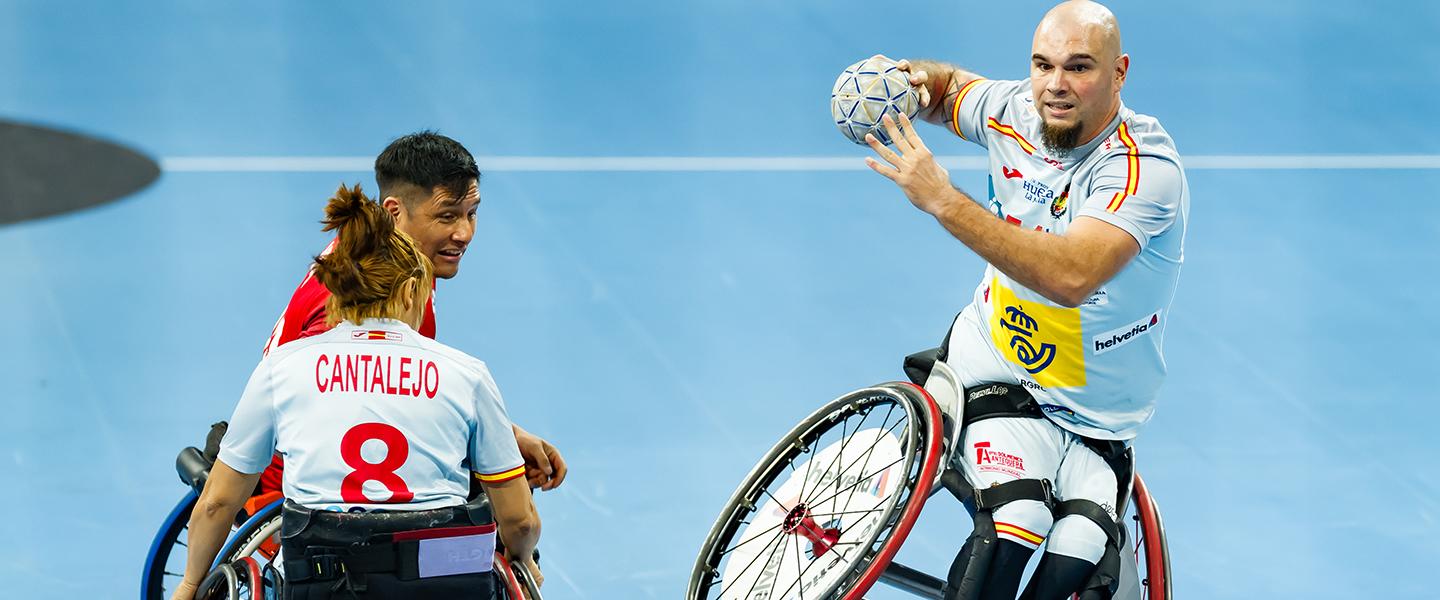
Coming out of nowhere to win the title, it was basically written in the stars for Spain. Home court advantage, over 2.000 fans in the stands to support their favourites and a gritty performance which took everyone by surprise. While Spain were underdogs at the 2026 IHF Wheelchair Handball World Championship, they produced some fantastic performances, eliminating Brazil, Chile and Japan on their way to the title.
And it was not easy, nor pretty, but the European side made history by producing a trademark defensive display in each match and some clinical performances in attack when it mattered to secure the trophy.
One of the main characters in the team was Agustín Alejos Alonso, who had a strong tournament in Granollers, finishing the final with 10 points, roughly 41% of the total amount of points scored in the competition, and it came in his first official competition in wheelchair handball. Minutes after Spain's win over Japan, he sat down to talk about the match and what it meant to win it at home, still reeling it in.
"It's unbelievable, you know," he said. "We got a second chance to be able to play this World Championship. What a better way to win it at home with our people, with an amazing group of people in the squad, the coaches, we worked really, really hard all summer, and it all worked out for the best, and we're the World Champions now."
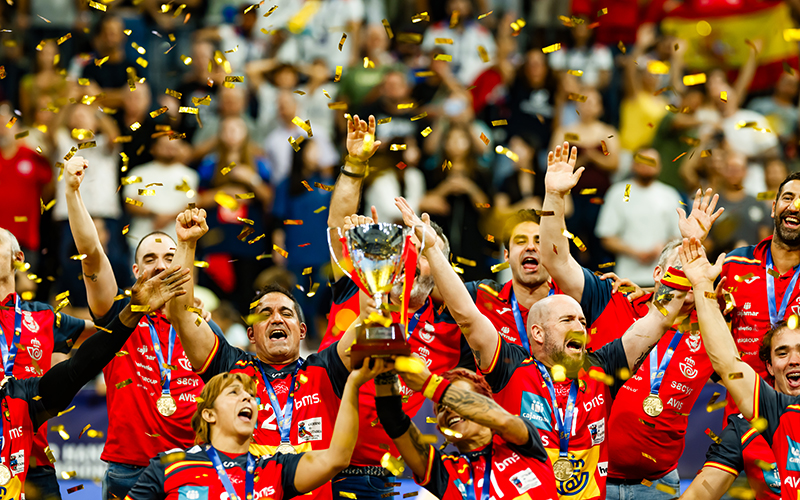
"Campeones del Mundo, campeones del Mundo," was everything that you could hear on the court in Granollers, after Spain got their gold medals and lifted the title after a dramatic final.
Spain's route to that moment had been anything but calm. Against a Japan side that arrived in the final unbeaten and had scored more points than anyone else in the competition, Spain stormed out of the blocks, forcing Japan to throw MVP and top scorer Shinnosuke Morooka into the game within three minutes, far earlier than planned. Goalkeeper Francisco Javier Cazurro Revuelta saved three of Japan's first four shots, Alejos put up nine points of his own, and Spain closed out the first set 13:9.
Then the match turned on its head. Japan found their rhythm, Morooka took over completely, and by the midpoint of the second set Spain's defence had no answer, watching a 12:5 gap open up as Japan levelled the match. For a few minutes, the home crowd had gone quiet and the title looked like it was slipping away.
It didn't. Spain shut Japan out completely over the final three minutes of the decider, with Alejos and Lorenzo Envo Edjang Nsa combining for a run that swung the whole match, closing it out 6:5 to seal gold 2:1 overall.
It was more or less the story of the tournament for Spain, which also lost a set against Brazil in the quarter-final. And they also lost a preliminary round match against France, which sent them to the second place in the group and provided a tougher path towards the trophy. Asked about the tougher moments earlier in the tournament, Alejos didn't try to spin it into something it wasn't.
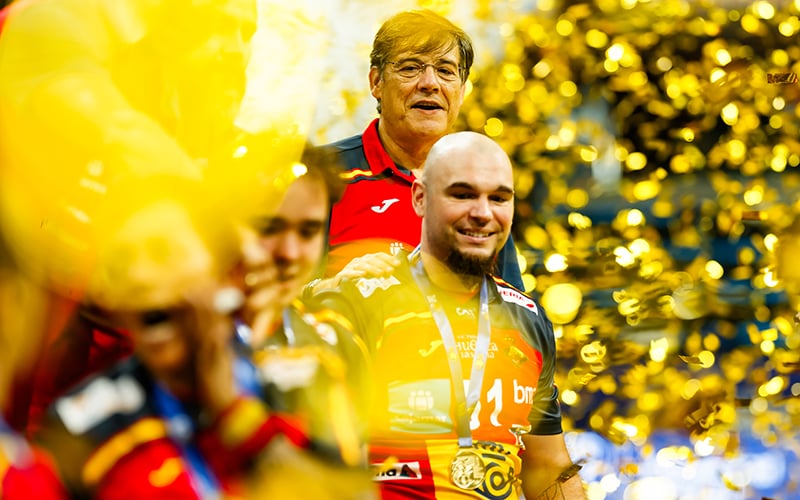
"It's always hard to lose, it's not good to lose, but it helped us work harder and think better about what we have to do to be able to reach our best. You need to take a step back and look what can make you better," says Spain's player.
None of this was Alejos's first experience with a wheelchair and a Spanish national jersey. Long before Granollers, he was a teenager in Vigo when a neighbour, who ran the local wheelchair basketball club, invited him to give the sport a try.
That invitation turned into a career that took him through clubs in Murcia and Toledo, a stint in Italy with Padova, five years playing across Australia with the Queensland Spinning Bullets, and eventually a return to Europe with his sights set on Rio. He made that Paralympic team in 2016 and came home with a silver medal, then competed again in Tokyo five years later, when Spain ended up fourth.
Handball, by contrast, is brand new to him.
"Wheelchair handball in Spain, it's a very young sport, it's only been around for like three, four years," he said. "Myself, it's the first time I actually play wheelchair handball in an official competition. I come from wheelchair basketball, and I think that's going to help a lot of people to come to wheelchair handball and hopefully make it a stronger sport and have more people involved."
There was a lighter moment when the conversation turned to where a gold medal from Granollers might fit alongside a Paralympic silver from Rio and a fourth-place finish from Tokyo.
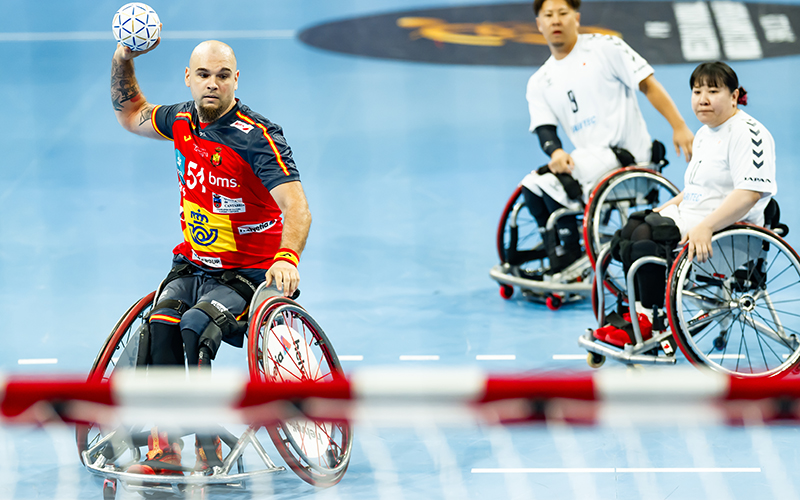
"I'm going to have to find somewhere else to put the World Champions on my skin," he said, laughing. "I always try to find a way to remember the best moments in sport, and find a way of remembering them."
In Granollers, Spain became the first European team to win the IHF Wheelchair Handball World Championship after Brazil and Egypt won the previous titles, and only the second European nation to medal at all, after Slovenia's bronze at the inaugural edition in 2022. For a sport in its infancy in the country, a home title carried on national television is exactly the kind of moment organisers hope will bring new players through the door.
Alejos, for his part, was already looking toward a bigger stage. "That's the goal, you know - to be able to have this amazing sport being represented in the Paralympic Games. Hopefully at Brisbane 2032, but we'll work hard to make a sport better than it is."