

Made for handball: From player dream to coaching reality
14 Jul. 2026
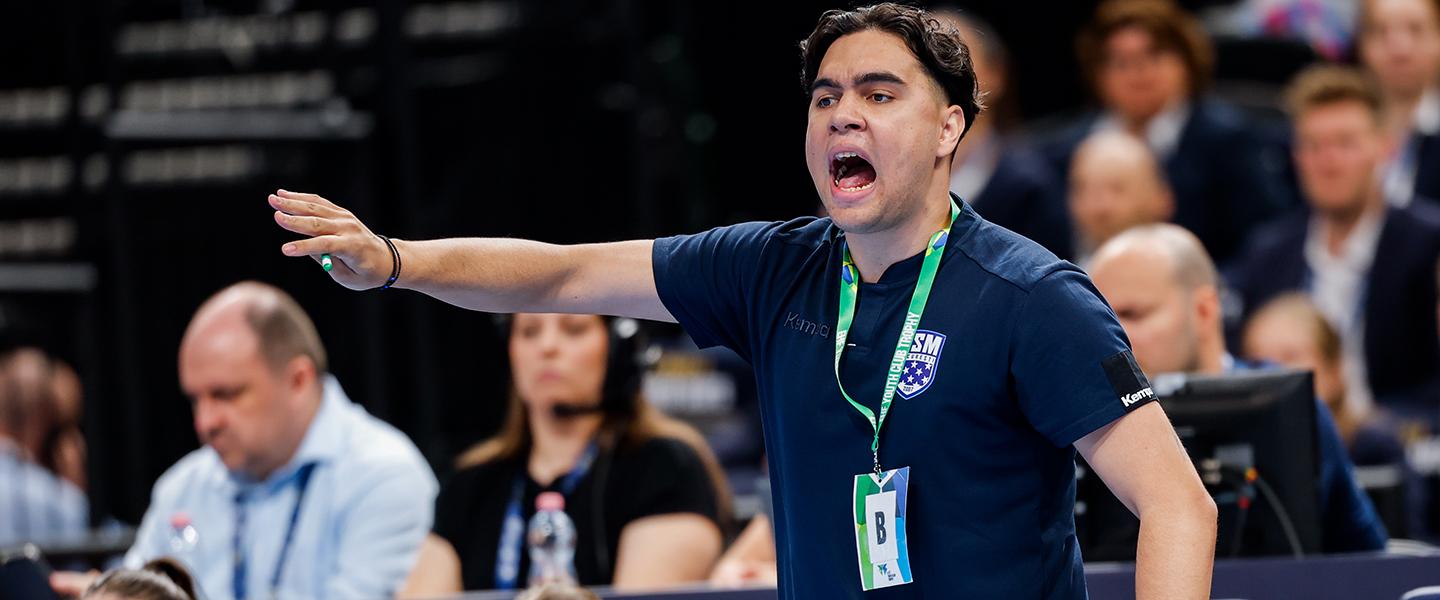
Sometimes handball chooses you.
Even when the path is anything but easy. Even when a serious health problem brings a playing career to an abrupt end, the game can still find a way to stay at the centre of your life - on the court, or just a step beside it.
And when that happens at 18, the question is no longer whether you will stay in handball, but how.
“I had about a year and a half when I didn’t want to hear anything about handball, about sports, about anything. I studied business and tourism, and after a few weeks I realised that if I wanted to do something in life, it had to be something related to handball. It was the only thing I knew how to do, the thing I understood best. So I quit, and I enrolled in the Faculty of Sport, which I also finished,” says Alexandru Moise.
The coach of CSM București’s Under-17 team guided his side all the way to the final of the EHF Youth Club Trophy Women in Budapest, where they pushed Debrecen to overtime before finishing runners-up in a dramatic showdown on the fringes of the EHF FINAL4 Women.
Born into a handball family, Moise was practically destined for the game. His mother, Maria Iorgu, a former Romania international at the 1997 IHF Women’s World Championship, and now part of the CSM’s Under-17 staff, introduced him to handball almost from day one.
And like so many great stories in the sport, it all began with a dream: first to play, just like his mother.
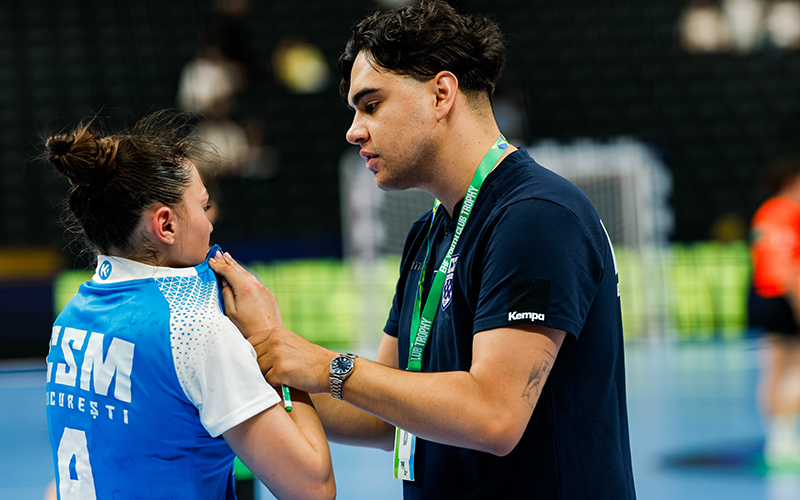
“I think it started the first time my family told me I was going to play handball. At that time, I wasn’t necessarily the most talented. I remember when I was little, I used to go to my mother’s training sessions, when she was still a player, so I had no choice but to play handball with her. I liked it quite a lot, so I started to see what handball was about, and that is where my passion for handball came from. I think it was transmitted to me mostly by my mother,” says CSM’s Under-17 coach.
Then, Alexandru started enjoying it more and more. He played as a wing and was looking forward to become a professional player. And then, the fate had other plans.
When he was 18 years old, therefore just preparing for the senior career, Moise was diagnosed with antiphospholipid syndrome.
Antiphospholipid syndrome, often called APS, is an autoimmune condition in which the immune system creates antibodies that make the blood clot more easily than normal. Those clots can happen in veins or arteries and may lead to serious problems such as deep vein thrombosis, pulmonary embolism, stroke, or heart attack.
The main concern for a person suffering from APS is that intense effort, dehydration, injury, or long periods of travel and immobility can all increase the chance of a clot forming. Contact sports, like handball, can be especially problematic if the person is taking blood thinners, because the medication raises the risk of serious bleeding after a knock or fall.
“It was very hard, because I had a very special situation. I was examined by doctors and discovered that I had a very rare autoimmune disease. I stopped playing handball at that time, and I was very disappointed. But with the years that have passed, and with what is happening to me now, I guess that what seemed bad at the time was actually the greatest good in my life, because it brought me onto the path I am on now. Without that health problem, I probably would not be in the position I am in today,” adds Moise.
The position which he holds today is that of a coach, something that is becoming more and more of a trend in world handball. Young former players start their coaching careers younger and younger, instilling new passion in the game.
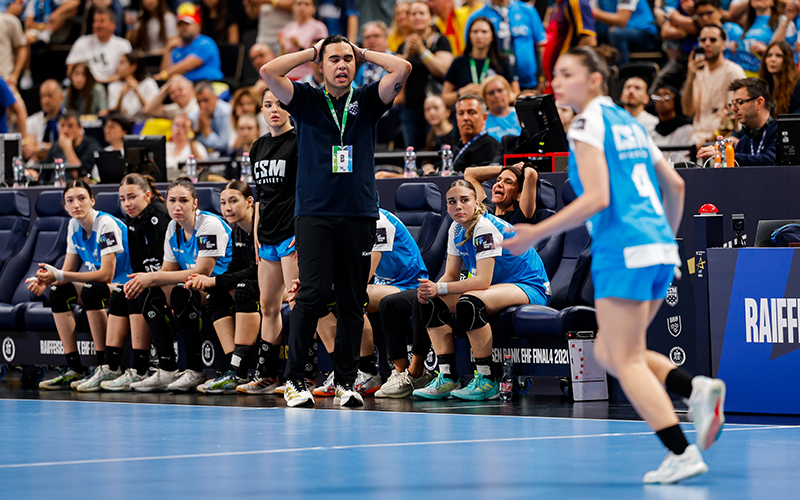
Take, for example, the case of Jaron Siewert, who started his coaching career in his late teens, then taking over at Füchse Berlin when he was only 26 years old. After five years and one German title, Siewert is preparing to take over MT Melsungen, another German powerhouse.
And for Moise, it’s only about passion, one that can be a little bit extreme at times.
“For me, it is an obsessive process. You have to try to absorb every type of information you can, which fortunately is now available very quickly. There are many situations on the internet, courses, exercises and things you can learn from. You can improve yourself at every training session, every weekend, and somehow, with each week spent as a young coach, you realise that you accumulate the experience needed to know whether an exercise is suitable for teaching a certain idea, or whether you need another pedagogical approach, whether you need to change the way you speak to a child, and so on,” says the coach of CSM’s Under-17 women’s team.
“Experience comes with time, but without passion and without – I don’t know how to put it better – madness, it is not easy.”
But what is this madness?
“The desperation to look for every detail in anything you can find on the internet, in any book you can read, or to be extraordinarily curious, to talk to everyone, to try to absorb and learn something from everyone, to ask all kinds of questions even if you seem stupid, and to understand how the mechanism works in order to become a successful coach. After that, you adapt it to your own values, your own principles, your own emotions, and you create the coach you want to become at the beginning of the journey,” says Moise.
Of course, things might change with age and the overview of the job, the world and the sport will surely be different in 10 years’ time. But right now, the passion, the drive, the desire, the … madness are there.
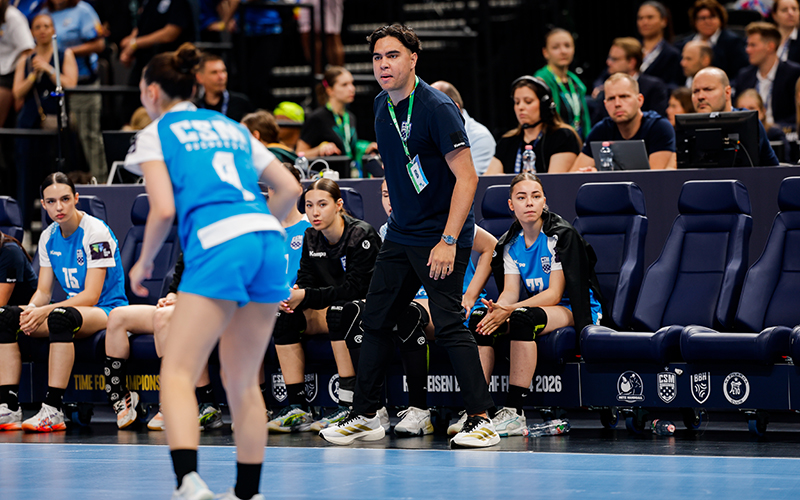
However, the 25-year-old is built different. Take, for instance, a crucial penalty miss by one of CSM’s best players in a do-or-die moment in the final against Debrecen. The cameras showed Moise comforting his player, rather than criticising her, something that is quite usual in this part of the world.
“You need to know how each person you work with functions, and it is not an easy field to work in every day because it is very challenging. You always have to adapt to many factors, and without that passion pushing you forward, I think it would be very difficult. You really have to be a little crazy to do this job, especially with children, where it is very difficult. It is also different from working with seniors, because you are shaping players, teaching them the ABCs they will later use at senior level,” says the coach.
With Romania stagnating around the 10th place in the women’s World Championships – be it senior, junior or youth – over the last years, it is clear that change is needed. And while Moise is not the one to implement it on a macro level, he says he is influenced by modern handball.
“I think it is an extremely physical game played at an extraordinary pace. If you do not play at the required rhythm, you can lose very quickly. The pace is immense, and the game is very physical, very hard. I think we must keep the principle of hard defence, but add extraordinary fast transition. Mobility and intelligence matter more and more,” says Moise.
Citing Helle Thomsen – who he has “always admired” – as one of the influences in the way he approaches the game, Moise also projects a maturity well above his age.
Case in point, the match against Debrecen, which ended in a loss, but brought plenty of attention and plenty of experience for his players.
“It was unreal from my point of view. It was something I never expected. If someone had told me it would be like that, I would have said it was absolutely impossible, maybe even too optimistic. I never thought the level of media coverage and everything surrounding the team would be so incredible. I simply did not expect that,” says CSM’s coach.
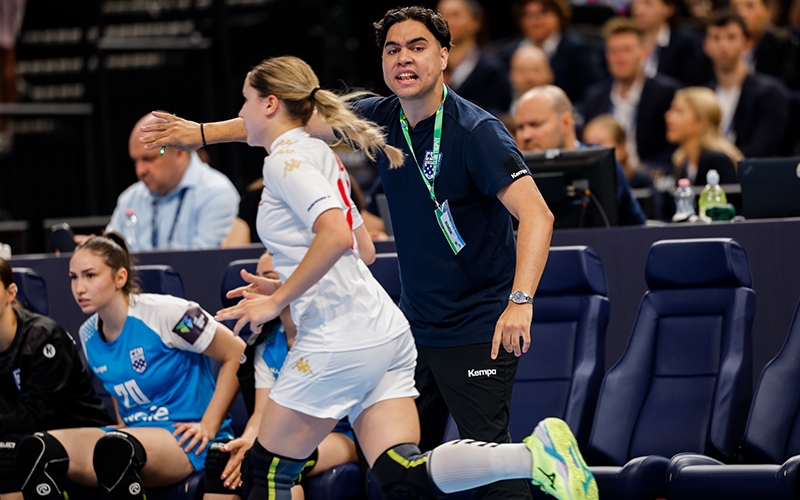
“I would not change the result, because this experience was so important and will shape up so much of these players’ future, that this is more important.”
And for Moise, who also mentions former CSM coach Adi Vasile as one of his mentors, this experience is surely just another step for what projects to be a long career on the bench. Seven years ago, the 25-year-old did not even think he will be able to ever attend a handball match.
Now he is a coach and still dreaming, despite his playing career being cut short by a shocking diagnostic.
“I have a dream, and I think that is a dream for young coaches. But at the moment, I am very happy with what I am doing, and I think I am on the right path. I just have to keep going, stay focused and avoid mistakes,” concludes Moise.
Photo credit: EHF / Kolektiff / Jozo Cabraja