

Machine-like Norway chase new records in crunch final
13 Dec. 2025
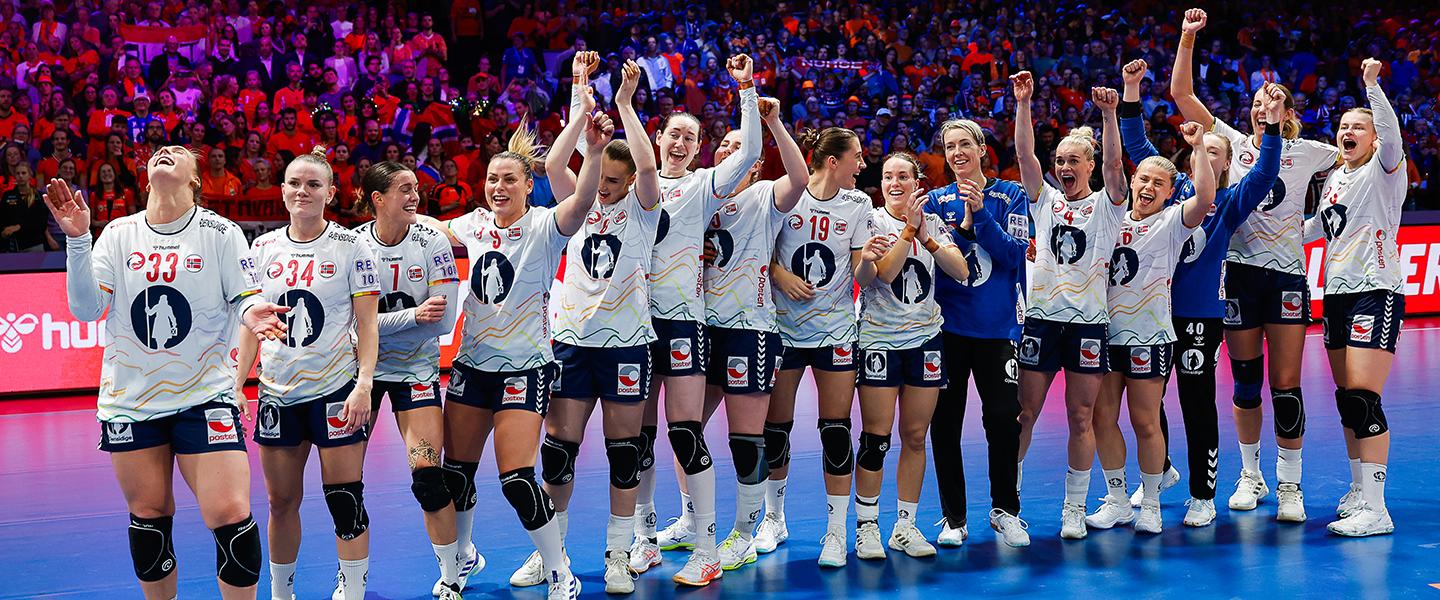
There are teams which won the IHF Women’s World Championship without dropping a match. In the past 25 years, Russia have done it twice, in 2001 and 2005, and France did it in the previous edition of the competition.
But no team has been so dominant as Norway was at Germany/Netherlands 2025. Before the final against Germany, Norway won all eight matches by at least nine goals. Seven of those wins came in double digits. And in the other one, the quarter-final against Montenegro, 32:23, Norway led most of the second half by 10 goals or more.
On average, Norway outplayed their opponents by 15.75 goals per match. They dominated Sweden by taking a 13-goal win, they demolished Brazil with a 19-goal win and they beat Czechia by 23 goals. All those wins came in the main round.
Come the knockout phase, Norway had the nine-goal win against Montenegro in the quarter-finals, 32:23, and a 10-goal win against co-hosts the Netherlands, 35:25, which only managed to keep Norway at bay for 15 minutes.
“I think being in another final means a lot, this is why we come here, to be on the top all the time, and for me, as long as the team is so good, I will not stop and there are new players, hungry for trophies, coming up. We also have the experience and we showed that we are a good team,” says Norway’s right back, Nora Mørk.
Norway’s rise to the top over the last 26 years has been nothing short of special. The Scandinavian side had only three coaches since 1994 - Marit Breivik, Thorir Hergeirsson and Ole Gustav Gjekstad – with the latter taking over in 2025 and now leading the team for the first time in a major international competition.
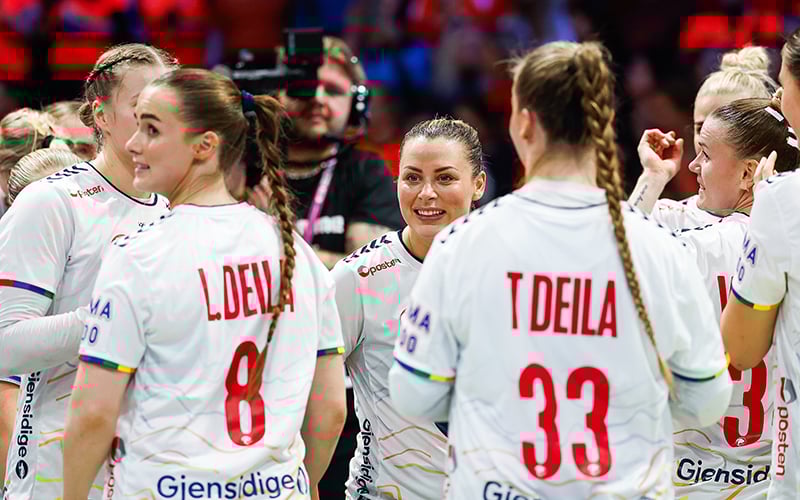
Since winning their first major international title in 1998 – the European Championship – Norway have been dominating the world, adding more and more medals.
In the past 27 years, they won 27 medals, including three Olympic gold medals at Beijing 2008, London 2012 and Paris 2024, four World Championships and a record 10 European titles.
And now, provided they secure their ninth win in nine matches at the IHF Women’s World Championship, in the final against Denmark, they will become the nation with the largest number of titles in the history of the competition, leapfrogging Russia, which also won the title four times.
“We have been really good, and lucky, because we have some players out too,” says Mørk.
And indeed, Norway have their own share of absences, which would have certainly derailed any other team.
Take, for instance, line player Kari Brattset Dale, the MVP of the 2021 IHF Women’s World Championship. A late bloomer who became a mainstay in defence and is crucial to Norway’s attack, Brattset is out due to pregnancy.
From the team which won the Olympic Games at Paris 2024, Stine Bredal Oftedal has also retired, marking and end of her illustrious career. Twins Silje Solberg-Østhassel and Sanna Solberg-Isaksen are also out, due to pregnancies or giving birth. Left wing Camilla Herrem has also finished her international career.
Losing five crucial players in the space of a few months would have seen any other team crumble. Instead, Norway found new options in Eli Marie Raasok, Anniken Wollik, Emilie Hovden and the pair of Maren Aardahl and Vilde Ingstad and they all delivered excellent performances.
“People are always stepping in, we have a very good system, with good recruitment and it is also a key, but we have to acknowledge that some of the teams are in a different moment of their build-up after the Olympics,” added Mørk.
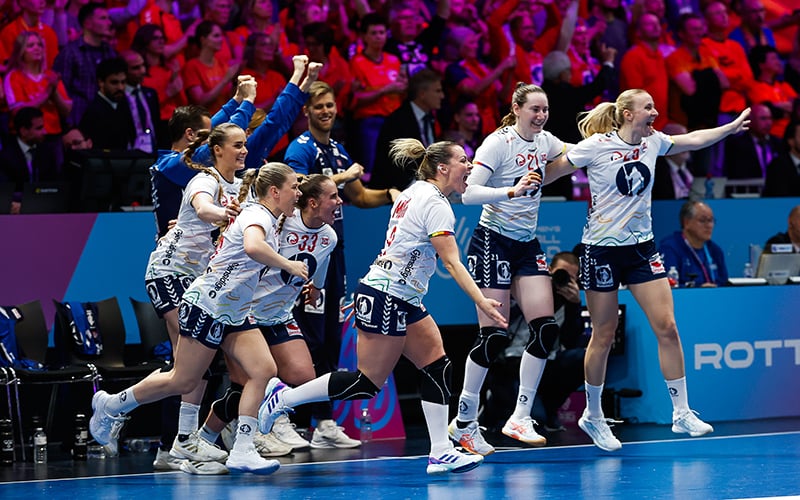
Looking at the numbers, Norway are virtually untouchable, even with six of their 15 players at the Olympic Games, or 40% of the team, being replaced.
They have the best attack in the competition, scoring 282 goals, or an average of 35.2 goals per match. The Scandinavian side has also conceded the lowest number of goals so far, 144, or an average of 18 goals per match.
And in the goalkeeping department, they are head and shoulders above their competition, with 131 saves, which means that 47,6% of the shots registered on their goal were saved by Katrine Lunde, Eli Marie Raasok and June Cecilie Krogh.
For Lunde, aged 45, this will be the last major international competition, having already secured her 21st medal at the World Championship, European Championship and Olympic Games.
“I think we have been amazing in defence in this competition, but we need to step up against Germany as well, we need to stay humble, work on our own game and we will see what happens,” says Norway’s coach, Ole Gustav Gjekstad.
Norway have conceded only two losses in the past 26 matches at the IHF Women’s World Championship, therefore being favourites against Germany, especially with another stellar campaign from the IHF Female Player of the Year in the previous two years, Henny Reistad.
In her third edition of the World Championship, Reistad has already scored 50 goals and is now at 140 goals in the competition, after scoring 38 times at Spain 2021 and 52 goals at Denmark/Norway/Sweden 2023. She needs only five goals to top the goal scorer rankings for the first time in her career.
She had 10 goals against the Netherlands, scoring all her first seven shots, being rendered unstoppable at times. And with her, Lunde’s and Mørk’s experience, Norway can still thrive.