

"Incredible experience": Uruguay looking to turn World Championship lessons into IHF Nations Trophy progress
01 Sep. 2026
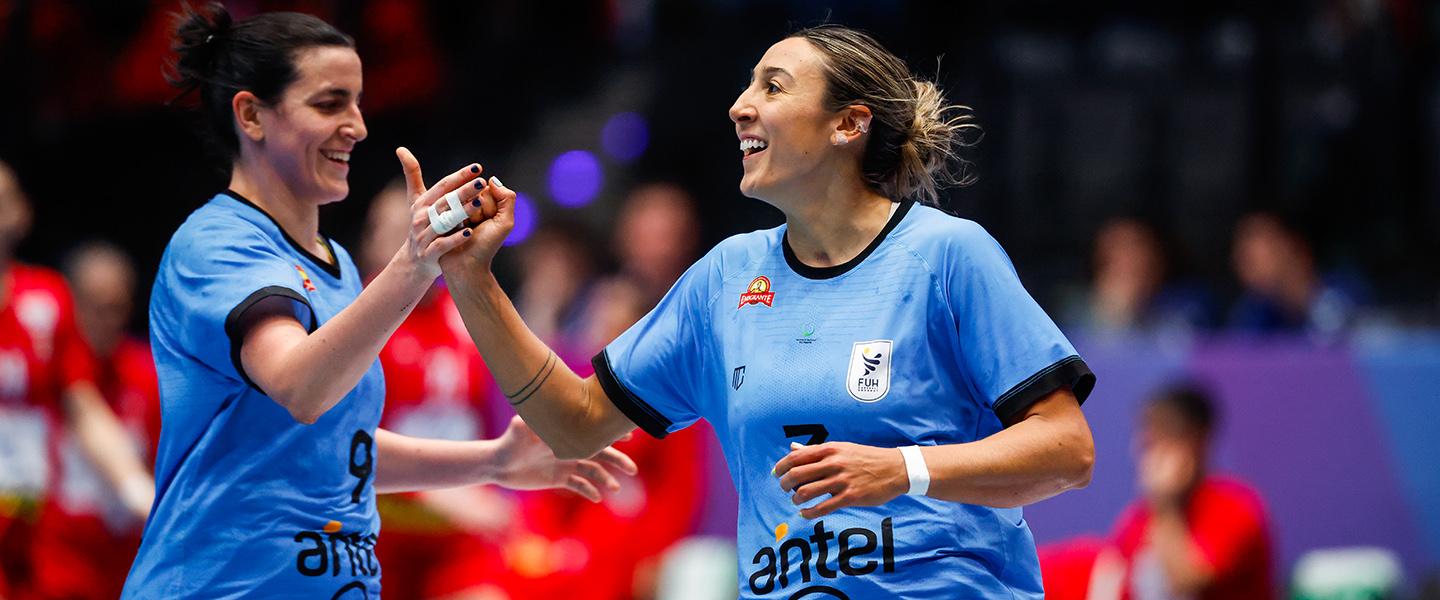
The introduction of the IHF Nations Trophy at senior level brings a new competition into the international calendar with a purpose that will matter particularly to emerging teams: creating more opportunities to play, develop and measure themselves against international opposition.
After years in which international matches were relatively scarce, the first South American edition of the IHF Nations Trophy will give Uruguay another competitive stage. Peru’s capital, Lima, will host seven teams from 2 to 6 September, with Chile, Colombia, Ecuador, Venezuela, Bolivia, Peru and Uruguay competing for the inaugural title of the IHF Nations Trophy.
The top two teams will also earn their place at the 2026 South and Central American Women's Handball Championship, giving the tournament an immediate sporting consequence and creating a path towards the 2027 IHF Women’s World Championship, which is a qualification event for the Los Angeles 2028 Olympic Games.
For Uruguay, the timing could hardly be more relevant.
Their recent history has been defined by the pursuit of opportunities like this. The team have been regular participants at the South and Central American Women's Handball Championship, and in 2024 they took a significant step forward in Niterói, Brazil.
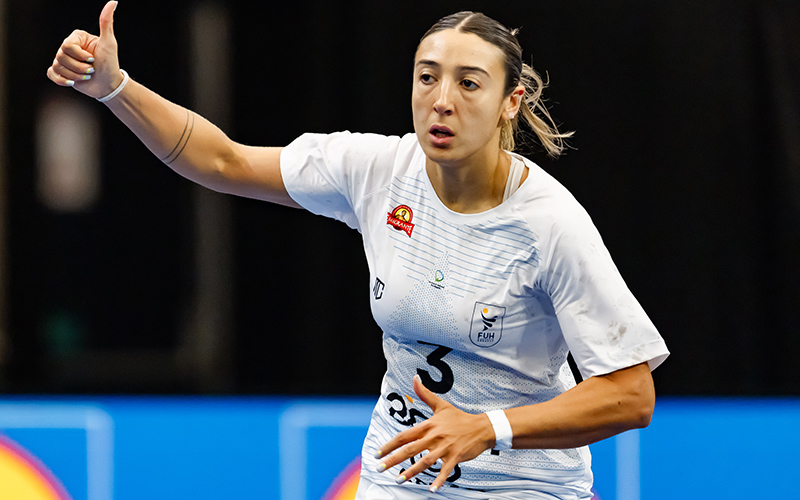
After finishing 5th, 4th and 4th in the first three editions of the competition, Uruguay defeated Paraguay, El Salvador and Chile to finish third, behind Brazil and Argentina. That bronze medal delivered something the team had been working towards for more than a decade: a return to the IHF Women's World Championship, after appearances in 1997, 2001, 2003, 2005 and 2011.
Their place at Germany/Netherlands 2025 ended a 14-year wait. Uruguay had last appeared at the World Championship in Brazil in 2011, when they achieved their best-ever finish of 20th. In 2025, they returned to the global stage with a squad that had earned its opportunity through the continental championship.
For Sabrina Grieco, who was part of that return, the experience changed the team's perspective.
"It was an incredible experience and, at the same time, very challenging. Playing against the best teams in the world forces you to raise your level in every aspect and leaves you with so much to learn, not only from the way they play, but also from how they prepare, how they train and how they approach every competition," says Grieco.
The World Championship also provided lessons that Uruguay can now take into a very different tournament. The squad travelling to Lima contains change compared with the group that featured at the World Championship, but Grieco believes the experience gained in 2025 can still filter through to the new team.
10 players will return, including some of the most experienced ones, like Martina Barreiro, Grieco, Agustina Modernell, Paula Eastman or Camilla Bianco.
"We learned the importance of sustaining our identity throughout the 60 minutes, competing on every ball and taking care of the small details, which often end up deciding matches,” says Grieco.
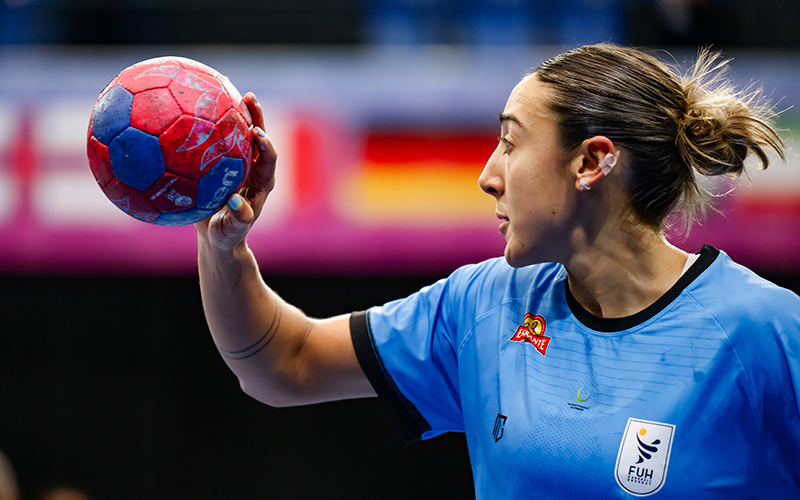
That is one of the reasons the Nations Trophy can be so important for Uruguay.
A World Championship provides the toughest possible test, but it does not necessarily provide the frequency of matches required to build continuity. In the past, Uruguay's players did not have the same number of international opportunities during a calendar year as many of the world's leading teams. A tournament like the IHF Nations Trophy in which several competitive matches arrive within a few days offers a different kind of preparation.
"For teams such as Uruguay, which do not always have a large number of international matches during the year, being able to play a tournament at this level means gaining match experience and continuity in competition. It also allows more players to face opponents with different styles of play, for the team to strengthen its functioning and for South American handball to continue growing through greater international competition. The more quality matches we have, the greater our possibilities of continuing to improve," says Grieco.
That last part is particularly relevant to the structure of the Nations Trophy. The competition has been introduced at senior level after the IHF Trophy pathway had already been established in the youth and junior categories, offering a path for younger age category players to develop and become better and better.
The senior tournaments extend that idea to national teams that need more regular opportunities to compete internationally and provide a clearer connection with continental championships.
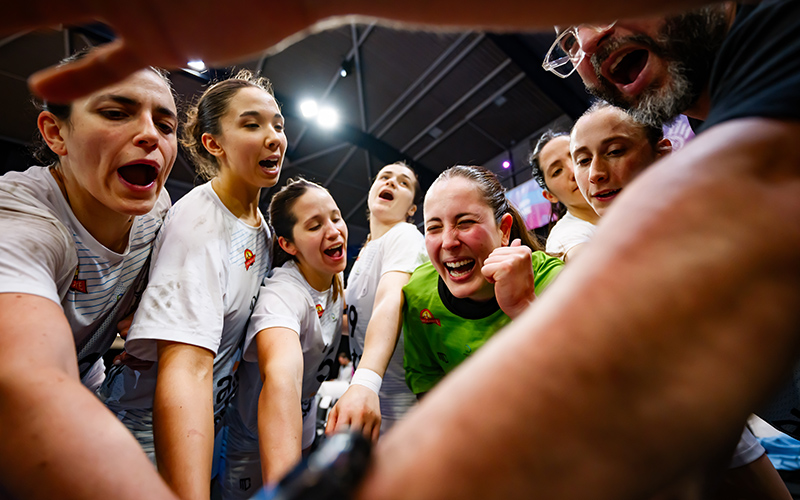
In South America, the top two teams in Lima will qualify for the 2026 South and Central American Women's Handball Championship, putting Uruguay closer to a place at another major continental tournament.
The first test will be the preliminary round, where Uruguay have been drawn alongside Peru and Bolivia in Group B. Win at least one of them and they will be advancing to the semi-finals, one of the two sides which will compete the penultimate act against the top two sides in the other group, which contains Chile, Colombia, Venezuela and Ecuador.
"We expect a competitive tournament, with demanding matches. Our first objective is to have a good first phase so that we arrive well positioned in the second part of the competition," adds Grieco.
"As a team, we are travelling with the hope of fighting for the top positions, but also with the conviction that we can use every match to continue growing. Whatever the final result, we want to perform as well as possible and get the greatest possible learning and sporting performance from every match we play."
Grieco's own development mirrors that of the national team. She has spent much of her career in Uruguay and became one of the country's leading scorers, but she describes the biggest change in herself in much simpler terms: confidence.
"I think the main difference is confidence. The years and international experiences give you tools that you did not have before. You learn to read matches better, make decisions more calmly and understand that every competition leaves you with something,” says Grieco.
At the 2025 IHF Women’s World Championship, Uruguay finished 29th, sealing two wins, 27:16 against the Islamic Republic of Iran and 33:27 against Cuba, in the Placement Match 29/30.
Grieco scored 12 goals, being her team’s top scorer against Serbia and Germany.
"It is a very nice personal recognition and obviously I value it a lot, but when I put on the national-team shirt, that responsibility is always at the service of the team. Goals are the consequence of collective work: a defence recovering the ball, a teammate providing an assist and a team functioning in a way that creates scoring opportunities," says Uruguay’s back.
The current Uruguay squad is being built around that collective idea.There is experience from players who have already played international competitions, combined with younger players who are now getting their opportunity at senior level. For Grieco, the balance is one of the team's most interesting characteristics.
"I think one of the greatest strengths of this group is the balance between experience and youth. There are players who have already experienced important international competitions and others who arrive with a lot of energy, talent and the desire to earn their place."
That process of development is rooted in the domestic game. Uruguay's national competition provides the base from which international teams are assembled, giving players the training and match experience needed before they step onto the continental or world stage.
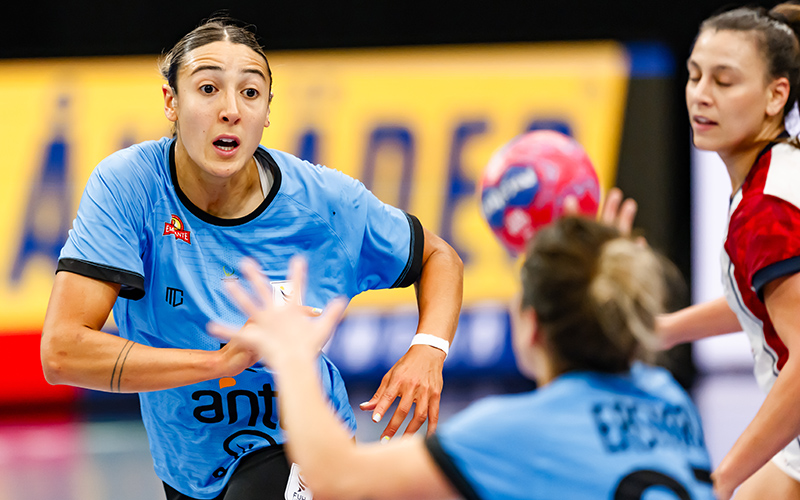
For the 2025 IHF Women’s World Championship, none of Uruguay’s players featured outside of the domestic league. For this IHF Nations Trophy, Uruguay have two players featuring in different South American championships: Martina Tapia plays for Jockey Club in Argentina, while Martina Campos plies her trade at EC Pinheiros in Brazil, the continental champions.
"Uruguayan handball has given me practically everything from a sporting point of view. It allowed me to develop as a player, compete for many years, meet incredible people and also grow as a person," says one of Uruguay’s most experienced players.
"Uruguay has enormous human potential and players with a huge commitment, but to get closer to the strongest teams we need to continue improving the conditions around the sport."
More infrastructure, greater resources, additional training opportunities and more international matches would all help Uruguay sustain the progress made over the past two years, she believes.
And Grieco already knows what she wants to see when the tournament ends.
"It would be important to finish the tournament feeling that we were faithful to our identity, that we competed on equal terms in every match and that we showed the level of handball Uruguay has been building, always with that 'Garra Charrúa' that represents us," says Grieco
"Obviously, we are travelling with the ambition of being among the top teams. If we achieve that objective and, in addition, grow as a team, consolidate our game and continue gaining experience and strengthening our systems, I think we can say that Lima was really an important step for Uruguay."