

IHF Women's Handball Working Group holds inaugural meeting in Pitești
11 Aug. 2026
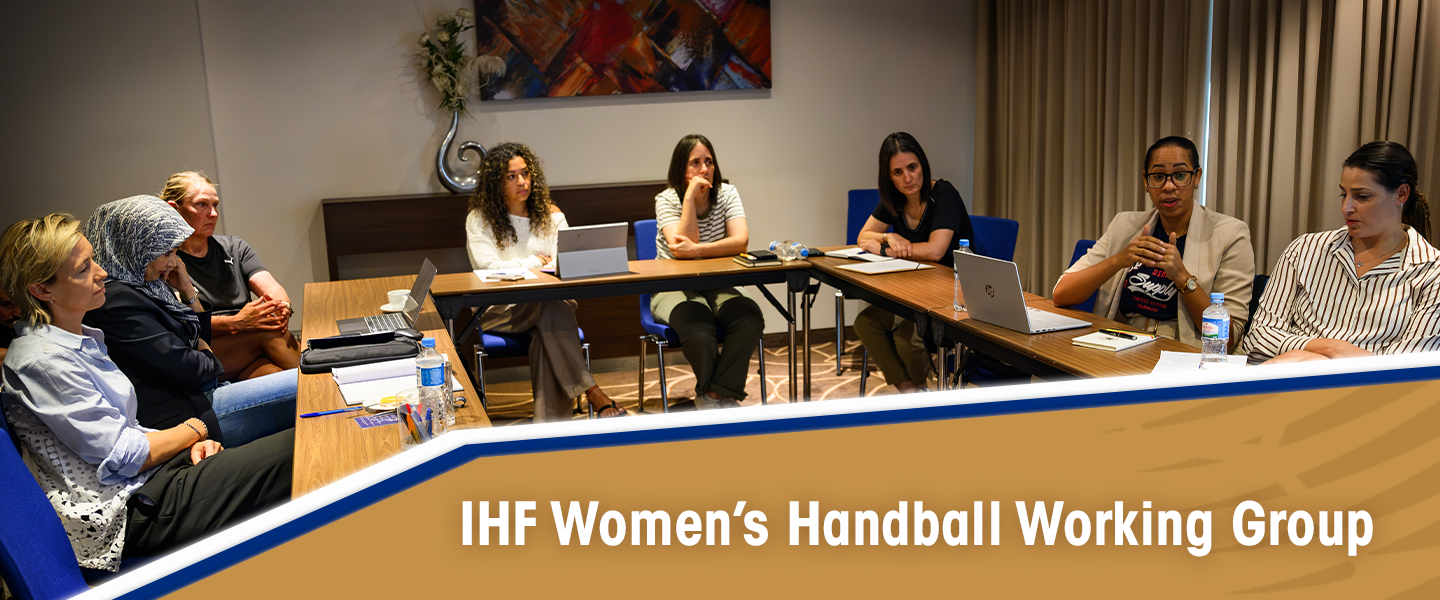
While the final matches of the 2026 IHF Women's Youth World Championship were being played in Pitești, another important milestone for the future of women's handball was taking place away from the court.
Over the closing weekend of the championship, the newly established IHF Women's Handball Working Group held its inaugural meeting, bringing together its eight members in person for the first time since the group's creation was approved by the IHF Council in May 2026 in Basel.
The meeting marked the official launch of the Working Group's activities and represented the first step in implementing the IHF Four-Year Plan 2026–2029 for Women's Handball, a strategic initiative designed to strengthen the role of women across all areas of the sport.
Chaired by Norwegian goalkeeping legend Katrine Lunde, the Working Group brings together a broad range of experience from across the global handball community. Alongside Lunde, the members are former international players Nair Filipe Pires de Almeida Vilaca (Angola) and Eduarda Amorim (Brazil), Asian Handball Federation Ethics Commission Chair Mitra Noori (Islamic Republic of Iran), Handball Canada Board Secretary Saribel Deslauriers, Denmark women's national team coach Helle Thomsen, and former French international referees Julie and Charlotte Bonaventura.
Representing different continents and professional backgrounds, the members contribute expertise acquired as elite athletes, coaches, referees, delegates and sports administrators, ensuring a comprehensive perspective on the future development of women's handball.
The first sessions focused on introducing the Working Group to the International Handball Federation's governance structure, competitions and existing development programmes, providing members with a common understanding of the framework within which the group will operate during the next four years.
IHF President Dr Hassan Moustafa also attended the inaugural meeting in Pitești, where he expressed his full support for the newly established IHF Women's Handball Working Group. During the discussions, Dr Moustafa reaffirmed the International Handball Federation's commitment to the continued development of women's handball worldwide and highlighted the importance of the Working Group in strengthening opportunities for women throughout every level of the sport.
For Lunde, who only retired from her illustrious playing career a few months ago, chairing the Working Group represents another opportunity to give back to the sport.
"First of all, I'm really honoured and happy to be part of this group. We are eight women with different backgrounds, coming from different continents, and I think that's one of our greatest strengths. We all want to open the sport up to even more girls and women," said Lunde.
"Our goal is not only to encourage more girls to play handball, but also to see more women become coaches, referees, delegates and leaders within the sport. At the most basic level, we simply want more women to be involved in handball, because we all love the game."
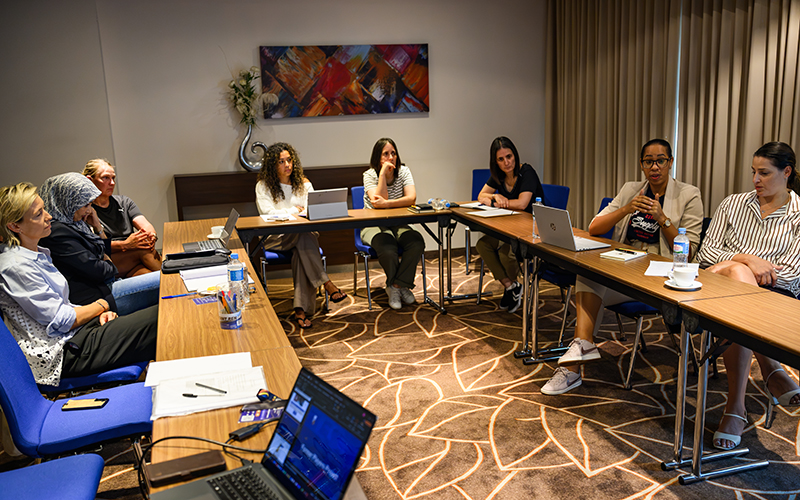
Attention then turned to defining strategic priorities and identifying concrete initiatives that can support the implementation of the Four-Year Plan. Rather than serving solely as an introductory meeting, the gathering allowed members to begin shaping the group's programme of work and establish a roadmap for the coming months.
One of the Working Group's flagship projects focuses on supporting former elite players as they transition into new roles within handball. The objective is to provide women approaching the end of their playing careers with clear information about opportunities to become coaches, referees, delegates or administrators, ensuring that the knowledge accumulated during years of elite competition remains within the sport.
To support that objective, the Working Group discussed developing dedicated educational resources, including videos, interviews and social media content showcasing the daily work of referees, delegates and other officials at IHF events. The initiative will also include specialised education opportunities, with two IHF Former Players Coach Licence Courses already planned for next year in cooperation with the IHF Commission of Coaching and Methods.
Another important topic was the role of IHF competitions as platforms for development beyond the matches themselves. Members exchanged ideas on how future Women's World Championships can evolve into broader festivals of handball, creating activities designed to introduce more children - and particularly girls - to the sport while strengthening the connection between elite competitions and grassroots participation.
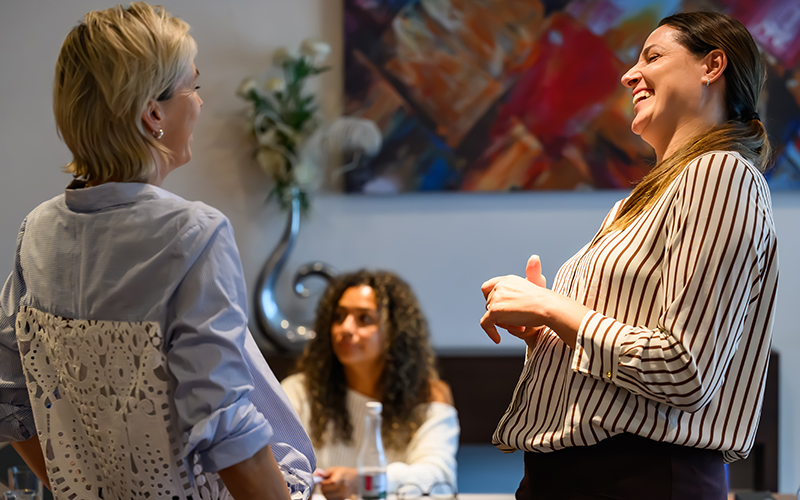
Increasing the number of girls entering handball also emerged as one of the Working Group's long-term priorities. Members agreed to develop a dedicated international campaign aimed at attracting more girls to the sport, particularly in regions where women's handball continues to grow and participation opportunities remain limited.
The discussions also covered communication strategies. Alongside expanding social media activities, the Working Group explored the creation of a dedicated section on the IHF website serving as an information platform for girls and women in handball, bringing together educational material, development opportunities and inspirational stories from across the global handball community.
A central topic throughout the discussions was the recognition that the development of women's handball differs significantly across continents and national federations. While some countries already benefit from well-established structures for female players, coaches and referees, others remain at an earlier stage of development. Consequently, the Working Group agreed that future initiatives must be sufficiently flexible to address the specific needs of different regions while remaining aligned with the overall objectives of the IHF.
"The challenges are not the same everywhere. That's precisely why this group has been put together with members from different continents and different backgrounds," said Lunde.
"We want to create something that benefits the entire sport. We know we have to move one step at a time, but our overall goal is clear: to inspire more girls and women to become involved in handball."
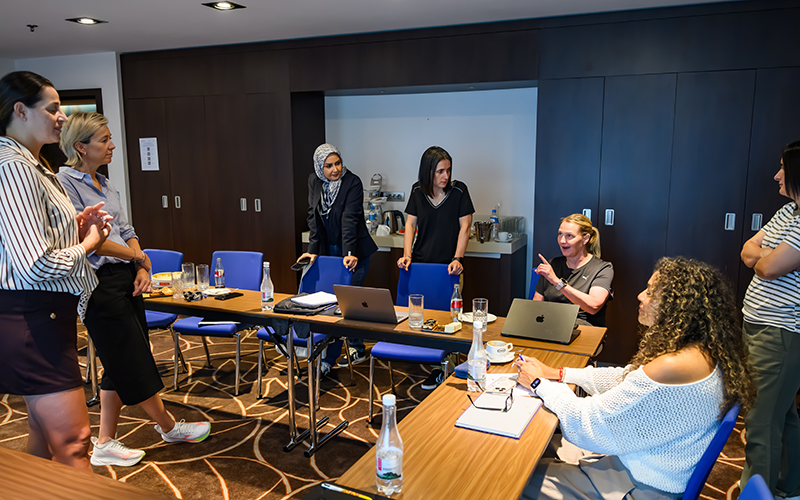
The importance of increasing the visibility of women's handball also featured prominently throughout the discussions. Members underlined that greater media exposure, stronger digital communication and enhanced promotion of female role models are essential to encouraging more girls and women to participate in the sport, both on and off the court.
Another key objective identified during the meeting was the promotion of women's representation throughout the entire handball ecosystem. Alongside athlete development, the Working Group emphasised the importance of increasing opportunities for women in coaching, refereeing, administration and leadership positions within national federations, continental confederations and the IHF itself.
The meeting also addressed legal aspects affecting women's participation in handball, including contractual protection related to pregnancy and motherhood. Members agreed that supporting women throughout every stage of their careers - from youth players to elite athletes and beyond retirement - must remain one of the Working Group's guiding principles.
For Lunde, that subject is particularly close to her heart.
"I hope we can show that it's possible to be a successful player, referee or coach while also having children and a family life. Those two parts of life shouldn't be separated, they should be able to exist together," she said.
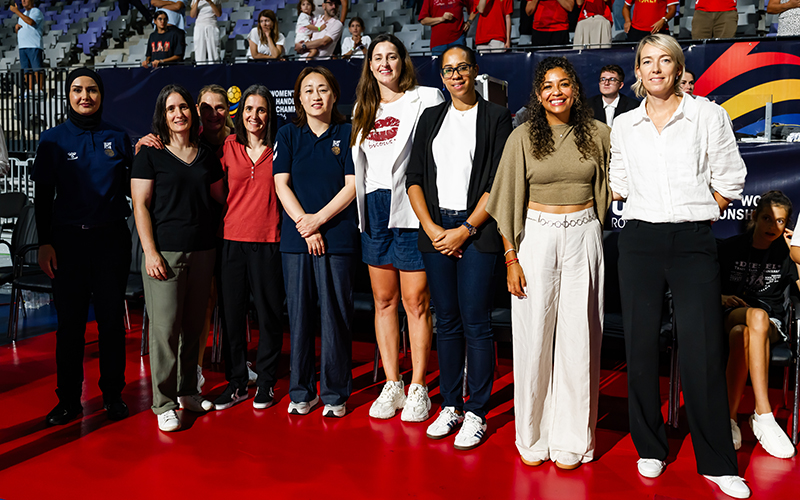
The meeting concluded with the Working Group participating in the medal ceremony of the 2026 IHF Women's Youth World Championship, presenting the All-Star Team awards to the tournament's outstanding players.
Two further meetings are scheduled before the end of 2026, during which the Working Group will continue refining its proposals before submitting recommendations to the IHF Council and, where appropriate, the IHF Executive Committee.
Under its mandate, the Working Group will continue supporting the implementation of the IHF Four-Year Plan 2026–2029, with the objective of creating sustainable opportunities for women and girls at every level of handball, both on and off the court.
"We have big ambitions, but it's important to move step by step," Lunde concluded. "We want to do our best, focus on the most important priorities first and build something that can make a real difference for the future of women's handball."