

"I never thought I'd play sport again": Brianna Keyes' strenuous road back to handball
15 Sep. 2026
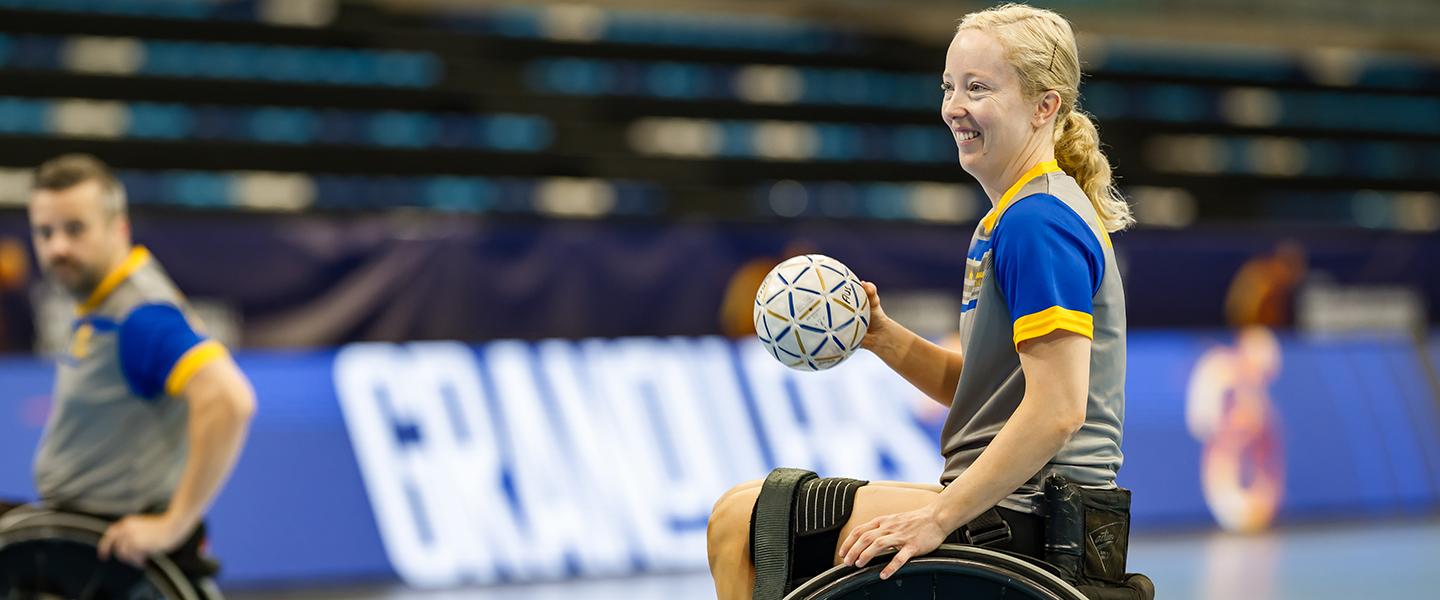
When Brianna Keyes sings the Australian national anthem in their opener at the 2026 IHF Wheelchair Handball World Championship, the moment will certainly carry a different weight than it did six years ago.
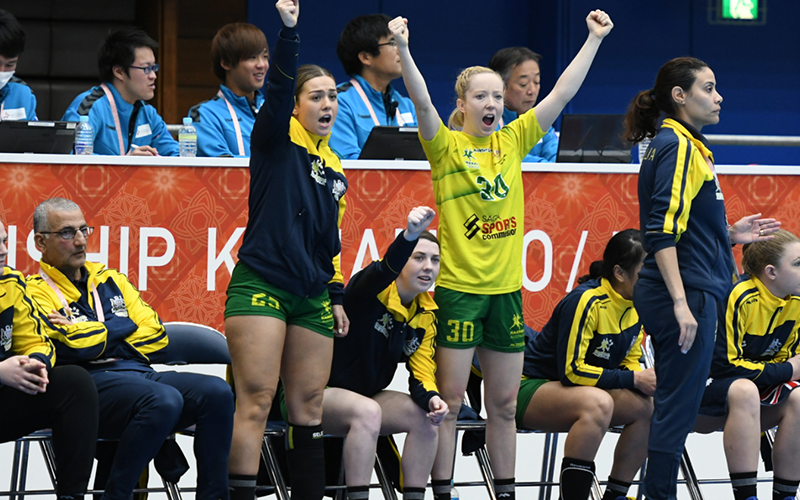
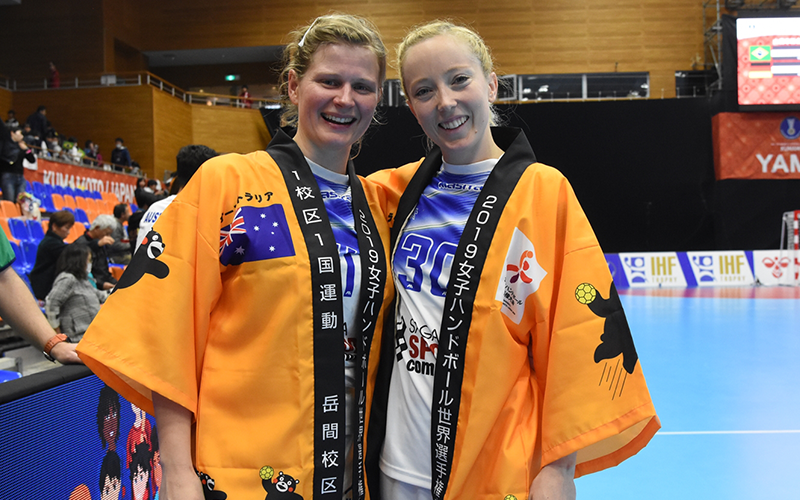
Keyes knows what it feels like to stand on the court at a World Championship. She first did it at the 2019 IHF Women’s World Championship in Japan, where Australia finished 24th after losing all seven of their matches. At the time, it was simply the latest step in a career that had already taken her to the international stage.
Now she is back at a World Championship, but the circumstances could hardly be more different.
Keyes is part of the Australian team making its debut at the IHF Wheelchair Handball World Championship, and in Granollers she is returning to elite handball after having believed for years that her playing career was over.
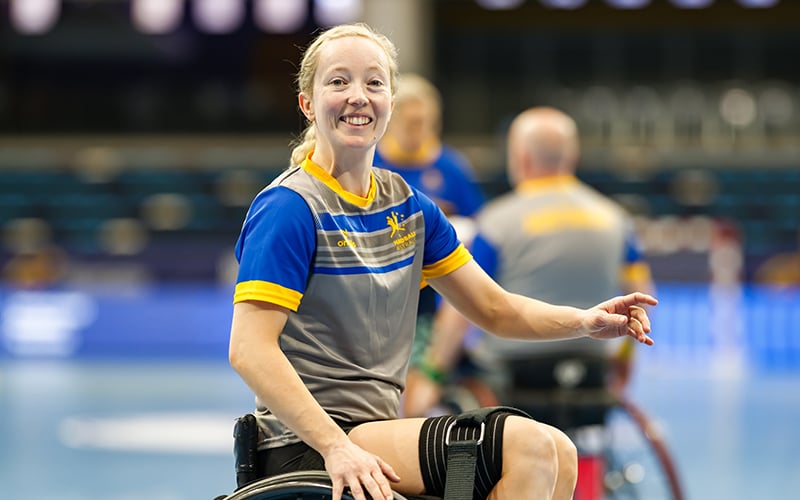
“I’m so grateful and I’m excited to experience this in a new light,” Keyes says in Granollers, one day before the start of the competition, after Australia shared the court with world champions Egypt for a test match.
“When I went to the Worlds in able-bodied, I never thought I’d play sport again, let alone handball. When I found out this was an opportunity, it was like it was meant to be,” says Hayes.
But how did the Australian player get here? The story began with an injury.
Keyes suffered a serious ankle injury while playing handball. Two corrective surgeries followed, but neither restored the ankle sufficiently, leaving her with a permanent impairment. For the athlete standpoint, who had spent years training and competing, the consequences were substantial. Running was affected. Agility was affected. Jumping was affected. Eventually, the impact extended beyond elite sport.
“What made it so hard was that I didn’t just lose elite level sport. I couldn’t play any community sport or kick the ball around with my daughter at the park, which I had always imagined doing,” Keyes says.
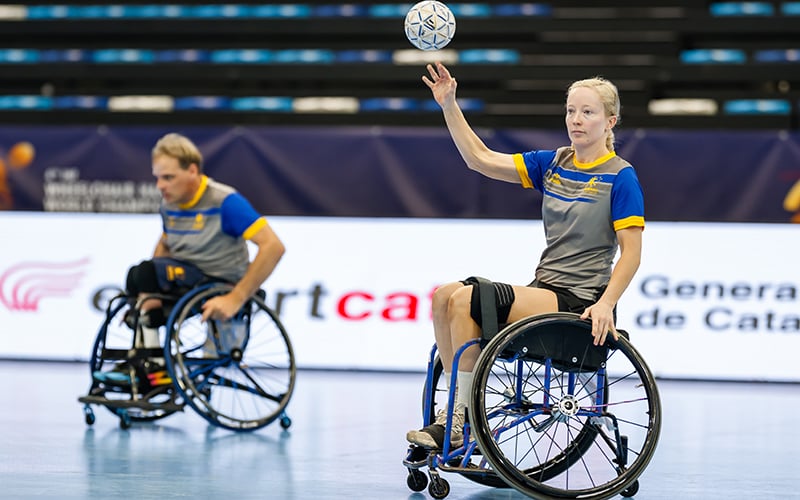
For years, she believed she would not play handball ever again. But there was another reason why the possibility of wheelchair sport did not immediately present itself. Keyes says she had always believed that someone had to be a wheelchair user to participate.
“I had the misconception that you have to be in a wheelchair to play wheelchair sports,” she says.
“To the eye, I have a bit of an invisible injury to some,” she explains.
That combination meant wheelchair handball was not something she had considered until relatively recently. Once the opportunity appeared, however, it offered Keyes a route back into the high-performance environment she had missed.
“I feel like me again. Being on the court, being in the high-performance environment, I’m super excited to be back,” adds Keyes, with a big smile on her face.
The return has come quickly. Keyes has been using a wheelchair for only three months, meaning that the World Championship in Spain is arriving at a very early stage of her transition.
“I’m still learning in the chair,” she says. “It’s an incredible learning curve for me.”
There is an obvious familiarity because the sport itself remains handball, but much of the way she moves and plays has changed.
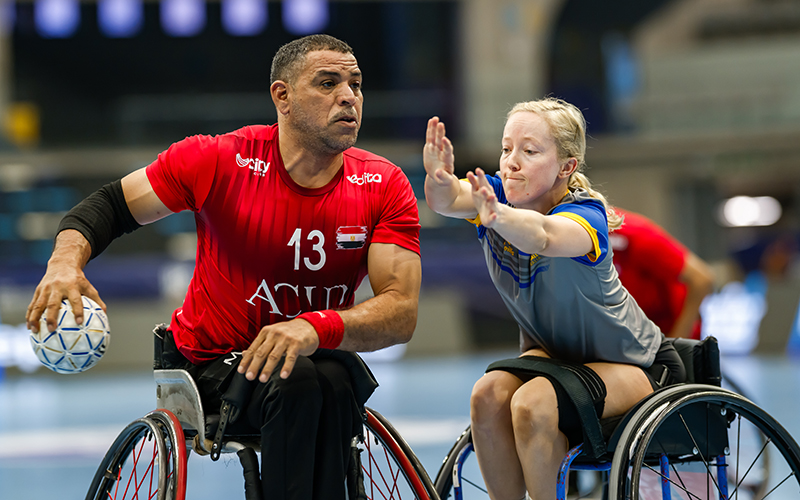
“There are some incredible athletes here and I think I just want to soak it up and come back again in a couple of years and hopefully blow everyone away with how much we’ve improved in that time,” adds Keyes.
That is part of what makes Australia’s appearance in Granollers. The team is entering the IHF Wheelchair Handball World Championship for the first time, becoming the first team from Oceania to compete at the event.
For Keyes personally, it means returning to international competition while also helping establish something new in Australian handball. But for the Australian handball in general, it is also another step towards the Brisbane 2032 Olympic Games and Paralympic Games.
Keyes spent around 15 years representing Australia, beginning at the 2010 Youth Olympic Games in Singapore before progressing to the senior national team. By the time she reached the 2019 World Championship in Japan, international competition had become familiar. The experience in Japan nevertheless left a lasting impression.
“Kumamoto itself, the Japanese culture is incredible. The fans there, I think being in Kumamoto itself is something you can’t really replicate. We had so many lovely fans that were following us around even after the tournament,” remembers Keyes.
And she hopes that is replicated also in Granollers.
“Everyone is really interested. ‘Hey, what are you guys here for and what’s happening?’ And we’re like, come watch us, come cheer for Australia.”
In Granollers, Australia will again have family members in the stands, even after a long journey from home. This time, for Keyes, there is someone particularly important in the crowd. Her daughter is two years old and made the trip to see mum play again at a World Championship.
“She’s got a little shirt that says, ‘Go Mummy Go’,” Keyes says. “She’s been practising the cheering.”
It is one of the details that has changed the meaning of representing Australia.
“I think you take it a bit for granted. I think I did as well because I spent 15 years representing Australia and travelling the world,” she says.
“Then when that’s taken away from you, coming back and honestly just singing the national anthem, being here, seeing my daughter…”
For Keyes, those moments now matter as much as what happens during the match. The opportunity also comes at an encouraging time for Australian handball.
Just days before the wheelchair team began its World Championship campaign, Australia won the inaugural Women’s IHF Nations Trophy – Oceania, securing their place in the 2026 AHF Women’s Asian Championship and continuing their pathway towards the 2027 IHF Women’s World Championship. The coach leading the wheelchair team, Eoin Murray, is also the coach of that successful women's side.
“Our coach is also the coach of that women’s team, so he’s flying on Tuesday, he’s coming off a high. He’s coming off a win. So I think we are in really good hands.”
But Keyes is particularly interested in what happens beyond the current senior teams.
Australia is developing junior programmes and grassroots opportunities, and she sees a growing number of children entering the sport at an age when she herself was only beginning.
“I only started playing at 16, which is too late,” she says.
Now, in Canberra, her home city, children are already playing handball at eight years old.
“We have kids that are eight playing, which is just amazing. Those kids in 10 years’ time are really going to be filtering up,” adds Australia’s player.
But until then and, maybe, until her daugheter will take up handball too, Keyes is living her dream once again. This time in a wheelchair, but with the same ambition and grit.
“I never thought I’d play sport again, let alone handball. I just want to soak it all up,” she concludes.