

"Hard work never betrays you": Jang So Hee's philosophy is driving Japan's rise
04 Aug. 2026
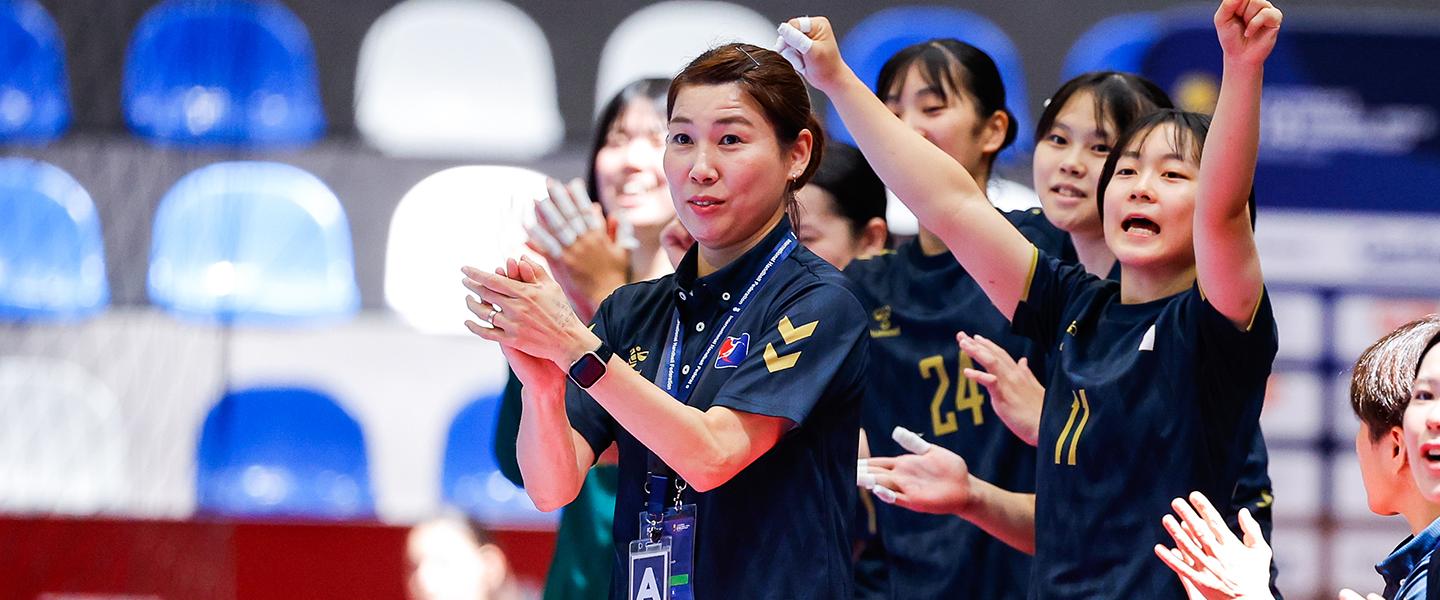
Twenty-two years ago, Jang So Hee stood on the Olympic podium with the Republic of Korea after winning silver at the Athens 2004 Olympic Games.
Today, her mission is very different.
No longer a player, Jang is shaping the next generation from the bench as the head coach of Japan's women's youth national team.
Having guided Japan to an eighth-place finish at the previous IHF Women's Youth World Championship in 2024,, she returned to Romania 2026 determined to help another talented group compete with the world's best, narrowly missing out on the quarter-finals but once again proving that Asian handball continues to close the gap on the traditional European powers.
Drawing on a career that took her from Olympic finals to international coaching and continuous learning through the IHF Coaches' Licence programme, Jang believes success is built on relentless hard work, lifelong learning, as well as creating an environment where every player can reach her potential.
“Having experienced handball in both countries, I have come to understand the differences between them. Broadly speaking, Korean handball places more emphasis on individual play, while Japanese handball is more team-oriented. The playing styles and environments are different,” says Japan’s coach about the differences between the two sides.
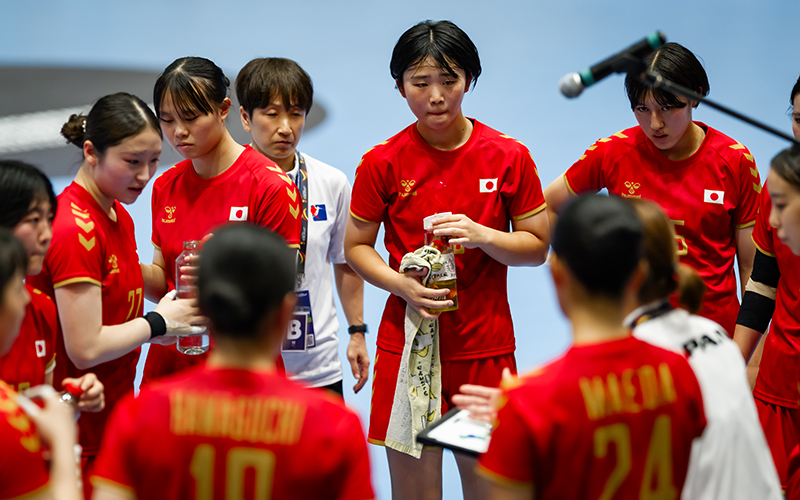
At China 2024, Japan drew with the Republic of Korea and beat the Netherlands and Canada in the preliminary round, following up with a loss against France and a win against Brazil in the main round, enough to get them to the quarter-finals.
There, Japan lost to eventual champions Spain before narrowly missing out on a top-five finish, suffering defeats to Serbia and Croatia, with the latter coming after a penalty shoot-out.
“Reaching the top of the world is never easy. Hard work never betrays you. If you train as hard as you possibly can, you will not be left with regrets, even in defeat,” says Jang.
Training hard is, therefore, Japan’s mantra and the results have followed in this edition of the IHF Women’s Youth World Championship, where Japan made again the main round, with wins over Angola and Brazil and a narrow loss, 30:32, against Slovakia, the European champions.
In the main round, Japan lost against Switzerland, 31:41, but bounced back and finished third in their group, with a 34:30 win over Slovenia, as they have the sixth ebst attack in the competition, with 165 goals scored, an average of 33 goals per match.
“International handball is becoming faster and faster. Japanese players tend to be smaller in stature, so in attack we try to find and attack the gaps. In defence, we work so that two defenders can cooperate to contain one attacker. They may not be the tallest group I have worked with, but I think they are the fastest,” says Japan’s coach about her current team.
Over the last years, Japan have been on an upward path in the senior level, winning the Asian Championship in 2024, and finishing 17th and 13th respectively at the 2023 and 2025 editions of the IHF Women’s World Championship.
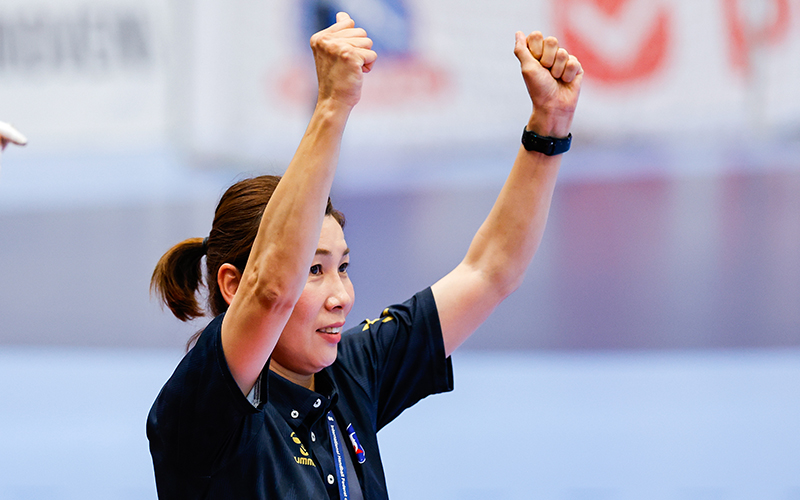
Over the last six years, they have beaten Romania, Croatia, Austria, Denmark and Switzerland, also drawing with Hungary, with several teams which are usually finishing in the top-10 of the world handball flagship competition failing to beat the Asian side.
And the principle to win is easy: win balls in defence, which then can be exploited in attack.
Two of Japan’s players - Rio Hamaguchi (36 goals) and Hina Miura (34 goals) – are between the top 10 scorers of the competition, proving that the Asian side still produces talented players, who are ready to make a step further.
“I want this team to play fast handball. I want people to immediately recognize how quickly we turn defence into fast breaks. For this team, I try to make the most of the qualities each player already has, while bringing the team together and ensuring that we function as one,” says Jang.
But if this trend is to continue, Jang considers a necessary requirement: “Both Japan and Korea need to invest from the youth level, build development systems and nurture players step by step.”
Jang So Hee was also one of the participants at the IHF A-Licence course which took place in Tokyo between 12 and 20 July 2026, taking part in a course which saw 22 participants from all over Asia.
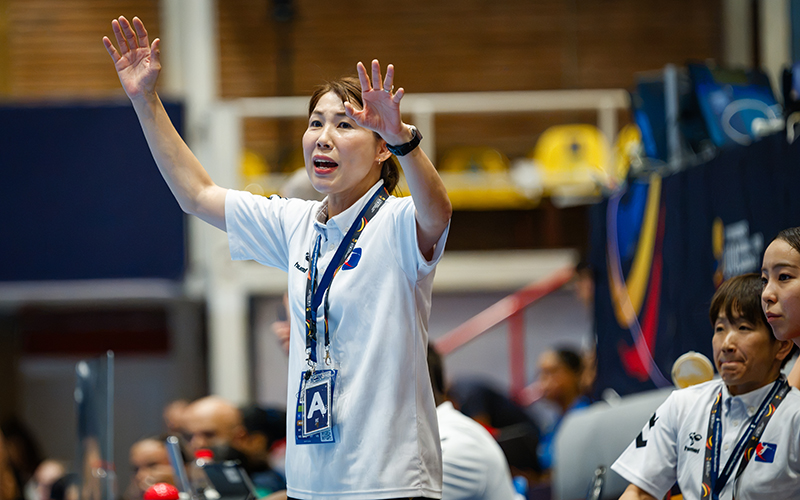
This proved to be an invaluable experience for Jang, who now applies the knowledge in practice with the Japan team.
“I learned not only about the playing side of the game, but also about psychological aspects and the latest trends attracting attention around the world. What I learned was extremely useful at this World Championship. It was a very valuable experience. It is extremely important. I believe learning continues throughout our lives.,” says Japan’s coach.
Moreover, she is one of the 10 female coaches in the 32-team 2026 IHF Women’s Youth World Championship, a record number spans four continents.
In Africa, Nadia Benzine leads Algeria, Katia Santos is in charge of Angola, and Clementine Mara Titi guides Guinea. In Asia, Jang So Hee is at the helm of Japan. Europe fields the largest contingent, with Petra Vitkova coaching Czechia, Sandra Fernandes leading Portugal, Vesna Bojkovic in charge of Serbia, Cristina Cabeza guiding Spain, and Victorina Bora leading host nation Romania. And in North America and the Caribbean, Selene Hernandez Sifuentes is charge of Mexico's youngest generation of talent.
“I believe women’s teams should be coached by women. Female coaches are needed not only for matters relating to play, but also to support players in their daily lives,” says Jang.
“As I know from my own experience, marriage changes a woman’s life, and having children can make it even harder to continue working in handball. Recently, however, we have begun to see more female coaches. Their numbers are gradually increasing, and we need to create an environment in which more women are able to step forward and stay involved.”
And Jang also has one advice for the players who want to become a coach: "A key part of coaching is finding ways to pass your knowledge and experience on to your players and help them absorb it. Do not be afraid of failure. Gaining a wide range of experiences is the most important thing."