

Five things to remember after the 2026 IHF Women's Under-16 World Championship
27 Oct. 2026
The 2026 IHF Women's Under-16 Handball World Championship took place between 16 and 24 October in Agadir, Morocco, with 16 teams at the start. After 40 matches, Germany were crowned champions, winning against Hungary in the final, to lift the inaugural title of the competition.
But what did we learn after nine days of competition?
Four continents in the top-10
Teams from five continents – Africa, Asia, Europe, North America and the Caribbean and South and Central America – lined up at the start and the competition was fierce, providing some highly-entertaining matches. At the end, four of these continents ended up in the top-10, with Europe having five teams, Asia boasting three teams, while Africa and South and Central America sending one team each in the top-10 of the final standings.
Europe took the lion’s share, sending three of the five participating teams on the podium, as Germany won gold, Hungary ended up with silver, while Russia took the bronze medal. Belarus finished sixth, with Switzerland sealing the ninth position.
Asia had three teams in the top-10, including the People’s Republic of China on the fourth place. China won all three matches in the preliminary round, but conceded the semi-final against Hungary, 36:40, and then the bronze-medal match against Russia, but showed clear promise for the future. Kazakhstan ended up seventh, while Uzbekistan also finished eight, winning two matches in the competition.
Paraguay, showing clear signs of improvement, ended up on the 10th position, displaying a fantastic attacking display, scoring 35 goals per match in the competition, and finishing as the best team from South and Central America.
Over 66 goals scored per match
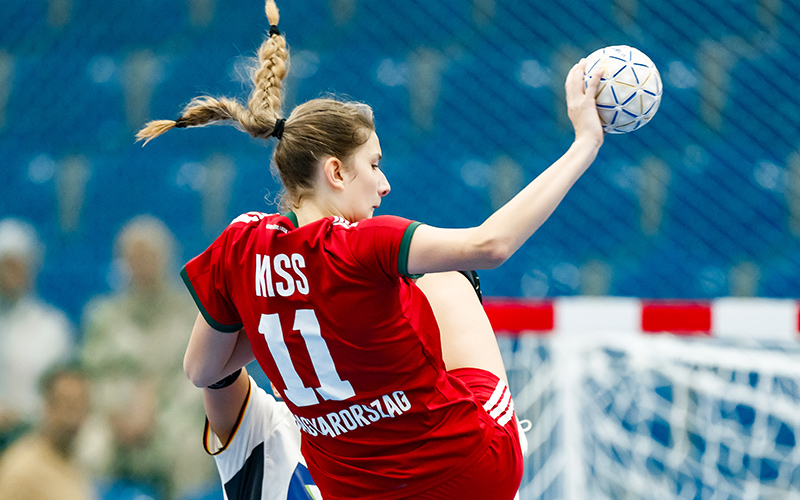
The competition was played under modified rules designed to prioritise player development. Teams were not permitted to use the seven-against-six attacking formation or replace the goalkeeper with an additional outfield player while serving a suspension. Goalkeepers were also prohibited from crossing the centre line. In addition, a resin-free ball was used to support the players’ technical development.
Nevertheless, the attacking output of the players has been fantastic, with 2662 goals scored throughout the competition, an average of 66.55 goals per match. The best team in attack was China, with 226 goals scored, or an average of 45.2 goals scored per match, while Germany followed close, with 213 goals (42.6 goals per match), and Guinea finishing third, with 184 goals (36.8 goals per match).
The top seven scorers were from teams outside Europe, with China’s Meishan Du topping the charts, with 54 goals, one more than Kazakhstan’s Nurdana Kyrgyzbay and nine more than Fatoumata Naby Soumah from Guinea, with 45 goals.
A new platform for the next generation
The inaugural IHF Women’s Under-16 World Championship marked an important step in the development of young handball players, giving them the opportunity to compete internationally at an earlier age. Across 40 matches in Agadir, the participants faced opponents from different continents, experienced the pressure of knockout handball and had to adapt to different playing styles and tactical approaches.
The competition was designed with player development at its core. Modified rules, including the absence of seven-against-six attacking play and the use of a resin-free ball, placed greater emphasis on technical skills and individual decision-making. The tournament therefore provided an environment in which young players could test their abilities, gain international experience and identify areas for further growth.
For many of the participants, this was an early step on the international pathway, with opportunities to progress through the youth and junior ranks before potentially reaching senior national teams. The inaugural edition established a new platform for that journey, bringing together emerging talent from five continents and giving the next generation of women's handball players a stage on which to develop and show their potential. It also completed the competition pyramid, ending the circle started with the senior, junior and youth World Championships.
Four nations in the All-Star team
The inaugural edition of the IHF Women’s Under-16 World Championship offered a chance to see some of the players who could shape the future of the women’s game. China’s Meishan Du led the scoring charts with 54 goals, finishing one ahead of Kazakhstan’s Nurdana Kyrgyzbay, while Guinea’s Fatoumata Naby Soumah scored 45. All seven of the competition’s top scorers came from teams outside Europe, a reminder of the attacking talent emerging across the world.
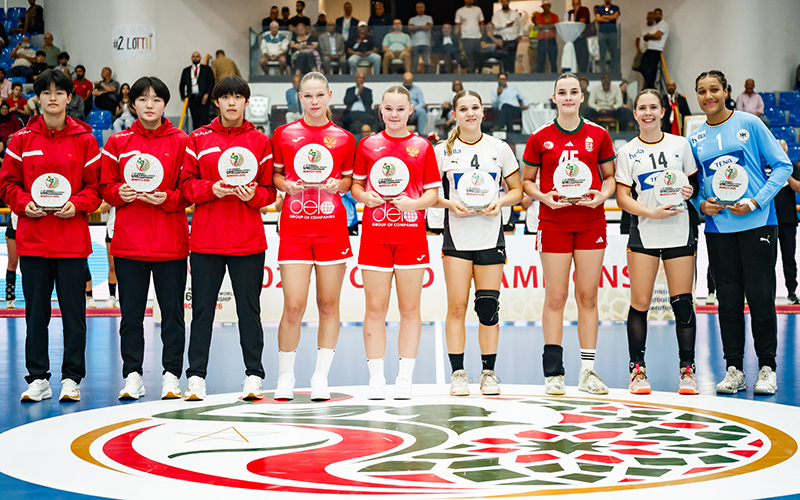
The All-Star team reflected that variety, with players from Germany, Hungary, the People’s Republic of China and Russia recognised for their performances in Morocco. Hungary’s Hanna Molnár was named the Most Valuable Player, while Germany’s Nora Lueg and Taya Nagel earned recognition on the right wing and at right back. China’s Yiran Song and Shiman Li were selected at centre back and line player, respectively, while Russia’s Ekaterina Astafeva and Elizaveta Sapozhnikova took the left wing and left back positions. Germany goalkeeper Mercy Hacker completed the selection.
A social media hit
The 2026 IHF Women’s Under-16 World Championship demonstrated the growing appeal of youth handball, generating an impressive digital audience and bringing the next generation of players to the attention of fans around the world.
Across the monitored IHF channels, the competition accumulated 126 million views, reached 29.8 million viewers and generated almost over one million content interactions. The tournament also generated 42,300 followers, further expanding the digital audience for the sport.
The scale of this audience is particularly significant given the age of the players. The 2026 IHF Women’s Under-16 World Championship represented an opportunity to introduce emerging talents to a wider public, build their profiles and create lasting connections with the next generation of handball supporters. Every highlight, goal and decisive moment offered a chance to showcase the personalities and potential of players who could become prominent figures in the sport in the years ahead.