

Ferraris, Alexandre Dumas and handball: How does Dusjhebaev feel in his "dream job" in France
14 May. 2026
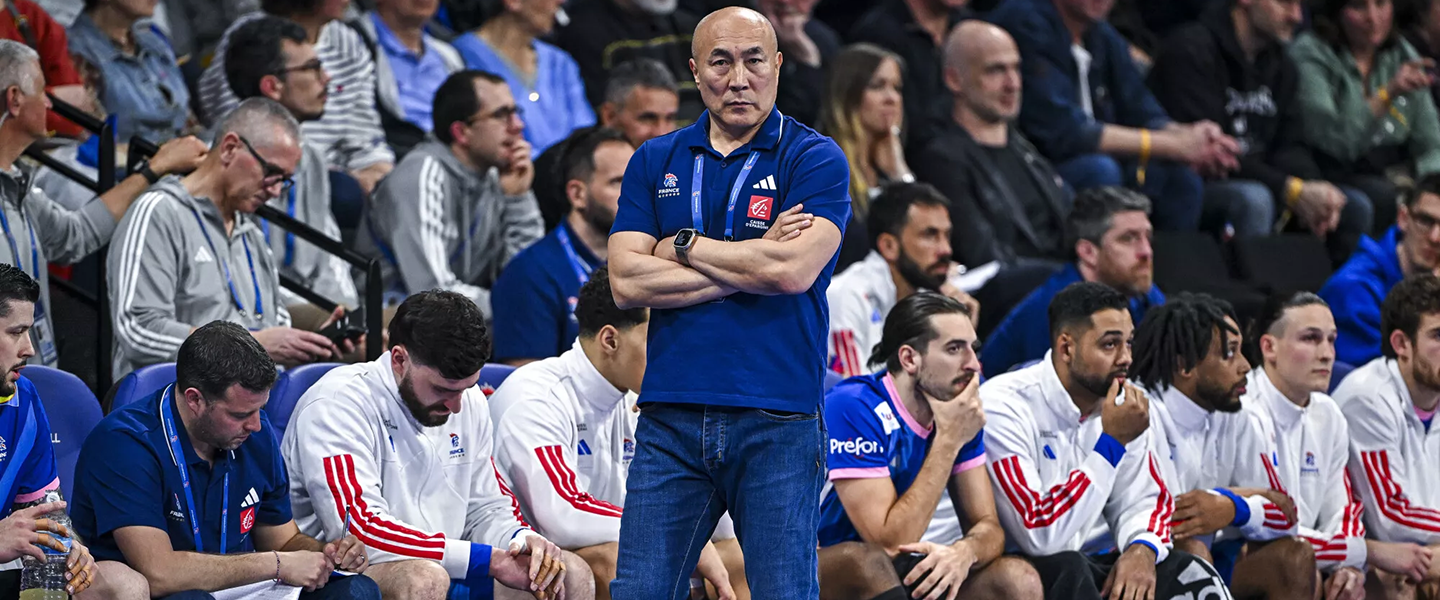
Since 1985, France men’s senior national team had only four coaches: Daniel Constantini (1985-2001), Claude Onesta (2001-2016), Didier Dinart (2016-2020) and Guillaume Gille (2020-2026).
But for a team which was eliminated from the Paris 2024 Olympic Games in the quarter-finals, took the bronze medal at the 2025 IHF Men’s World Championship and could only muster a seventh-place finish at the EHF EURO 2026, the past years have been a true roller-coaster.
Hence the seismic appointment of Talant Dujshebaev in March 2026, a move that has reverberated through the handball world.
Dujshebaev is definitely seen as one of the greatest minds of modern handball. But for France to tear out the blueprint they held throughout the last decades and hire a foreign coach, it really speaks volumes of the situation they thought they were in.
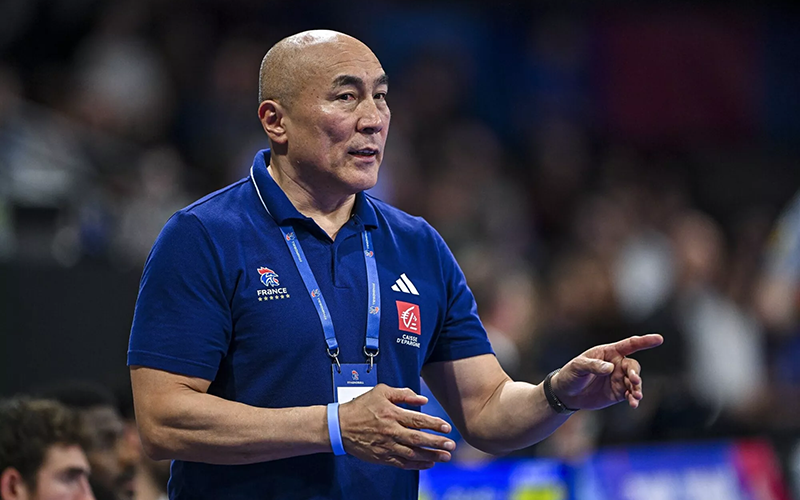
The Kyrgyz-born former Spanish international, an IHF Male World Player of the Year in 1994 and 1996, is only the second foreign coach appointed at the helm of France men’s senior national team in history. The previous one? Legendary German coach Bernhard Kempa in 1958, almost 70 years ago.
“Above all, I am proud to have been chosen for France, and you have to look at the history to understand why. In all the history of French handball, only in 1958, when handball was still played 11 against 11, on a big outdoor field, did a foreigner – Bernhard Kempa - serve as coach for two months at the World Championship. From then on, never again has a foreigner had this privilege in the seven-against-seven era. So for me, it is, as they say, a gift from the Lord, something that has fallen from the sky. There is no other way to interpret it,” says Dujshebaev for ihf.info.
Indeed, France have the know-how and an immense resource of talent at disposal. Over the past 31 years, they became World Champions in 1995, 2001, 2009, 2011, 2015 and 2017. They were gold medallists at the Beijing 2008, London 2012 and Tokyo 2020 Olympic Games. And they also secured the European Championship title four times, in 2006, 2010, 2014 and 2024.
It was such an honour for Dujshebaev, who previously was a national team coach for Hungary (2014-2016) and Poland (2016-2017), that he compared the appointment to “getting the keys to a Ferrari”.
“France is above all natural talent, a physical talent with a great deal of individual quality. As I said, if we bring the positive things together and add a little more technical and tactical rigour, and, above all, discipline, then I believe we will have every possibility to compete with the best and return to the highest level,” says the new France coach.
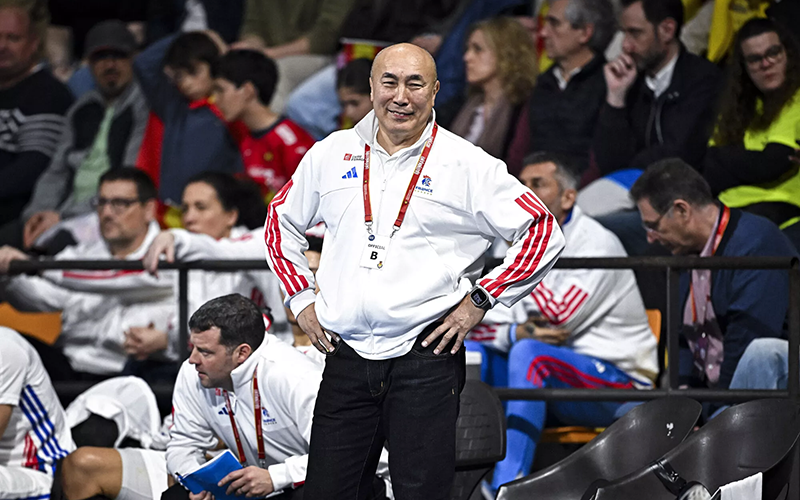
However, while it might not be a totally new job for Dujshebaev, the role of a national team coach is totally different to what he was used to over the past decade. Between 2014 and 2026, he was the coach of Polish side Industria Kielce, where he won nine domestic titles, seven domestic Cups, plus the EHF Champions League Men in the 2015/16 season.
But now, his job requires him to scout, analyse and select the best France players all over Europe, which means an analytical approach, rather than a hands-on one, which Dujshebaev knew from his previous jobs.
“Let's be realistic about how a national team works. During the year, you have only three weeks of actual work - one in March, one in May, one in November - and then ten or eleven days to prepare for a major championship. It is completely different from a club, where you have all the time in the world to prepare, train and embed your ideas over the long term,” says Dujshebaev.
“In the national team, it is short and intense, and you have to be able to open and close your eyes in an instant. That is also why I enjoyed combining it with Kielce before we finished the cooperation, because the two roles of a club coach and a national team coach give very different satisfactions, and together they keep me completely fulfilled as a coach.”
Dujshebaev already made his debut in two friendly matches against Spain in March, where the coach had less than a week to meet his new players. France enjoyed a win, 29:26, and drew, 25:25, in those matches, which helped the team gel and absorb some new ideas, before the doubleheader against Czechia, in the 2027 IHF Men’s World Championship qualifiers.
And in that first official match, France overcame a slower start to basically punch their ticket for Germany 2027, with a clear 37:26 win, before the second leg takes place on Sunday, in Orleans.
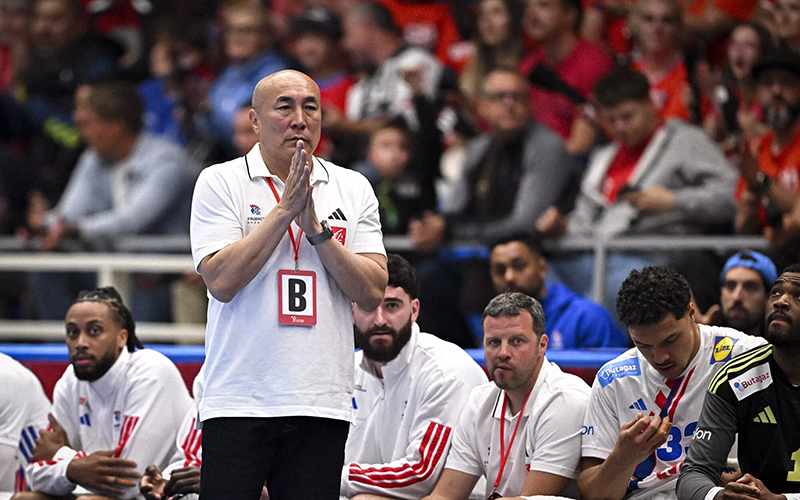
However, just being there, on display, in the 30th edition of the competition where no team has won more titles, is simply not enough for France or for Dujshebaev. Therefore, he already identified teams like Denmark and Germany as the ones to beat in the future.
Let's be honest, it would be foolish to say we are going to win a World Championship winning against teams like the United States or Mexico, with all respect to those countries, as if it were easy. We are talking about one of the great nations in this sport. When you are a French player, there is only Denmark clearly above you, and then Germany, Croatia, and then teams like Portugal, Sweden, Spain, Iceland, Hungary, Serbia and Slovenia - we are right there, capable of fighting for the semifinals. France has been world champion six times. We have to try to return to the podium, and the higher the better. My only realistic goal is the gold medal. Will we finish second or third sometimes? We will see. But the minimum objective, at every tournament, is to reach the semifinals. And as I always say - dreaming is free,” adds the coach.
But taking over France has been a dream – which was free until now – for Dusjhebaev, since he was a little kid.
“First of all, I am proud. Who would have thought that a kid from my neighbourhood would go this far? When I was young, I used to read Alexandre Dumas - the Three Musketeers, the Count of Monte Cristo - and I would dream watching those stories on television. And now I have the opportunity to be in this country and to coach the national team of this country. It is something extraordinary. Much more than a dream come true,” says Dujshebaev.
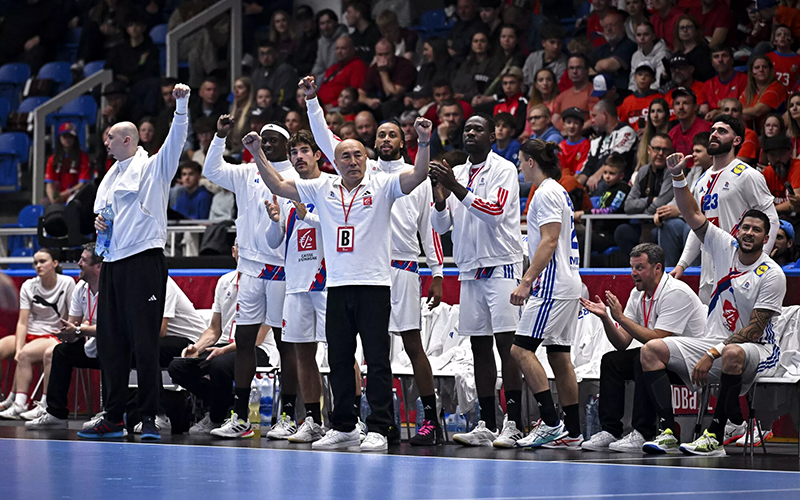
“And now that I am with them, the new dream is to try to conquer everything that is possible. If that means gold, if that means a World Championship and an Olympic Games, then even better. But in life, I always try to set the highest possible goals, knowing full well that in sport it is never guaranteed. If it were, all seven billion people on earth would be Olympic champions and world champions - and that is simply not how sport works. Some days you lose, some days you win. But the goals must always be the highest. The dream of a boy who started playing handball at twelve years old - it has not just come true. Much more has come true.”
Photo credit: FFHandball