

Different team, same Destination: Spain chase another title at the IHF Women's Youth World Championship
09 Aug. 2026
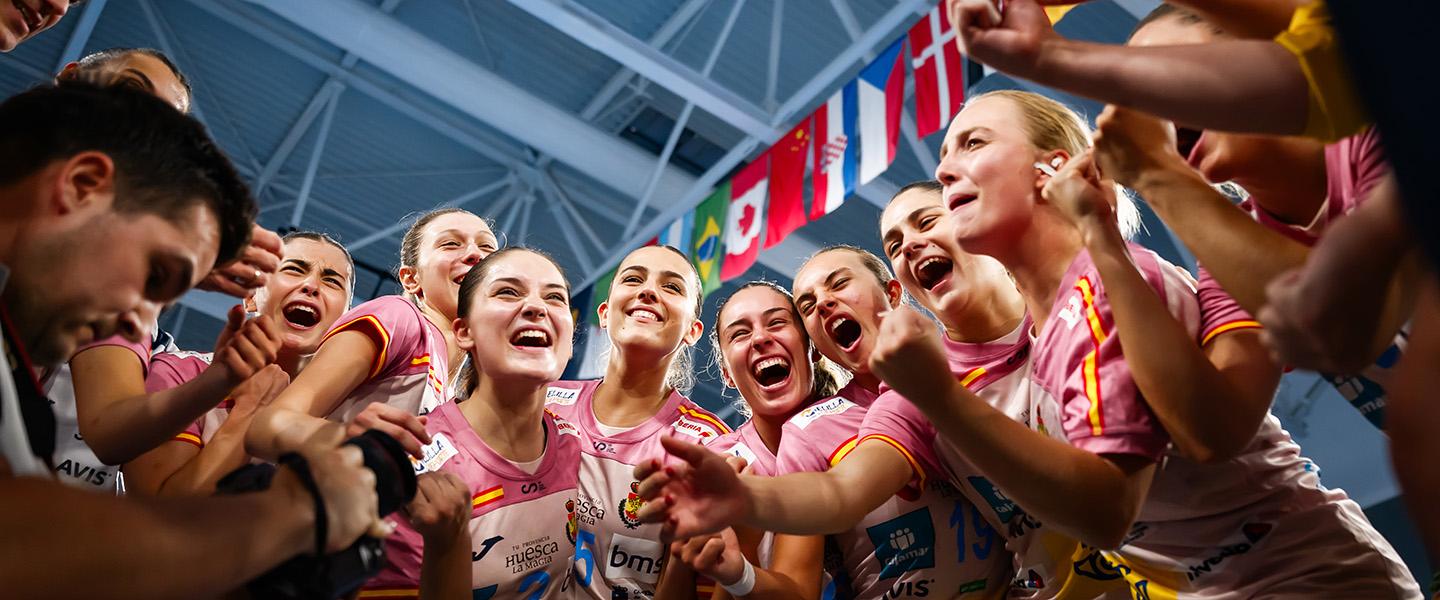
It’s one thing to win the IHF Women’s Youth World Championship once. It’s a totally different thing to secure back-to-back wins.
So far, a single team managed to secure the title in consecutive editions, Russia in 2016 and 2018.
Another team made back-to-back appearances in the final, Denmark, but they lost both in 2022 and 2024, against the Republic of Korea and Spain respectively, with the Scandinavian side missing out by a hair in this edition, after conceding a 25:27 loss against Montenegro in the semi-final.
But Spain are still in the hunt for a repeat win, after they went unbeaten in seven matches, to set up a crunch clash against Montenegro for the title at Romania 2026.
Reaching one final is difficult, but taking a new generation – with different personalities and attributes – to another medal match is a feature which proves that a system can work perfectly, regardless of the players who are in the roster.
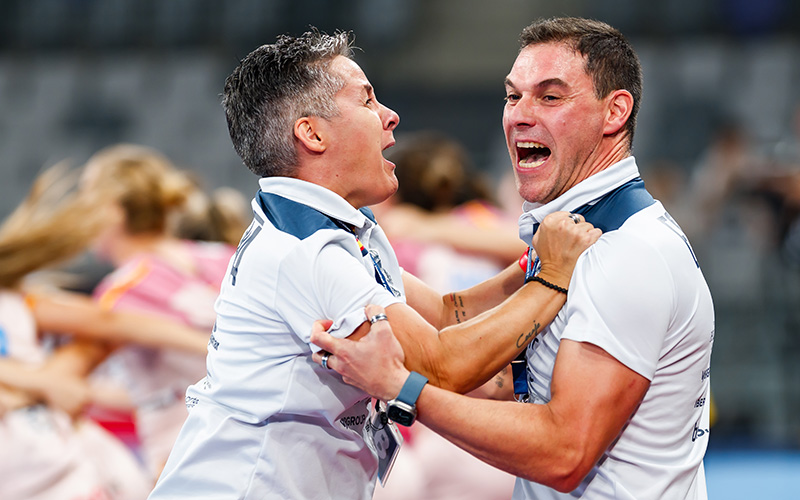
“It is never easy to reach the final of a World Championship, especially with a different generation after winning the title two years ago. I'm also very happy to share this journey with my assistant coach, Luis Miguel Ascorbe. He is an incredibly hard worker, and it's a privilege to work alongside him every day,” said coach Cristina Cabeza, after the semi-final win against Egypt on Friday.
Two years ago, at the 2024 IHF Women’s Youth World Championship, Spain had a stellar generation, providing two players in the All-Star team, MVP Belen Rodriguez, who also made her debut in the senior team in 2025, and centre back Marta Regordan.
Players like goalkeeper Goundo Gassama or Estitxu Rodriguez also carried the load throughout the competition, as Spain delivered strength in numbers, a strong team with a fantastic defence, which eventually went on to seal the title.
This time, the pattern repeated, but with different players.
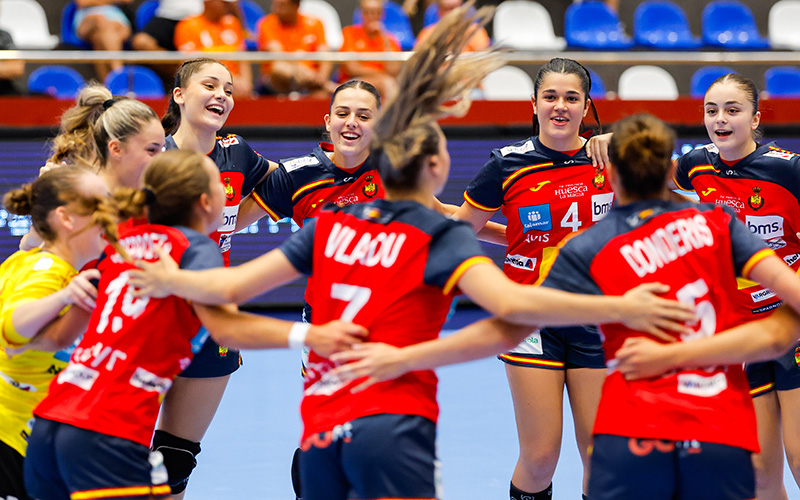
Spain’s top scorer is Lucia Calleja Velasco, who scored 32 goals, enough for the 32nd place in the top goal scorer standings. Their next best scorer is right wing Erika Elena Vladu, with 26 goals.
But Cabeza managed her team to perfection, rotating the players in each match, providing fresh legs in the end of the matches, where Spain have managed to seal a one-goal win against Egypt in the semi-finals, a two-goal win against Switzerland in the quarter-finals, a two-goal win against Montenegro in the main round and a three-goal win against Germany in the preliminary round.
Seven matches, seven wins, but if one takes out the wins against Guinea (27:12) and Uzbekistan (46:22), the average margin of a Spain win in this competition is 2.4 goals per match.
“I also think we have grown throughout this championship. We didn't have much preparation time before the tournament, that's the truth. But the team has improved step by step, and I think that's the most important thing. The players are gaining valuable experience and understanding what it takes to compete at this level. We'll see what the future brings,” says Cabeza.
“I'm incredibly excited. Beyond the result itself, this group has shown tremendous character, commitment and the ability to adapt to every situation we've faced throughout the tournament. The opponents were not easy at all, and some of the matches were like a roller coaster. I'm very happy and very grateful to these players.”
Indeed, the semi-final against Egypt looked like the toughest test so far for Spain. In the first half, the reigning champions missed four chances to go up by two goals, instead beeing reeled in every time.
But when crunch time came, they played as a team, staved off the attacks of the opponents and secured their berth for the final in emphatic fashion, despite having a lower efficiency in attack and more turnovers than their opponents.
And with a proven generation which won the IHF Women’s Youth World Championship two years ago and finished fourth in this year’s IHF Women’s Junior World Championship, Spain can only dream to return in full fledge in the senior category, back where they belong, winning silver at the IHF Women’s World Championship only seven years ago at Japan 2019.
Few teams have been so consistent over the last years, but Spain certainly look like a side which is primed to be great over the next years, provided these players will have a healthy platform to grow.
But for now, 60 minutes are between them and another gold medal, in a rematch of the bronze medal match at the W17 EHF EURO 2025, against Montenegro, where they lost the podium last year.
“We will be ready. We have done our job,” concludes Cabeza.