

20 coaches receive IHF C-Licence after successful course in Guatemala
10 Jun. 2026
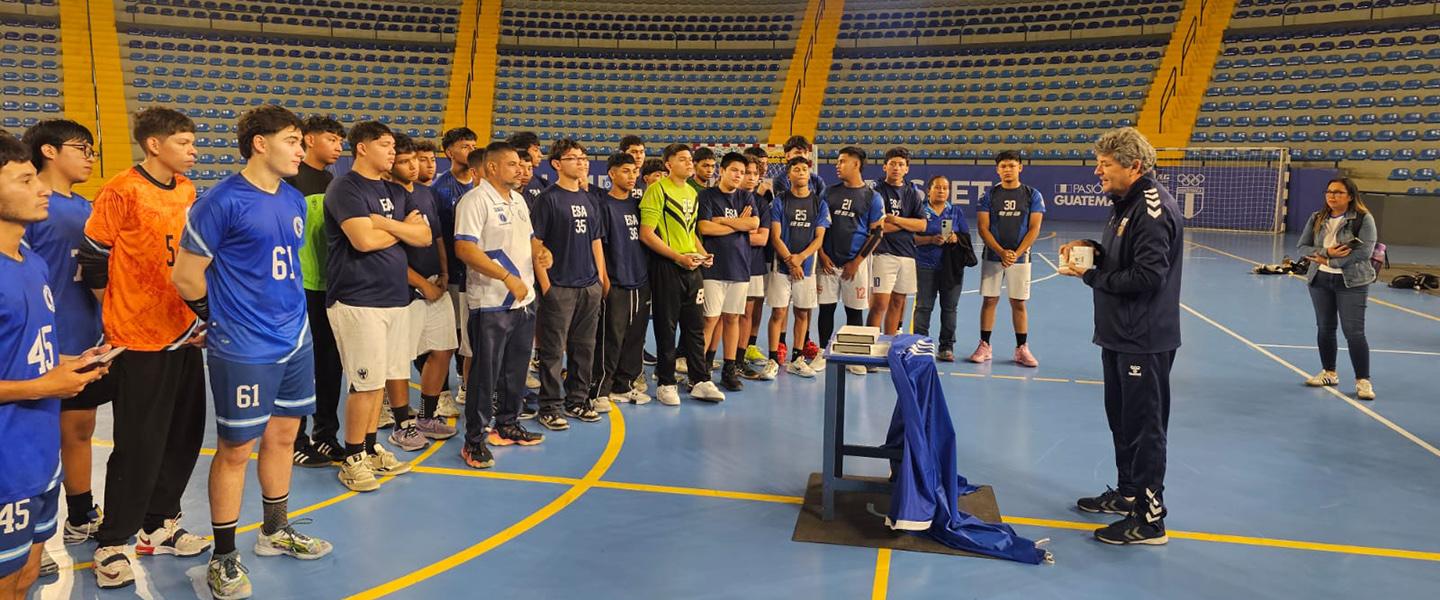
Guatemala has firmly established itself as a key centre for handball coaching education in Central America by successfully hosting an IHF C-Licence Coaching Course in March 2026. Welcoming participants from across the country, the programme, held in Guatemala City and led by IHF lecturer Manel Mañas Cortés, provided a comprehensive pathway for coaches to enhance their knowledge, practical skills, and pedagogical expertise.
The course brought together 20 coaches - 16 men and 4 women - all from Guatemala. At the conclusion of the programme, all 20 participants successfully passed, receiving their IHF C-Licence. The seven-day programme marked a significant milestone in the continued growth of handball education in Central America.
Conducted entirely in Spanish, the course was led by IHF Lecturer Manel Mañas Cortés. The course covered advanced topics in line with the IHF Coaching Education System, including training methodology, youth game development, tactical intentions on both offensive and defensive phases, fundamental skills, and an in-depth understanding of the official rules of the game.
The curriculum was designed to combine theoretical instruction with intensive practical application, and it covered a wide range of key areas. Coaches explored training methodology and periodisation, focusing on systematic approaches to planning and structuring training cycles suited to different age groups and performance levels. The programme also addressed youth game development and talent identification, introducing participants to frameworks for recognising and nurturing potential in young players.
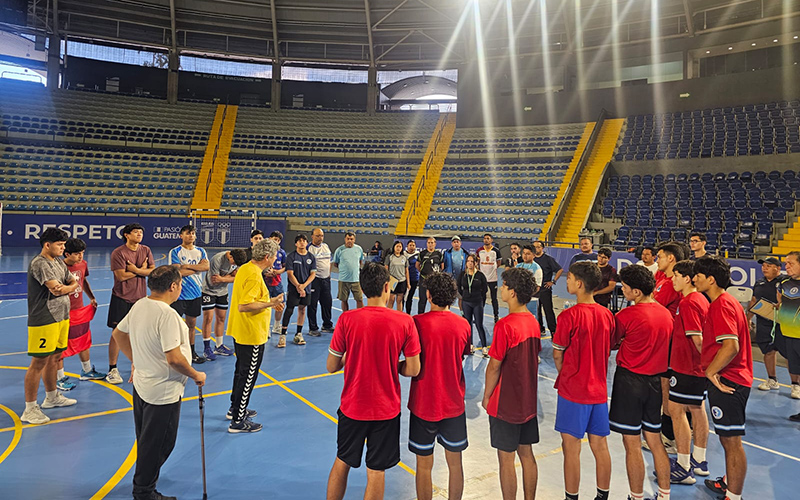
In addition, the course examined offensive and defensive tactical intentions at both the individual and small-group levels, helping coaches understand the principles behind attacking and defensive play and design exercises that would strengthen players’ tactical awareness. Fundamental skills development was also an important component, with technical execution across all core handball skills reviewed and assessed in practical settings. Pedagogical skills and communication formed another essential part of the course, enabling participants to work on how to convey information clearly and effectively on the court, which is particularly important for coaches working with youth and junior players. Finally, an in-depth module on the official rules of the game ensured that all participants had a thorough and up-to-date understanding of the IHF rulebook.
The average level of the participants before the course was assessed as good, while the homogeneity of the group was described as normal, indicating a balanced mix of experience and background among the coaches. Throughout the programme, the interest and attitude displayed by the participants were rated as excellent by the lecturer, reflecting the commitment and enthusiasm shown by the Guatemalan coaching community.
One of the most strategically effective decisions made by the organisers was to coordinate the C-Licence course with an international youth and junior handball tournament running concurrently. This provided participants with a unique and invaluable learning opportunity, coaches were able to observe live competitive match scenarios and directly apply the tactical and pedagogical concepts introduced during the programme, bridging the gap between theory and practice in a highly effective manner.
The successful delivery of this C-Licence course builds on a structured development pathway established by the Guatemalan Handball Federation, which organised IHF D-Licence courses in 2024 and 2025, and is already planning a B-Licence course for the end of 2026 and an A-Licence course for 2027. This progressive cycle reflects the federation's sustained commitment to raising coaching standards and nurturing the next generation of handball talent in the region.