

IHF Commissions meet in Egypt to turn Forum discussions into action
03 Oct. 2026

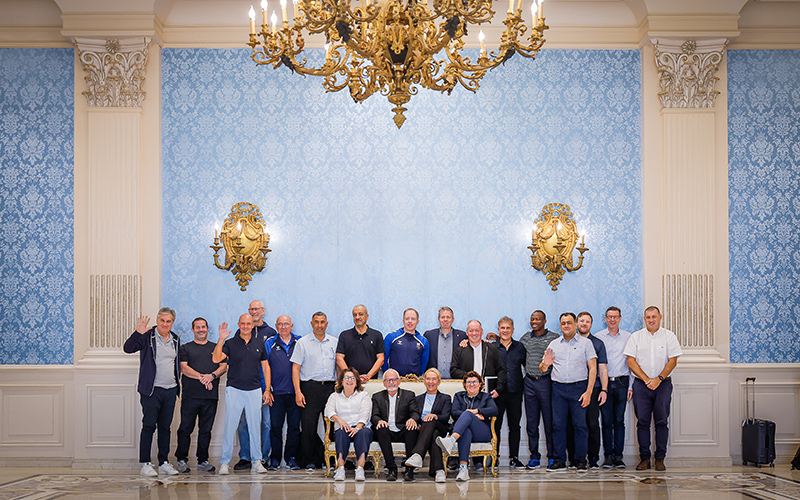
One day after the 2026 IHF Forum brought the wider handball community together to debate the future of the sport, the conversation moved into the IHF’s technical commissions on Saturday, with meetings held at the St. Regis New Capital Hotel in Cairo.
Following Friday’s almost 10-hour IHF Forum, where coaches, players, referees, continental representatives, commercial experts and other stakeholders debated the future of handball, the Commission of Organising and Competition (COC), Commission for Development (CD), Medical Commission (MC), Commission of Coaching and Methods (CCM) and Playing Rules and Referees Commission (PRC) each held meetings focused on their respective areas of responsibility.
The meetings offered a more technical continuation of the Forum discussions. While the Forum had deliberately brought different parts of the handball community around the same table, Saturday’s sessions allowed the commissions to take those broader questions into the areas where they can be developed further.
The importance of that connection was underlined by a joint meeting of the PRC and CCM, which had the outcome of the IHF Forum 2026 - The Further Development of Handball as its principal agenda item. The PRC and CCM are also closely connected through many of the subjects discussed at the Forum, where questions around the development of the game, coaching and the interpretation of its rules were considered together.
The five permanent technical commissions are part of the IHF's structure for carrying out specialised work across the sport, with each commission having its own responsibilities and continental representation. The current commission framework was approved for the 2025–2029 electoral period, with representatives from the continents forming an important part of their composition.
Development begins with understanding the continents
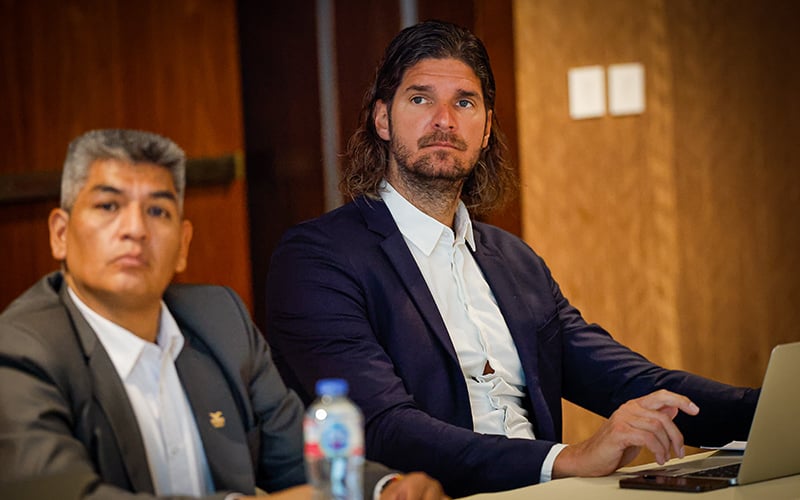
The morning began with the Commission for Development, chaired by Tomislav Grahovac. With representatives from Africa, Asia, Europe, North America and the Caribbean, Oceania and South and Central America involved, the meeting placed the continental perspective at the centre of its work. Activity reports from the continental representatives were followed by a discussion of the outcome of the IHF Forum, before the commission moved to other matters.
That structure reflects one of the strongest themes emerging from the Forum itself: handball cannot be developed through a single model applied identically everywhere. The Continental Development working group had examined region-specific strategies, youth and talent development, the “Coach on the job” concept, marketing and promotion, social media development for Continental Confederations and the possibility of future IHF events outside Europe.
The CD meeting provided the opportunity to continue that conversation within the body responsible for development.
Building the competitions of tomorrow
At the same time, the Commission of Organising and Competition (COC), chaired by COC Chairman Pascal Jenny, met to address the organisational side of the sport.
Its agenda centred on activity reports from continental representatives and the outcome of the IHF Forum, alongside miscellaneous matters. The commission brought together representatives from Asia, Europe, Oceania and South and Central America, as well as experts and IHF Competitions Director Patric Strub. The meeting followed a Forum discussion in which competition structures, formats and the event experience had been examined as part of the wider question of how to create more attractive and engaging competitions.
That discussion included the experience inside venues, the respective responsibilities of the IHF and Organising Committees, and the different requirements of women’s, men’s and younger age-category competitions.
The COC therefore found itself at an important junction between the technical running of competitions and the broader ambition of making them stronger experiences for everyone involved.
Coaching and methods: from licences to new markets
For the Commission of Coaching and Methods, chaired by Dietrich Späte, the Forum was only one part of a wider agenda.
The commission’s meeting included reports from its continental representatives and a review of the Forum outcome, but also moved into several subjects directly connected with the development of coaches and the wider handball environment.
The implementation of the IHF Licence Structure was one of the central items, alongside the work of the IHF Women’s Handball Working Group and the IHF New Markets’ Project.
The continental dimension was again prominent, with Nahla Boudhina representing Africa, Dr Taiysir Mansi representing Asia, Pedro Sequeira representing Europe, Franklyn Guevara Balcazar being the North America and the Caribbean representative, while Eoin Murray represented Oceania and Eduardo Gabriel Gallardo was the South and Central America representative. Paul Landuré was also present as a CCM member, alongside experts Jorge Dueñas de Galarza, Jochen Beppler, Nabeel Taha Alshehab and Mats Olsson.
It was another example of the IHF’s current approach of development being considered not only through elite performance, but through the structures that support coaches and federations over the longer term.
Protecting the players
The Medical Commission, chaired by Dr Yannick Mossus, approached the future of handball from perhaps its most fundamental starting point: the health and protection of the athletes.
Its agenda included the outcome of the IHF Forum, followed by discussion of the IOC Policy on the Protection of the Female Category in Olympic Sport, concussions in handball, and the follow-up on players’ injuries and the Injury Report Form.
The commission brought together medical representatives from several continents, including Dr Katsuhiko Sakuma from Asia and Dr Llewellyn Harper from North America and the Caribbean, alongside Dr François Raoux as a commission member.
The presence of the Injury Report Form on the agenda was particularly relevant to the wider effort to improve the collection and follow-up of injury information in handball. The IHF form is designed to capture all traumatic and overuse injuries caused by handball, together with information on the affected player, location, diagnosis, severity, circumstances and consequences.
Meanwhile, concussions remain an important area of medical attention in a sport characterised by speed, physical contact and repeated changes of direction. Their inclusion on the agenda reflects the continuing need to examine player welfare alongside the evolution of the game.
Rules, refereeing and the next World Championships
The Playing Rules and Referees Commission, chaired by Per Morten Sødal, met in the afternoon, after a joint session between the PRC and the CCM.
The joint PRC and CCM meeting provided the clearest bridge between the two days, with the Forum outcome itself placed at the centre of the agenda.
Its agenda again connected directly to the Forum, with activity reports from the continents followed by its outcome. A specific item was then dedicated to the 2027 IHF Men’s World Championship in Germany, before miscellaneous matters.
The PRC meeting came immediately after the Forum’s extensive discussion on the future of the rules.
There, participants had examined the challenge of making handball easier for new spectators to understand, as well as attacks without a goalkeeper, video replay, the possible future use of a Coach’s Challenge, rule interpretation and passive play.
The commission’s work now places those broader questions within the practical framework of the rules and refereeing system, while also looking towards the next men’s World Championship.