

Handball at School takes Türkiye by storm: 170 teachers certified across three cities
19 Mar. 2026
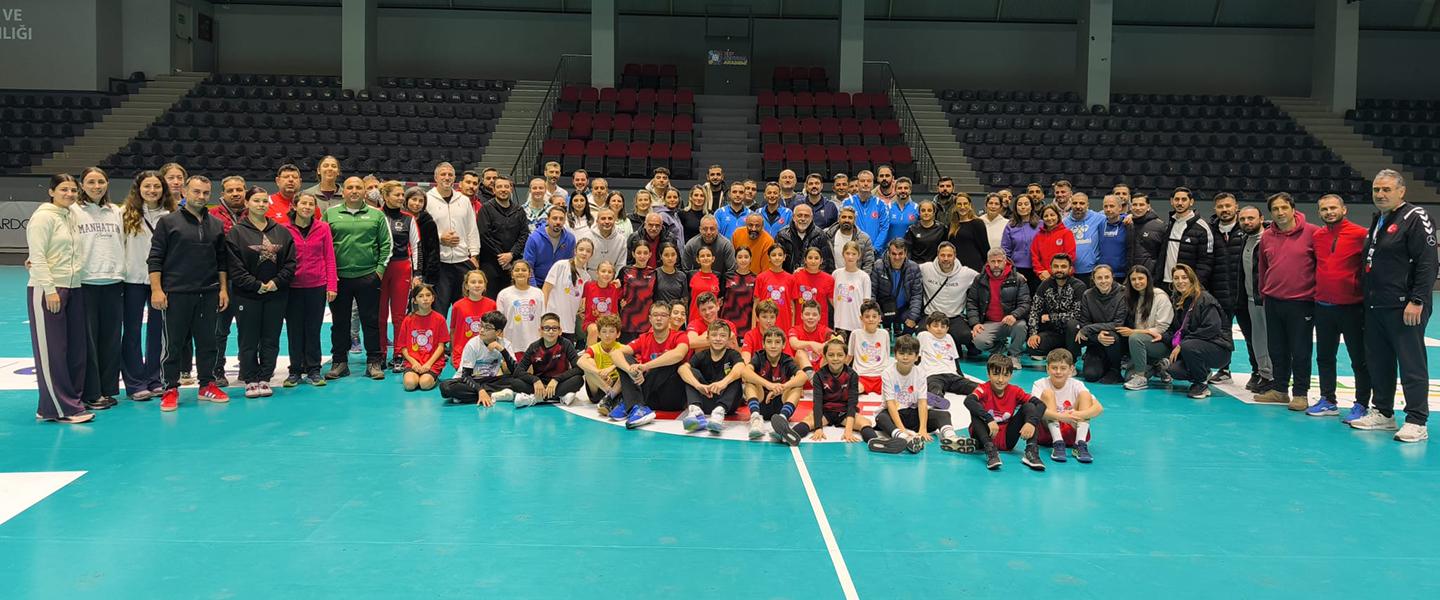
The IHF Handball at School (H@S) Project made its presence felt across Türkiye in January 2026, with a landmark series of courses bringing together 170 teachers and coaches across three cities, one of the largest H@S course turnouts in recent memory. Held from 18 to 31 January 2026 in the cities of Trabzon, Ankara and Bolu, the initiative underlined the International Handball Federation's commitment to building the game from the ground up, using the power of education and grassroots participation to expand handball's reach across Türkiye.
In total, 170 participants took part in the course held by IHF H@S Lecturer and IHF Children’s and Youth Handball Working Group member Dr Milan Petronijevic across the three venues, supported by four translators, Gencay Gündoğdu, Celal Gerneçioğlu, Ahmet Yıldırım and Yücel Makaracı, who ensured that the course content was accessible to all. Around 150 children were also involved, participating in demonstration sessions and a dedicated mini handball event that gave the newly trained coaches an immediate opportunity to put their learning into practice.
The course targeted school teachers and grassroots coaches working with beginners and young players, in line with the profile of the H@S D-Licence level. Across all three venues, participants combined theoretical sessions with extensive practical work on court, testing and experiencing the exercises first-hand. The balance between classroom instruction and on-court demonstrations ensured effective knowledge transfer, with practical sessions described in the official report as "dynamic and clearly linked to school-based implementation."
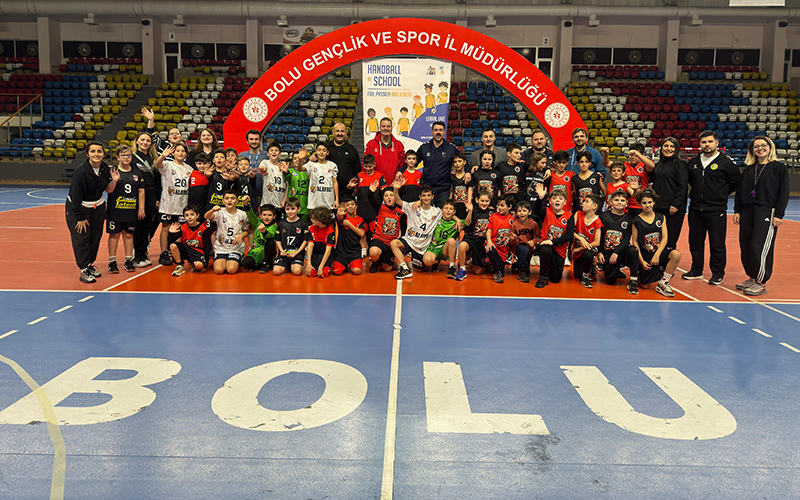
The Turkish Handball Federation (THF) played an active and central role throughout the entire process. The activities were promoted through the THF's official communication channels, local sports directorates and regional media outlets with social media platforms used to maximise visibility.
Each participant benefited from a comprehensive set of course materials provided by the IHF and and the THF, including Handball at School booklets, brochures and posters in digital format, as well as 500 Molten balls from IHF partner Molten, complemented by 400 beach balls. A Taraflex Performance floor from IHF partner Gerflor and access to the Dartfish analysis platform were also made available, ensuring participants experienced a professional, high-quality learning environment.
The THF's post-course feedback was emphatic: "THF is very pleased with the attention of participants, and thankful to the IHF for allowing more than 150 participants. The lecturer was very attentive to all the needs of the participants. The IHF was very open to the THF's questions and requests."
The course arrives at a significant moment for handball in Türkiye. The THF currently registers approximately 27,686 licensed athletes: 12,120 children, 14,125 juniors and 1,440 senior players, alongside 341 licensed coaches and 807 active referees. Grassroots participation has shown steady growth in recent years, particularly at school level, and the H@S project is now expected to serve as a catalyst for structured, sustainable acceleration of that growth.
Looking ahead, the THF has set ambitious targets: a 20–30 per cent increase in children and junior player registrations through school-based programmes and provincial cooperation models, expansion of the IHF D-Licence coach pool, and the development of inter-school tournaments and mini handball festivals throughout the academic year across all participating provinces. The emphasis will remain firmly on participation, fun and skill development, the foundational philosophy of the H@S project.
The successful courses in Türkiye reflect the broader objectives of the IHF Handball at School Project, which has been running globally since 2011 and remains one of the federation's flagship development tools. H@S is designed to introduce handball to children through adapted rules and a strong focus on fun, enjoyment and accessibility, equipping physical education teachers and grassroots coaches with simple, age-appropriate methods for players from roughly 5 to 17 years old.