

Dakar 2026 medals celebrate Senegalese heritage ahead of Youth Olympic Games
17 Sep. 2026
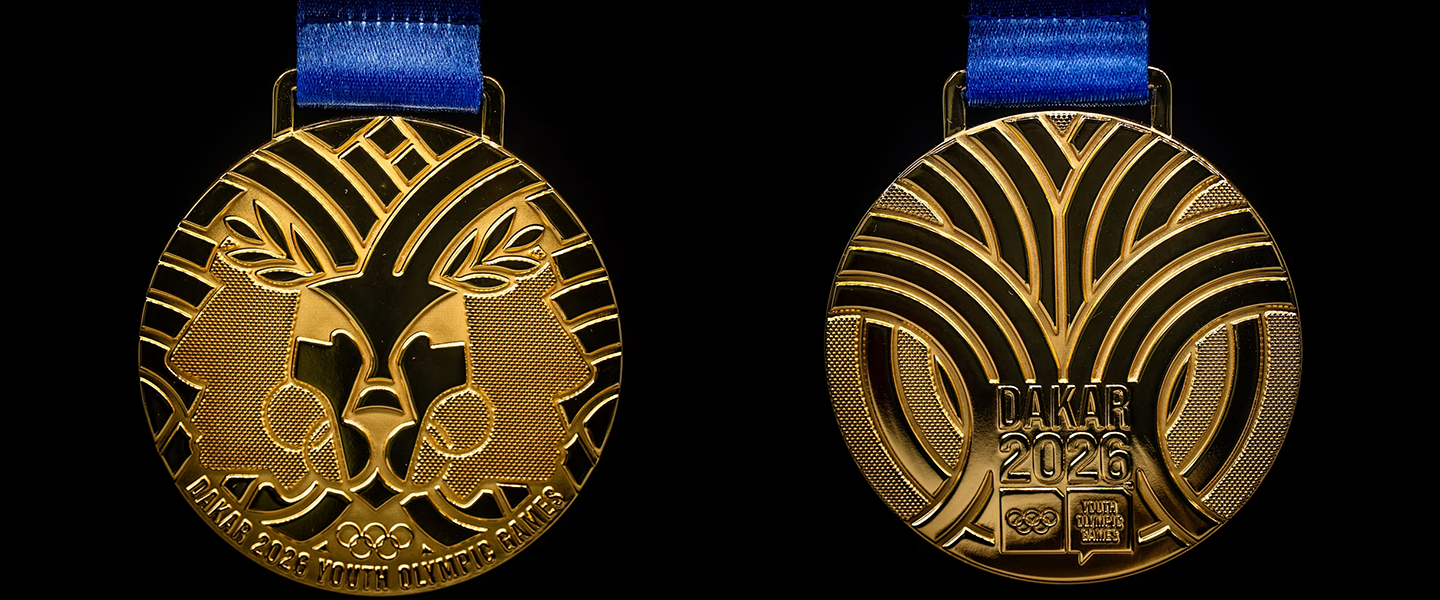
The official medals for the Dakar 2026 Youth Olympic Games were unveiled on Wednesday, 16 September, offering another glimpse into the cultural identity that will shape the first Olympic sporting event to be held on African soil.
Designed around the theme “From History to the Future”, the medals combine symbols deeply associated with Senegal with elements representing the Olympic movement and the country’s younger generation. The lion and baobab take centre stage, while traditional Senegalese craftsmanship is woven into the design.
For the beach handball players preparing to compete at Dakar 2026, the medals will ultimately represent the reward at the end of a tournament that brings together 16 teams from six continents.
The beach handball competitions will take place from 9 to 13 November at Saly Beach West, on Senegal’s Petite Côte, with eight teams competing in each of the men’s and women’s tournaments. Beach Handball will make its second appearance at a Youth Olympic Games, following its debut at Buenos Aires 2018.
The obverse of the medal is dominated by a lion, one of the most recognisable symbols of Senegal. According to the Dakar 2026 organisers, it represents strength and courage, qualities closely associated with sporting competition.
The lion's mane incorporates two faces inspired by Senegalese craftsmanship. Their symmetrical arrangement represents fairness, while olive wreaths surrounding the faces provide a direct link to the traditions of the Olympic Games, symbolising victory, peace and excellence.
The design, titled “The Roar of Youth”, was created by 26-year-old Spanish designer Pilar Barbadillo Vicario following a global call for proposals organised by the International Olympic Committee.
On the reverse, the baobab represents another defining element of Senegalese heritage.
The iconic tree is associated with strength, longevity, wisdom and the transmission of knowledge. For Dakar 2026, those ideas have been linked specifically to the younger generation: athletes who are growing from their roots while looking towards the future.
The medal's interpretation of the baobab is deliberately contemporary. Its roots and branches curve across the surface, creating a sense of movement and elevation. The lines also evoke cables and digital connectivity, bringing together an ancient symbol of Senegal with the technologies shaping the modern world.
The baobab design was developed through a competition organised in partnership with Senegal's National School of Arts.
That combination of heritage and innovation is at the heart of the “From History to the Future” concept, which runs throughout Dakar 2026. The medals therefore serve not only as prizes for sporting achievement, but also as a reflection of the host country's history, culture and ambitions for its youth.
The beach handball tournament will add its own chapter to that story when the young athletes take to the sand in November.
In the men's competition, Group A features Germany, Tunisia, Thailand and the Cook Islands, while Group B comprises Brazil, Hungary, Puerto Rico and hosts Senegal.
In the women's competition, Group A brings together Spain, Croatia, the People's Republic of China and Mexico, with Uruguay, France, Kenya and Senegal forming Group B.
The line-ups reflect the global reach of beach handball, with 15 nations from six continents represented across the two competitions. Host Senegal is the only nation competing in both the men's and women's tournaments.