
Sébastien Gardillou on his six-year habit: Watching the future before it arrives
14 Aug. 2026
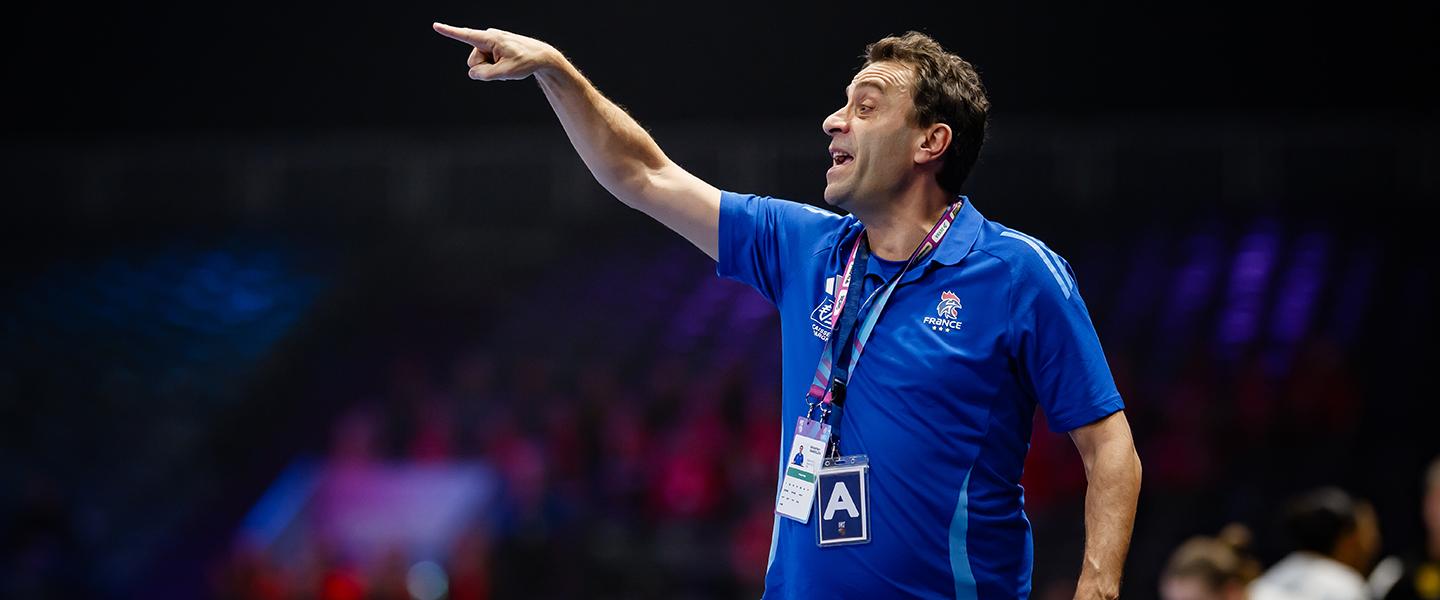
As the sport's next generation took to the court at the 2026 IHF Women's Youth World Championship, some of the game's most experienced coaches were watching from the stands, notebooks open, eyes fixed on every moment of the match.
For them, it was preparation for what comes next: gathering intelligence, watching how teenagers respond under real pressure, and taking stock of the fundamentals that will decide who's ready for the step up.
Over the two weeks in which the world's best 32 teams fought for the title across Romania, several senior national team coaches sat quietly among the crowds, weighing up which of these players might soon be wearing their country's senior colours, in the middle of an Olympic cycle building toward Los Angeles 2028.
Denmark's senior coach, Helle Thomsen, arrived for the tournament's final day and watched her country's youth side claim the bronze medal. Romania's Ovidiu Mihăilă kept a close eye on his own nation's development throughout the competition. Dragan Adžic, Slovenia’s national coach, also came to see the last matches of the competition
And then there was Sébastien Gardillou, France women’s national team coach, who followed his team from the very first whistle to the last, present for every match in the closing days - a level of dedication that said as much about his passion for the sport as it did about what he was there to find.
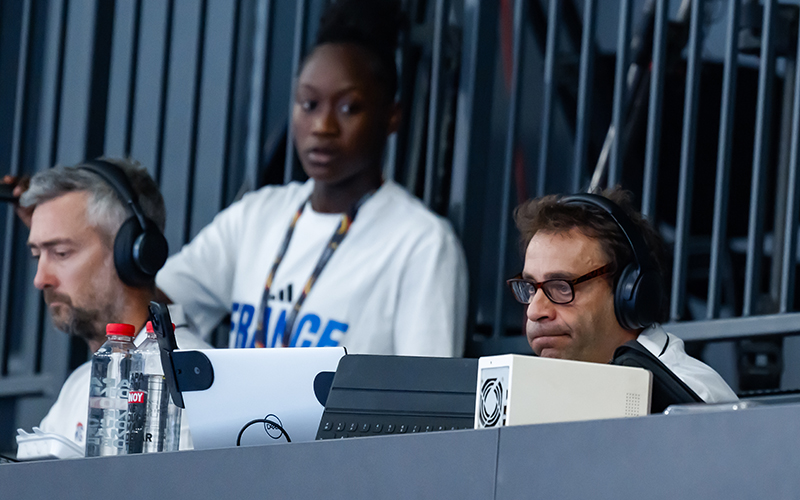
Gardillou was Olivier Krumbholz’s assistant between 2016 and 2024, when he took over the team, after Krumbholz retired following France’s silver medal at the Paris 2024 Olympic Games.
The coach led France to a fourth place at the Women’s EHF EURO 2024 and the bronze medal at the 2025 IHF Women’s World Championship, as the European powerhouse is in the middle of a generational shift, with new players being ushered in the team, such as Lylou Borg or Nina Dury.
“It is a very high-level competition, and I have been coming here to observe it for the past six years. As far as France is concerned, we are slightly below our expectations because we will finish in 10th place. Of course, we had hoped for a better result, but that is the reality. At the same time, I have seen many countries making significant progress. Egypt, China, Switzerland and several others have improved year after year. That is one of the reasons why it is so important for me to be here. These are young players now, but they will soon become senior internationals, so it is essential for me, for the French Handball Federation, and for everyone observing the competition to understand what the future of international handball will look like,” says Gardillou.
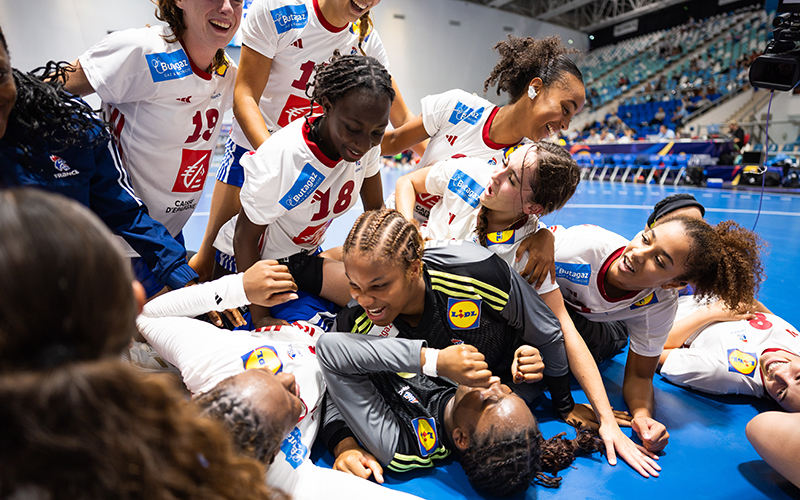
Indeed, whether he was an assistant or the head coach of the France women’s national team, Gardillou has made it a tradition to come to the younger age category events, observing the new trends, as well as France’s pipeline of talent, which has provided a team which won the title at the 2024 IHF Women’s Junior World Championship and secured the bronze medal at the same event in 2026.
This time, France finished 10th, conceding a painful loss against Egypt in the preliminary round, which sent the team into a fight for a quarter-finals finish, one which ended after a loss against Denmark in the main round. With two losses, France were out and eventually ended up 10th, after losing the Placement Match 9/10 against Japan.
But Gardillou was also interested about the trends in current handball, which were on display at the 2026 IHF Women’s Youth World Championship, and how the sport changes.
“We are seeing much more one-against-one play. Teams are also using the seven-against-six attack more frequently, trying to create space for central players who can beat defenders in one-on-one situations,” says Gardillou.
However, the France coach insists that he misses some key aspects of the game.
“Personally, I miss seeing more crossing movements and more back-court players attacking the defence with greater variety. The game is not boring, but at times it becomes a little predictable. It can feel like a battle along one line, with teams simply pushing against each other. That is why I really enjoyed watching Japan. I also like the way Korea defend. They play a much higher and more dynamic defence rather than staying in a traditional 6-0 system. I hope that, at senior level, we will continue to see more crossing combinations and more long-range shooting as well,” adds France’s coach.
From the France team which won the gold medal at the junior level in 2024, there are several players which became key in Gardillou’s setup in the senior team, such as left wing Nina Dury or centre back Lylou Borg.
Players like Manon Errard, Lilou Pintat or Enola Borg have also made their debuts, which means that Gardillou is taking youth into consideration seriously, as the generation which made history is slowly being phased out, with players retiring or missing time due to pregnancy.
“We have already started integrating players born in 2005, such as Lilou Borg and Nina Dury. Competition for places in the French national team is extremely high. Every position in the French team is important, and earning one requires a great deal of work,” says Gardillou.
Grâce Zaadi, Estelle Nze Minko or Laura Flippes are getting closer to the end of their careers, while others, like Cleopatre Darleux, have stopped their playing careers.
“We hope to have players such as Estelle Nze Minko and Laura Flippes back. Their return would be very important for us. We especially need a left-handed right back, and Estelle is also incredibly valuable in our high defensive system,” says Gardillou.
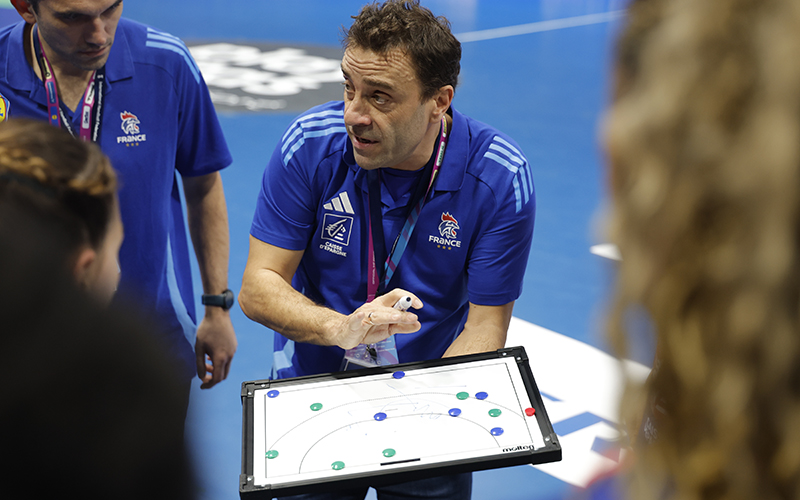
The coach’s first test this year will be the Women’s EHF EURO 2026, which will be a qualification event for the Los Angeles 2028 Olympic Games, as the winner will secure their ticket for the event. Finishing on the podium is also crucial, because it can mean France will already secure a place in the Olympic Qualification Tournaments for Los Angeles 2028.
Then, France will try to secure yet another medal at the 2027 IHF Women’s World Championship, due to take place at the end of the year in Hungary, which is, as well, a qualification event for the LA 2028 Olympic Games.
“The upcoming European Championship is extremely important because the winners qualify directly for the Olympic Games in Los Angeles. We have to be ready in December because qualification for the World Championship will also determine a lot, we can either qualify or have an easier opponent if we finish higher,” says Gardillou.
Before that, though, France will have a slew of hard tests in friendly matches, as they gear up for competition.
“I spent a lot of time thinking about the team because September will already be very important for us. We begin with a friendly match against Sweden. It is a challenging way to start, but if we want to be ready for December, we have to test ourselves against the strongest teams. After Sweden, we will face Hungary in October and Germany in November. That is the best way for us to improve and prepare for the major competitions ahead,” concluded Gardillou.
more topics

Top