
Women leading women: The coaching revolution at Romania 2026
02 Aug. 2026
On every court at the 2026 IHF Women's Youth World Championship in Romania, the spotlight naturally falls on the players. They are the main actors, who are taking their first steps on the international stage.
But behind every player, there is a coach. And herein, another story swiftly unfolds.
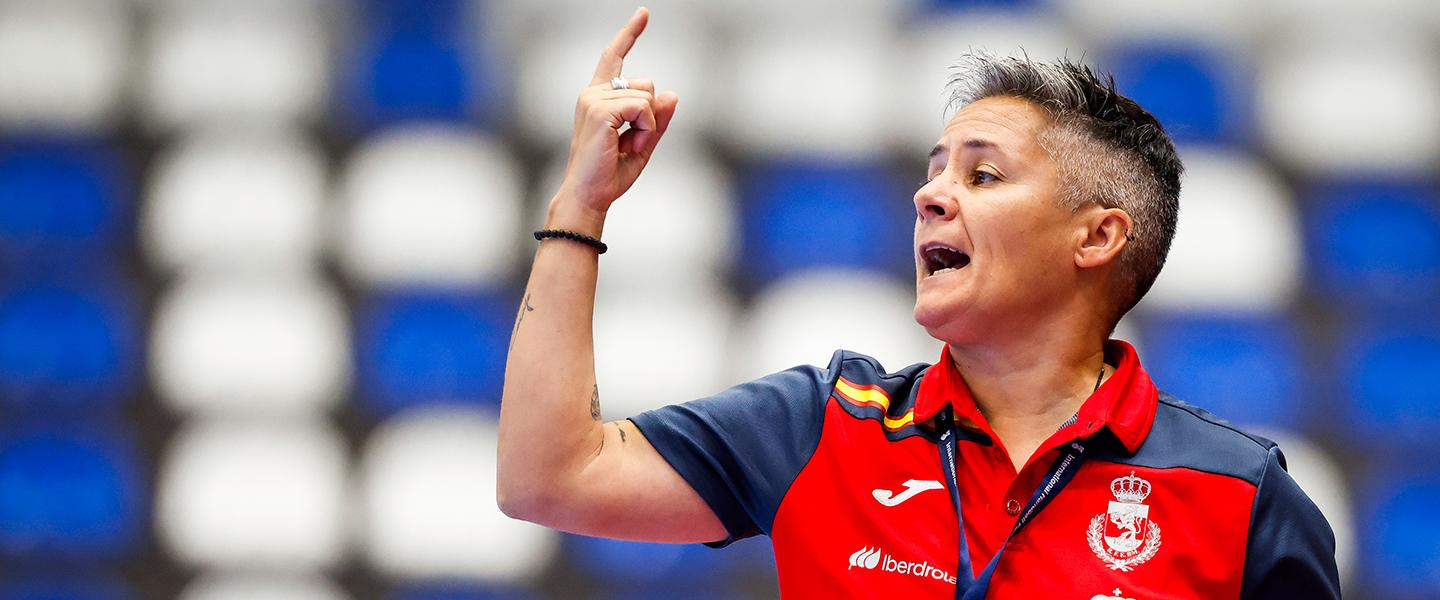
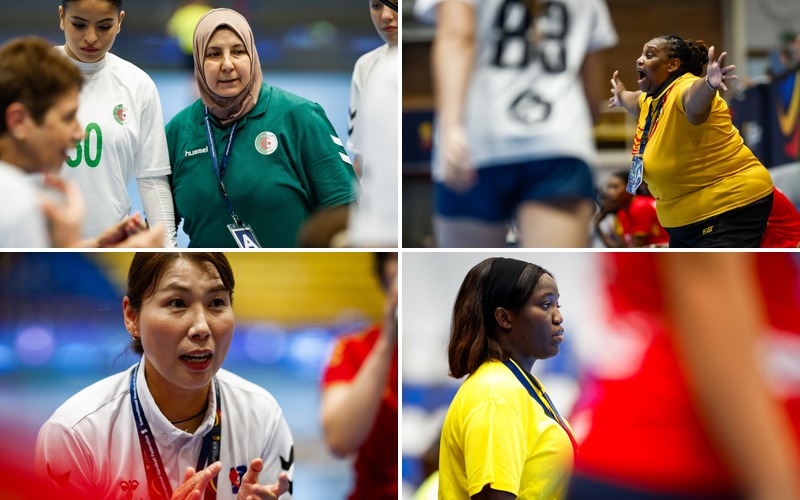
A record has been set at Romania 2026, as among the 32 teams competing at the championship, 10 are led by women, a figure which reflects the steady evolution of coaching in women's handball.
It is a number that spans four continents. In Africa, Nadia Benzine leads Algeria, Katia Santos is in charge of Angola, and Clementine Mara Titi guides Guinea. In Asia, Jang So Hee is at the helm of Japan. Europe fields the largest contingent, with Petra Vitkova coaching Czechia, Sandra Fernandes leading Portugal, Vesna Bojkovic in charge of Serbia, Cristina Cabeza guiding Spain, and Victorina Bora leading host nation Romania. And in North America and the Caribbean, Selene Hernandez Sifuentes is charge of Mexico's youngest generation of talent.
However, this is not just a list of names. If one tries to identify a trend, the common thread emerges: a growing number of former players are staying in the sport after retirement, moving from the court to the sideline, and finding that the pathways to get there - coaching courses, mentorship programmes, and the support of the IHF has been steadily helping them.
Just two months ago, the International Handball Federation has established a new Women’s Handball Working Group, bringing together leading female voices from across all areas of the game to drive implementation of its Four‑Year Plan 2026–2029 on women in handball.
Building on existing programmes that promote women’s handball worldwide, the group will connect development projects and competition structures so that progress for girls and women is embedded across the sport, from grassroots to elite.
Chaired by Norwegian goalkeeping legend Katrine Lunde, the Women’s Handball Working Group brings together eight members whose profiles span former elite players, national‑team coaches, referees, delegates and federation leaders. Alongside Lunde, the group includes former national team players Nair Filipe Pires de Almeida Vilaca (Angola) and Eduarda Amorim (Brazil), IHF delegate and Chairwoman of the AHF Ethics Commission Mitra Noori (Islamic Republic of Iran), Secretary of the Board of Directors of Handball Canada, Saribel Deslauriers (Canada), Denmark women’s national team coach Helle Thomsen (Denmark) and former IHF referees Julie Bonaventura (France) and Charlotte Bonaventura.
Their combined experience covers every branch of the game: playing, coaching, refereeing, national‑federation management and international event governance, ensuring that decisions reflect the realities of the court, the bench and the boardroom alike. The group is also deliberately global, with members representing Africa, Asia, Europe, North America and South and Central America, mirroring the IHF’s commitment to support development beyond traditional handball strongholds.
The group’s creation follows the IHF Four‑Year Plan 2026–2029, which sets clear priorities: attracting more girls to handball, identifying and educating female referees, promoting female leadership and building a more effective framework for women’s handball in every region.
At a tournament built around the sport's next generation, the fact that a third of the confederations represented on the coaching benches are led by women feels like a preview of where the sport's technical staff are heading. It is a shift that the coaches themselves are quick to frame simply as a natural consequence of opening doors that, for a long time, stayed closed.
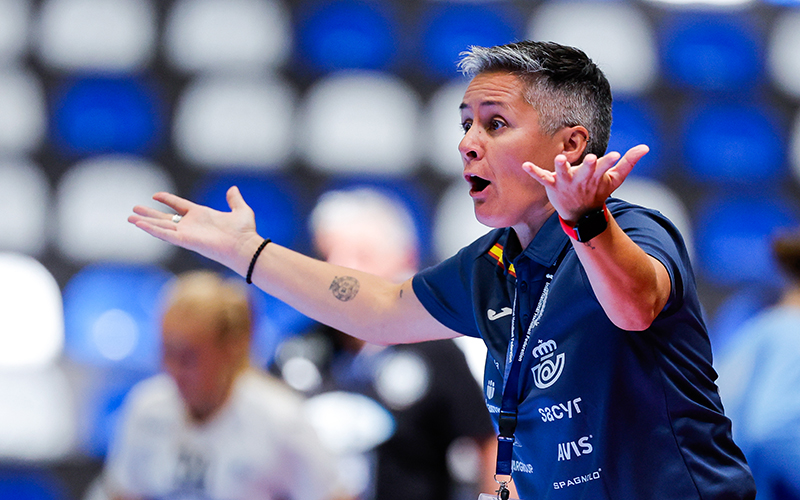
Few embody that journey better than Cristina Cabeza, the coach of world champions Spain at this age category. A former centre back herself, Cabeza recalls being told by teammates, long before she considered coaching seriously, that she was destined for the sideline.
"For example, when I was a centre back, when I was a player, everyone told me, you're going to be a coach," she says.
"I've been working with women for many years, and being here representing your country, and being a woman, it's an honour to belong to the federation and work with women.”
That visibility, Cabeza argues, is central to growing the number of women in coaching in the years ahead. She points to several practical obstacles that still stand in the way. Chief among them is the question of balancing family life with a coaching career, since many players retire from the game around the age when they are considering starting a family, and combining motherhood with the demands of coaching is far from straightforward.
She also highlights the importance of strengthening support structures and negotiations so that access to national coaching courses becomes easier - something she says is already improving in Spain - alongside a simple but powerful factor: visibility itself. The more young girls see women coaching at the highest level, Cabeza believes, the more of them will want to follow that path.
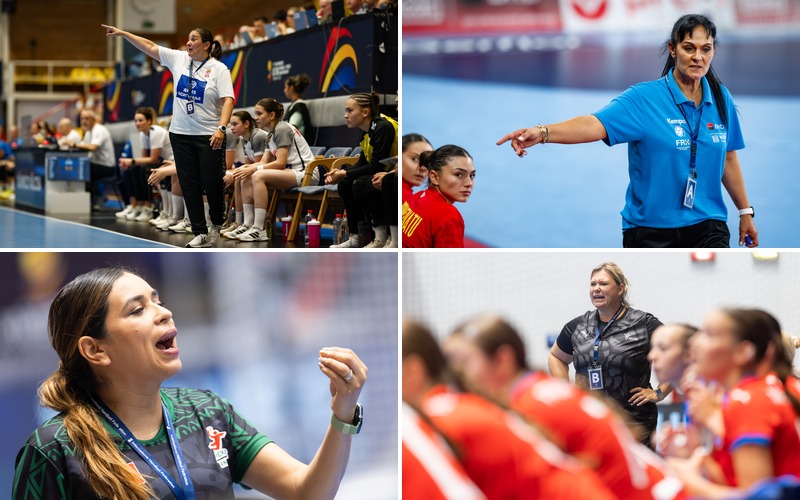
Beyond the technical and tactical demands of the job, Cabeza also identfies another crucial point. Working with a squad of teenage girls often means becoming as much an psychologist as a coach, particularly given how much each generation of players differs from the last
“I think it's the most difficult part. Every generation is very different. We are the current world champions in this category, two years ago in China. And there's a lot of difference between the two categories. So we have to work and get to know our players very well and try to get the most out of each one of them,” adds Cabeza.
Portugal's Sandra Fernandes offers a complementary view, one rooted less in the mechanics of career transition and more in a broader philosophy about leadership itself. For Fernandes, the growing number of women coaching at this is a statement about competence.
“This number of coaches demonstrates that we all have the competence to perform any role, regardless of whether we are men or women, in sport or in any other field. Leadership isn't defined by gender, but by competence, work, dedication, and the ability to make a difference. That is, fortunately, today's reality,” says Portugal’s coach.
Fernandes situates this shift in a broader social context. She describes a 21st century in which women are no longer confined to a single role, free instead to pursue whichever profession suits their abilities, motherhood included, rather than in place of it.
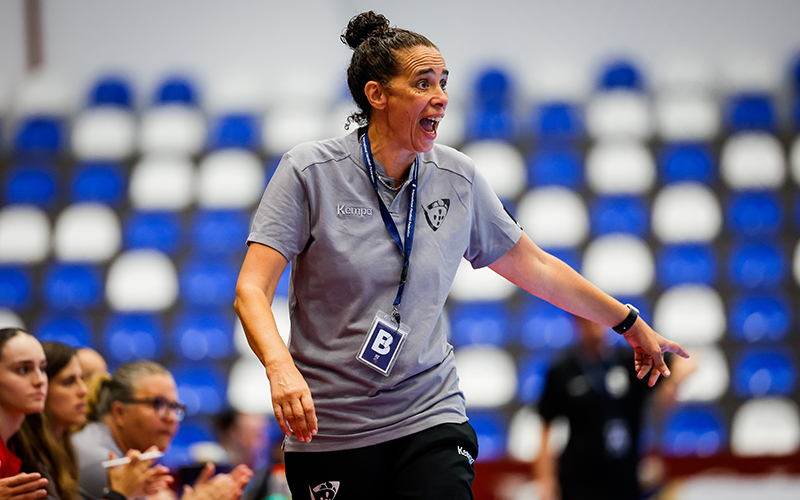
What should determine opportunity, she insists, is merit and capability, not gender. She goes further still, suggesting that today an elite coach ought to be judged purely on competence.
“I want to believe that today, an elite coach is judged by her competence and not by her gender. I'd like to think that no one looks at us just as women anymore, but as coaches - with greater or lesser competence - who may or may not fit the dynamic, philosophy, and profile that a club is looking for. That's what should make the difference. Being a woman cannot be a criteria for determining whether we are more or less prepared to lead a team. It's just a gender. What truly matters is the ability to work, lead, make decisions, and achieve results,” adds Fernandes.
That progress, in Fernandes' view, is being reinforced from above. She points to the recognition increasingly given to women's handball by governing bodies at every level, crediting federations and the IHF with playing an important role in promoting the sport and acknowledging the value women bring to it. It is a trajectory she believes should continue, with today's achievements serving as a foundation for even greater opportunities for the next generation of women coaches.
On the specifics of coaching young players, Fernandes is equally clear-eyed. At youth level, the priority must always be equipping athletes with the tools to compete with quality and effectiveness and not chasing results.
“Victory is important because it motivates, reinforces confidence, and prepares for the future, but it can never be the only objective. What matters most is developing players capable of evolving and meeting the demands of high-level competition,” adds Portugal’s coach.
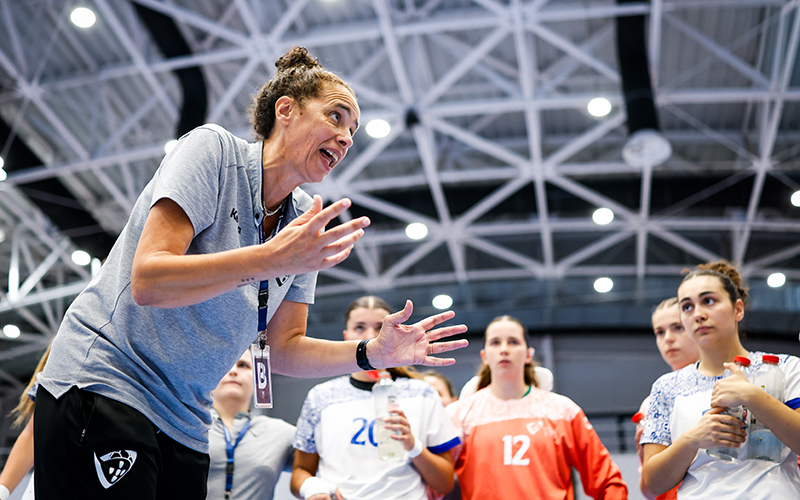
But how can a former player who is aspiring to become a coach can succeed?
“I would just say this: never stop working and believing. Nothing is achieved without dedication, sacrifice, and passion. When there is true love for handball, challenges become opportunities, and dreams get much closer to becoming reality,” says Fernandes.
The 2026 IHF Women’s Youth World Championship is, in its own way, a snapshot of where women's handball currently stands: a sport still working through practical questions around access and visibility, but one in which the coaches themselves see genuine, if gradual, change taking hold.
As Cabeza puts it, coaches like her exist partly so that the next generation of players can look at the sideline and see what is possible.
more topics

Top