
Development as a centrepiece: Switzerland's plan for Brisbane 2032 goes through Morocco
16 Oct. 2026
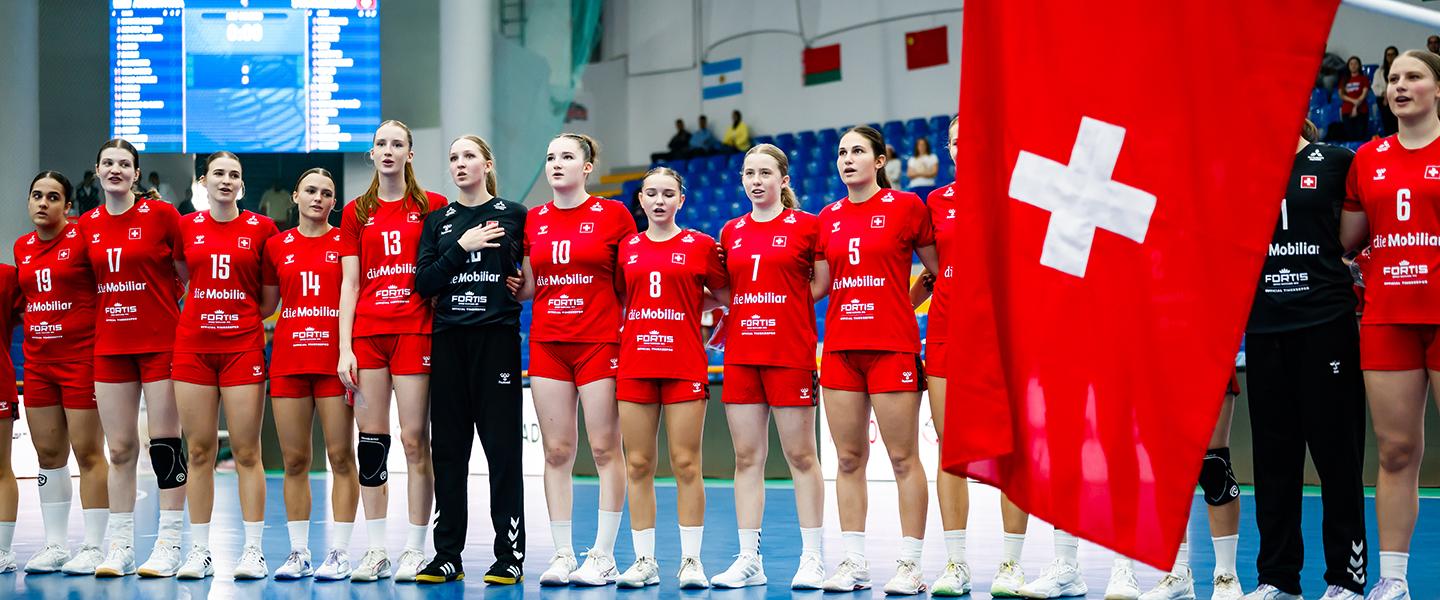
Switzerland opened the inaugural IHF Women’s Under-16 World Championship with a commanding 48:20 victory over Argentina, offering an early glimpse of the progress made in a country that has placed long-term development at the centre of its ambitions in women’s handball.
For head coach Jürgen Fleischmann, who also led Switzerland at the 2024 IHF Women’s Youth World Championship, the result reflects years of increasingly professional work, with the ultimate objective extending well beyond the current generation: qualifying for the Olympic Games in Brisbane in 2032.
Fleischmann has witnessed the progress first-hand. At the 2024 IHF Women’s Youth World Championship in China, Switzerland reached the main round after opening their campaign with wins against Romania, 25:24, and Egypt, 28:19. The team ultimately secured 14th place, improving on their 21st-place finish at their debut in 2022.
At junior level, Switzerland have also reached the quarter-finals at the last two editions of the IHF Women’s Junior World Championship, finishing eighth on both occasions after returning to the competition following an absence that dated back to 1997.
And in the Under-16 category, Switzerland have already made their mark in 2024, when they secured the title at the Women's 16 European Open, with a 34:31 win in the final against Germany.
For a country with a relatively small pool of players, those results represent a significant change in trajectory.
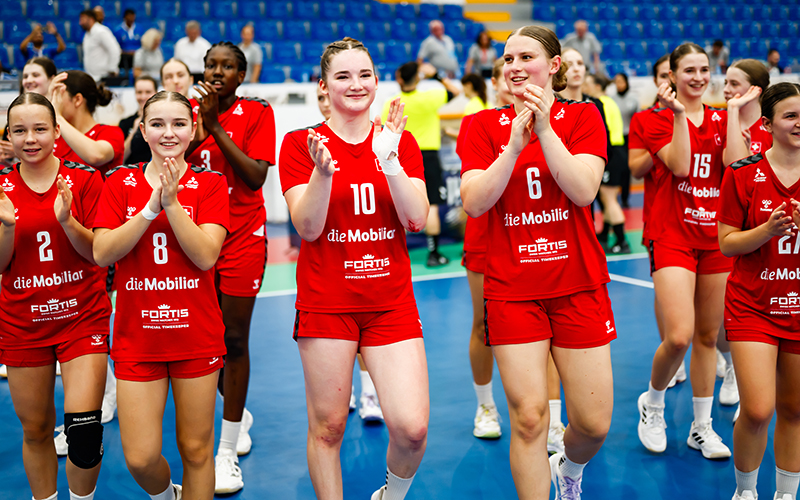
“I think the development in the last years has been very good,” Fleischmann explained. “For the last six or seven years, we have been working more professionally, also with the handball academy in Switzerland. I think we are starting to see the results now, and I hope the development will continue in the coming years.”
At the centre of Switzerland’s progress is the Concordia Handball-Akademie, established in 2020 as a structured environment for the country’s most promising young players. The project was designed to give talented athletes a more demanding training programme while allowing them to remain connected to their clubs, creating a bridge between domestic development and the requirements of international handball.
The academy’s model has involved players spending the working week training within the programme before returning home at weekends to play for their clubs. This arrangement gives the athletes a more intensive development environment without removing them from the domestic competitions that remain important to their progress.
The project initially benefited from the experience of Danish coach Martin Albertsen, who helped oversee the senior and younger national teams during its first years. Since his departure in 2023, the development structure has continued, with Switzerland’s results providing encouraging evidence of its direction.
Fleischmann is realistic about the challenge facing a country that cannot draw on the same numbers as Europe’s largest handball nations. His view is to make the most of the players available and ensure that the quality of their development keeps improving.
“That is always the problem in a country like Switzerland. You do not have so many players, and you have to work very well. We have the players we have, and our job is to make them better,” he said.
The Swiss academy places particular emphasis on physical development, believing that their players must become stronger to compete consistently at international level. Technical quality remains a constant priority throughout the training process, while tactical understanding develops through the experience of playing against different opponents.
“The most important thing is the physical aspect, that we work to develop strong players. Then it is technique. Technique, technique, technique. In every training session, we must improve,” Fleischmann said. “The tactical aspects are easier to learn through international experience, but you need good players.”
That philosophy is intended to create athletes capable of adapting to the demands of higher-level handball rather than relying on short-term results at youth level. The latest win in Agadir offers a promising indication of what the current generation can produce, but the more important measure will be how many players continue to progress as they move into the older age categories.
And that philosophy has worked wonders so far at Morocco 2026, where Switzerland opened their account with a clear 48:20 win against Argentina, after the first three minutes saw a 5:0 opening salvo for the European side.
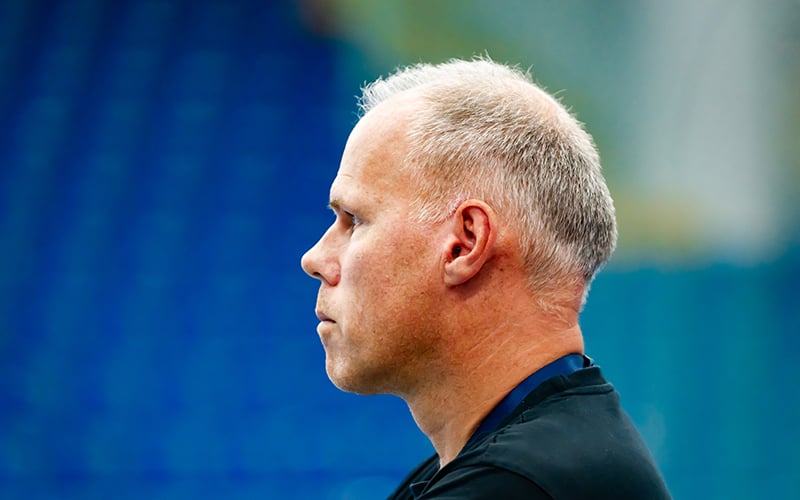
The margin of victory exceeded even Fleischmann’s expectations, although he was confident that his team would start the competition positively.
“We expected to win, but not by this difference,” he said after Switzerland’s opening match in Agadir.
The result gives Switzerland an encouraging start at a championship that marks a new stage in the international development pathway for young female players. The inaugural edition features 16 teams, with Switzerland representing Europe alongside Germany, Hungary, Belarus and Russia. For the Swiss, however, the tournament is also part of a much broader project aimed at creating a consistent route from youth handball to the senior national team.
The road to Brisbane 2032
The Swiss Handball Federation has formalised that long-term ambition through its Roadmap 2032 concept, which places qualification for the Brisbane Olympic Games at the centre of its strategy for women’s elite handball.
By 2029, Switzerland aim to qualify regularly for the final stages of major competitions and establish themselves consistently in the main round. The next milestones are more ambitious: a place among the eight best nations at the Women’s EHF EURO 2030, followed by a quarter-final appearance at the 2031 IHF Women’s World Championship. Those results would provide an important foundation for a successful Olympic qualification campaign.
The roadmap also reaches beyond results on court. A new contractual model for the national-team framework is intended to establish clear performance and development objectives, improve coordination around decisions involving players’ clubs and provide greater contractual security for international players. The federation is also investing in athletic support and sports psychology, strengthening the specialist assistance available to the senior national team.
For Fleischmann, reaching Brisbane would represent the fulfilment of a demanding ambition, even if he recognises the scale of the challenge ahead, despite Switzerland now boasting players who are featuring on the top stage, like line player Tabea Schmid, wings Era Baumann and Mia Emmenegger or back Daphne Gautschi.
“We have to work towards the goal of being at the Olympics in 2032, in Brisbane. It is a big goal, but I think we are on the way,” he said. “Maybe we will reach it then, or perhaps at the next opportunity. We know it is a very high target, but we will try.”
The pathway begins with ensuring that promising young players can make the transition to senior international handball. Fleischmann believes that the current generation contains several athletes with the potential to reach that level.
“I hope so. I think there are three or four players who have the chance to become senior national-team players,” he said.

Top