

Pinheiros return to world stage with Brazil’s next generation on show
25 Sep. 2026
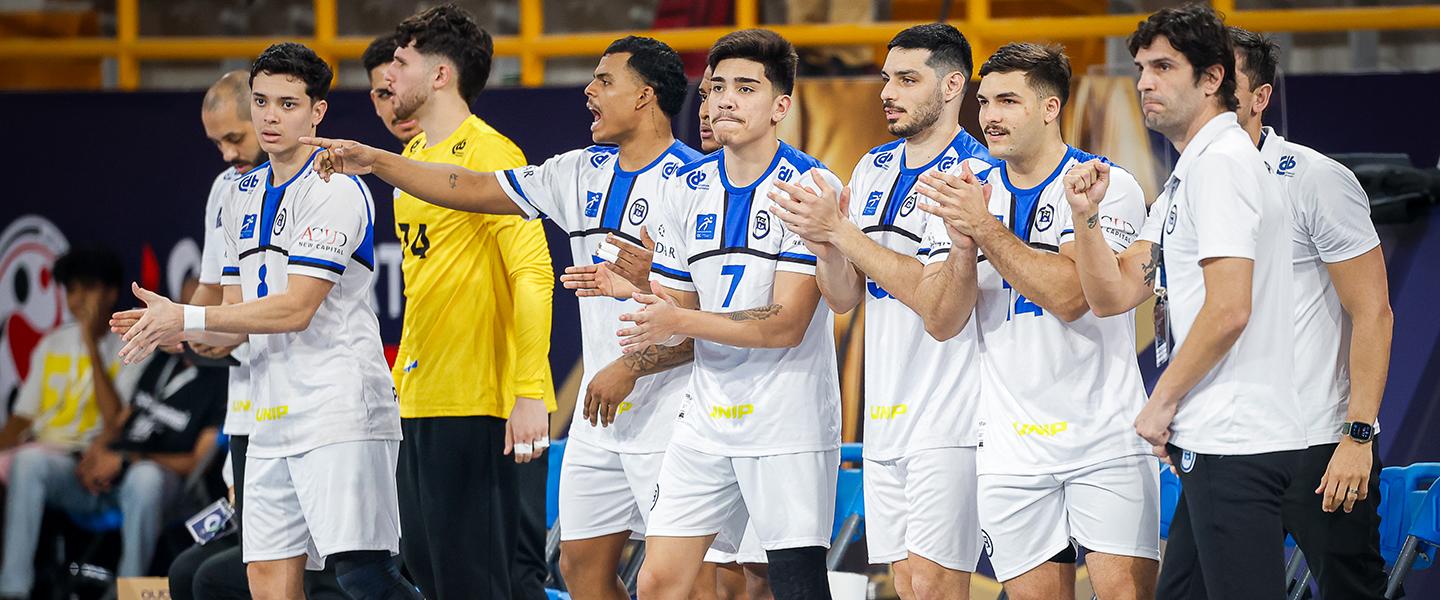
There is a particular kind of confidence in the way E.C. Pinheiros talk about the IHF Men’s Club World Championship. They know exactly what it means to share the court with Barcelona, Veszprém HC or Zamalek SC. They also know what it means for the players they have brought to Egypt.
The winners of this year’s South and Central American Club Championship are back at the IHF Men’s Club World Championship for the first time since 2021, making their fourth appearance in the competition. They arrived in Egypt with the youngest squad in the field, averaging just 23.31 years of age, and their opening match offered perhaps the clearest possible test of where that group stands.
While they managed to stay close to FC Barcelona, the reigning champions, in the first half, shaking off a slow start, the writing was on the wall. Barcelona won comfortably, 44:33, but Pinheiros still reached the mark they had set themselves before the game, scoring more than 30 goals against the reigning champions.
“We knew it was going to be a difficult match,” says Diogo Hubner, the former Pinheiros and Brazil player who is now working with the club as a supervisor.
“It’s always important to be in the IHF Men’s Club World Championship. It’s Pinheiros’ fourth appearance. It’s a very strong club, with a lot of tradition in Brazil. But it’s a pleasure to face one of the best teams in the world.”
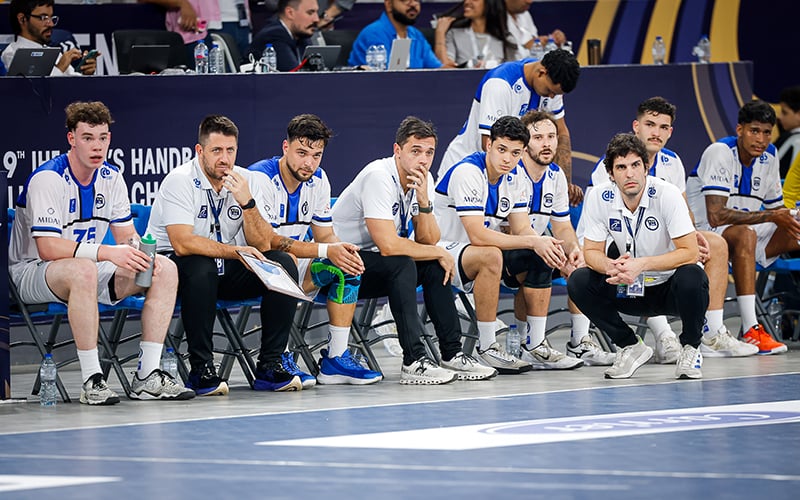
There was satisfaction in meeting their own target, but little time to dwell on it. Pinheiros now turn their attention to the rest of the Group Phase, where they chase the best possible finish and are slated to play against Moroccan side Montada, a debutant, and Egyptian powerhouse Zamalek Club.
“We’re happy with the opportunity,” Hubner says. “From now on, we’re going to try our best to compete and have a good result.”
For a club whose identity is so closely tied to player development, the experience of being on the court with some of the best clubs in the world carries a particular weight. Pinheiros have long been one of the important talent-producing clubs in Brazilian handball, and Hubner sees this team as another generation in that line.
“Pinheiros has the philosophy of being a feeder club. Many athletes who are now in the Brazilian adult team have played for Pinheiros. That’s the philosophy, that’s the job we know to do well,” says Hubner.
Indeed, some of the best Brazil players in the last decades have passed through Pinheiros. Stalwart defender, Thiagus Petrus, is one of them. Haniel Langaro and Bryan Monte da Silva, left backs who played a crucial role in Brazil’s maiden appearance in the quarter-finals of the IHF Men’s World Championship, also were formed in the club.
It is a philosophy that makes an apperance at the IHF Men’s Club World Championship especially valuable. Pinheiros’ players are sharing the court with some of the best players in the world and can showcase themselves, using the competition as a learning experience, as well as a springboard for the future.
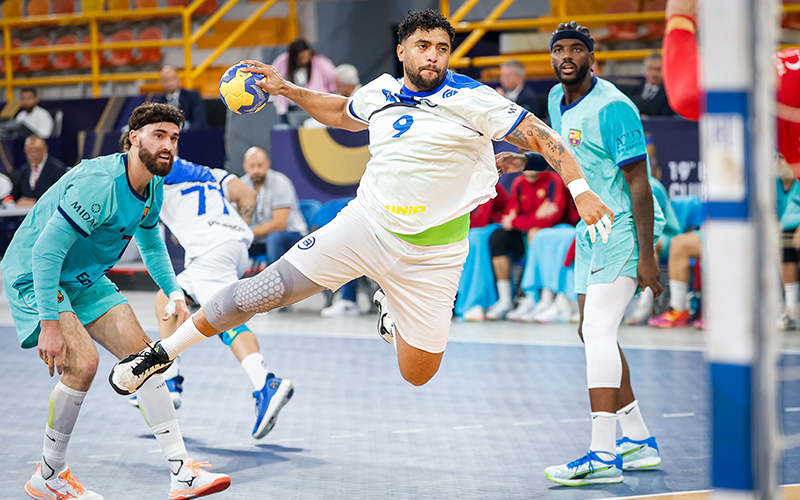
“It’s very cool to see these kids so young competing at such a high level against very established players like Dika Mem, N’Guessan and others,” Hubner says.
That contrast is visible everywhere around the team. Pinheiros are the youngest side at the tournament, while their first opponent included some of the most experienced players in international handball. For the club, that gap is part of the point.
No player in Pinheiros’ current squad is over 29 years old. Their average age is 23.3 years old and Hubner believes several members of the current squad already have the potential to move into Brazil’s senior national team in the coming years.
Some are already involved in the national youth pathway, and the IHF Men’s Club World Championship gives them a chance to accelerate that learning by testing themselves against players they normally know through television or their phones.
“We are sure that the work is being done very well,” he says. “We are also very proud of these boys who are representing Brazil, who have already played for Pinheiros. And today they represent the Brazilian team.”
Hubner knows what that journey looks like because he lived it himself. He spent more than 12 years playing professionally and wore the Brazil shirt at the Rio 2016 Olympic Games. Now his role has changed, but the connection with the players remains close.
“Many of them, I still was with them, playing as an athlete for Pinheiros. Even today, I still train with them from time to time. I’m always with them. Today it’s my role as a supervisor, a more administrative role, but it’s impossible not to talk about the squad, about the coaches and so on,” says Hubner.
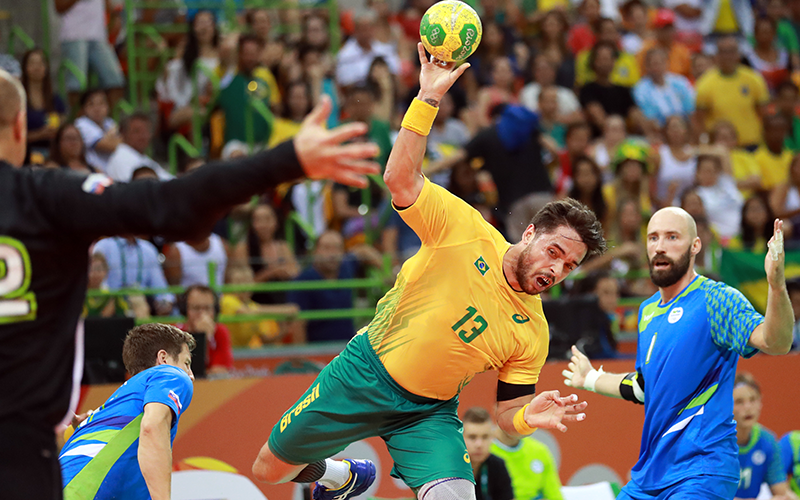
But the former Olympian’s role is beyond the club itself. Hubner has also become an active voice for Brazilian handball online, using social media to give the sport and its players more visibility in a country where participation is strong but exposure can still be difficult to secure. His Instagram account has 73.300 followers.
“In Brazil, we have little visibility of our sport,” he says. “We have a lot of people who practise, a lot of amateurs playing, but they don’t have as much access to information. So I started using my channel to be able to spread both my work and the work of handball in general.”
“Today, maybe what I receive the most is, ‘Diogo, talk a little about my team. Diogo, what was the result? Diogo, where will the game be broadcast?’. So it’s a job I do precisely thinking about that, and perhaps giving more visibility to our modality within Brazil,” adds Hubner.
That same idea of building visibility sits naturally alongside Pinheiros’ wider ambitions. Winning the South and Central American title for the first time in five years brought the club back to the world stage, but they do not intend for this to become a one-off experience.
“Whenever a season starts, our goal is to be competitive, to be in all the finals. The goal of Pinheiros is always to be in the grand finals and also to be champion,” adds Hubner.
The route back to the IHF Men’s Club World Championship is therefore already part of the plan.
“For us, a very clear goal in the next few years is to always be in South America, to be here in Egypt,” he says.
“I’m sure that going back to Brazil, our quality improves, because we are playing with the best players in the world,” he says. “And not only Barcelona, but other great teams like Zamalek, Al Ahly, Veszprém and Fuchse Berlin. These are teams that we are seeing here, players that we usually only see on TV or on the cell phone,” concludes Hubner.
Top