Dakar 2026: Defence wins championships? Germany’s BIELFELDT doing his best to show it does
10 Nov. 2026
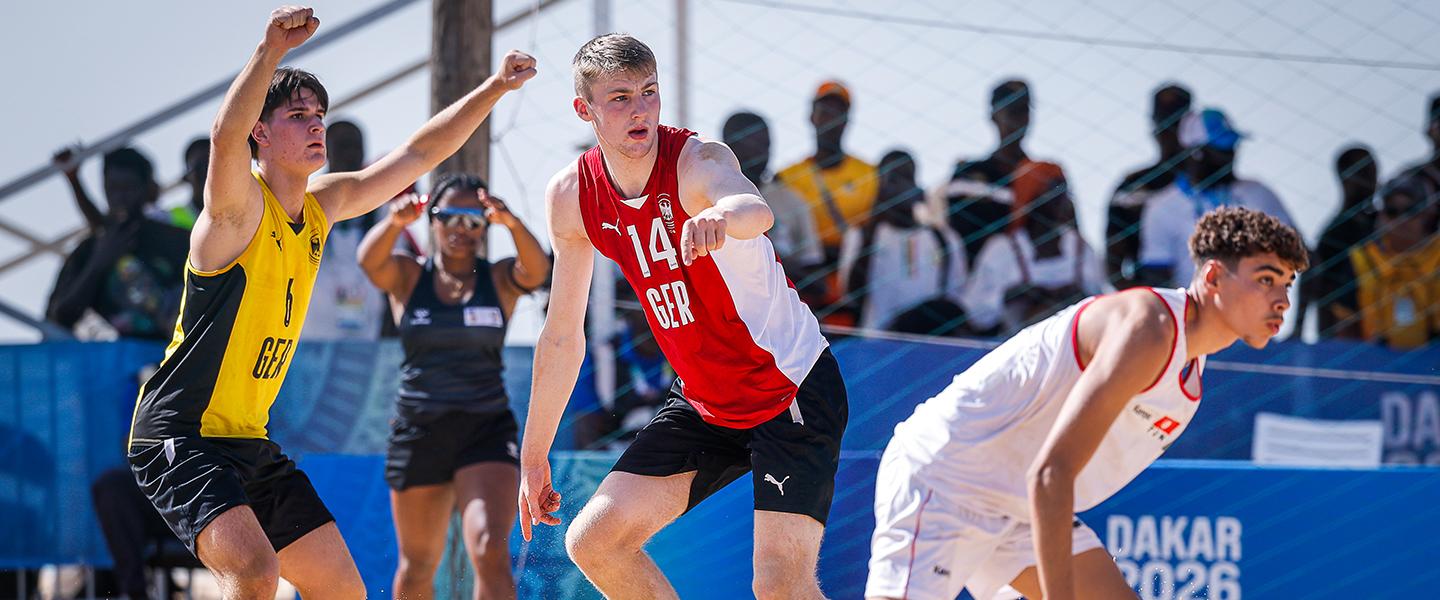
“You should speak to him,” says Germany coach Konrad BANSA to IHF.info while pointing towards his defender Thure BIELFELDT after the Cook Islands were beaten 2-0 in their preliminary group clash on Monday (9 November). “He scored his first-ever points for us and that’s why we celebrated more than usual for his goal.”
IHF.info duly obliged, speaking to the 2,00m player after that game and again on Tuesday (10 November) when his side had seen off Tunisia 2-0 to top their group with a perfect record of three wins from three games to set up a quarter-final date against Puerto Rico on Wednesday (11 November).
“I always play defence, but it's cool to have one goal so I know now that I will not end my national team career without any, but I’m really happy to play defence, plus the guys in offence are a lot better than me,” says the smiling BIELFELDT to IHF.info.
“Scoring the goal was nice because it was the first, but every ball we gain in defence is really important and I love to block slightly more than scoring.”
BIELFELDT’s sporting path to Dakar 2026 has been a little unconventional, telling IHF.info at the 2025 IHF Men’s Youth Beach Handball World Championship in Tunisia last year that he had only got into the Germany team initially due to another player not being available.
Now, he is playing at an Olympic Games.
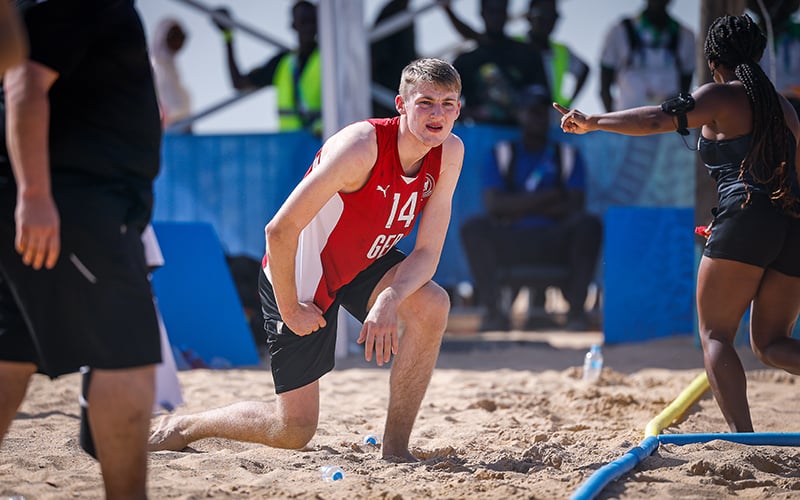
“Of course not,” he said when asked if he could quite believe he was now an Olympian. “It started really as fun. I wasn't that great at the beginning. I didn't play that much and I came to the national team try-out with no expectations. I was called there the night before because one of the other teammates was sick. I did my best, and now I'm here.
“Being an Olympian is a dream for every athlete,” he added. “It's cool to be part of this really nice thing here in Senegal. It’s really nice to be playing on the beach here and all the things besides the sport.”
That includes being part of a wider sporting delegation from your home country, part of a ‘National Olympic Committee’ and living alongside athletes from other sports in the Olympic Village.
“We are all really close in one area together in the Village and we have met-up before games, so we have got to know each other,” he explains. “Before Dakar 2026, I didn't know other sport athletes but here, when you meet someone, you say hello and ask; ‘How was your game?’.”
Despite his focus on the games in hand, BIELFELDT was keen to highlight what a privilege it was for him and his teammates to represent German beach handball on the Olympic stage and makes sure he promotes the sport where and when possible.
“We are the first German beach handball team to be part of an Olympics Games and this is really nice; it's everything,” he says. “This team started because beach handball became part of the Youth Olympic Games and this is the big goal for every generation before us and after us. For the previous one (Buenos Aires 2018) they weren’t able to come.
“When anyone in the Village asks about beach handball the easiest way to explain it is to show them some clips,” he adds. “Then, they see how entertaining this sport looks so you try and get them to come and say; ‘If you have time, you should definitely come and watch’.”
After moving from his youth basketball career in the Bundesliga in Germany into handball, BIELFELDT has used his physical frame and mental knowledge gained from both sports to be adaptable across the defensive line of BANSA’s team.
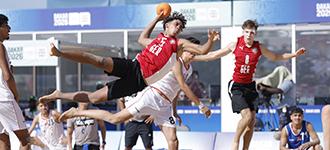
Defending in beach handball is to be constantly on your toes whether in play or on the side, ensuring the transition from attack to defence and vice versa is a smooth and effective as possible.
Anyone watching BIELFELDT in action both on and off the court will see his eyes locked constantly on the ball and movement of players around him, ensuring blocks are made to ensure his team are put in the best possible position.
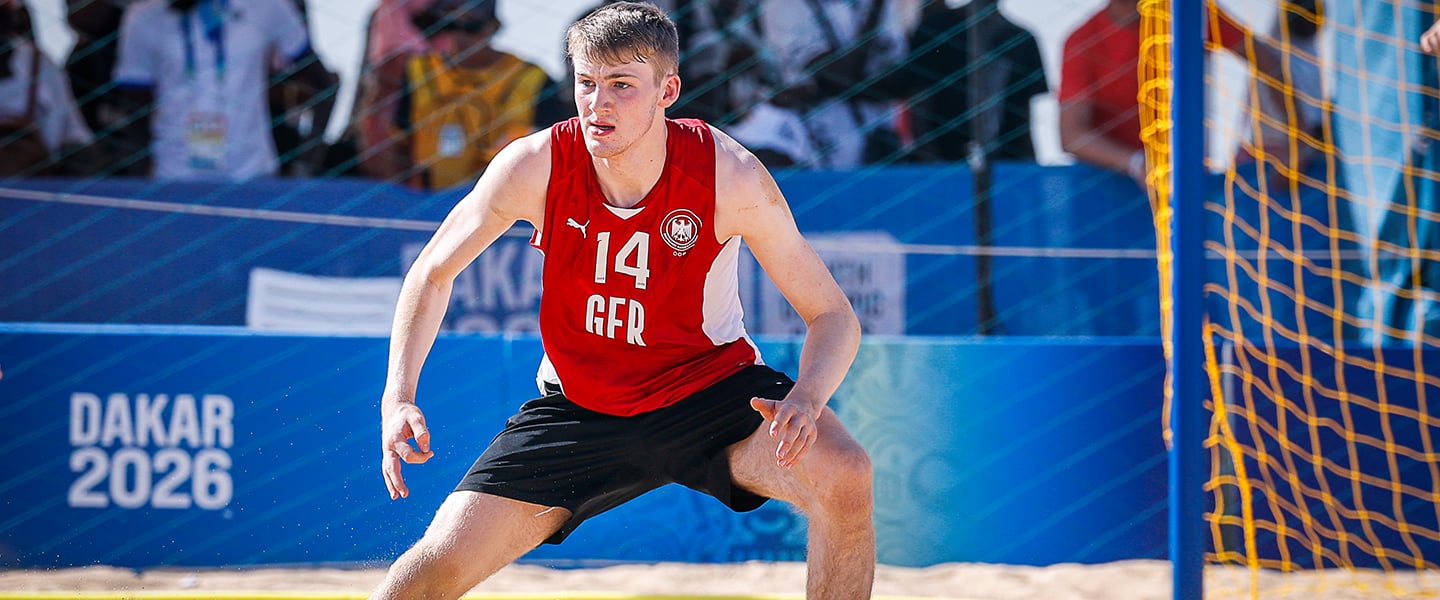
And that is clearly evidenced by Germany who have the meanest defence out of all 16 men’s and women’s teams at Dakar 2026, conceding no sets and just 55 points – their closest men’s rival is Tunisia (92 points) and Croatia and Spain (112) in the women’s competition.
“Everyone plays beach handball differently and even in each country there are different styles, so, especially for defences, you always have to adapt the playing style and this time it has worked out really well,” says BIELFELDT about playing against three different continental styles in the opening stage of Dakar 2026, in Asia (Thailand), Africa (Tunisia) and Oceania (Cook Islands).
“The mental part of defending is even more important than the physical part. It's good, basic conditioning and a lot comes about from the emotions and just playing the game. Against Tunisia we were well-prepared. We knew what Tunisia were able to play. We had a plan what we could do against them and it worked out, so that's great.”
After three sessions of games on the sand at Saly Beach West, just one hour south of Senegal’s capital Dakar, all players are well used to the playing conditions which include temperatures in the mid-to-high 30s as the competition now reaches its business end with the knockout rounds starting on Wednesday (11 November) as the quarter-finals get underway and Olympic Games medals start becoming the focus.
“Our goal was to have the best position for the quarter-finals because they are the most important game in this tournament and we have that with three wins – it also gives us a boost of confidence [going into the quarter-finals],” says BIELFELDT about looking ahead.
“A medal would be nice, of course, but we always take it step-by-step; the next game.”
more topics
Top