

Behind Türkiye’s handball progress: How 444 players shape up the future
25 Jun. 2026
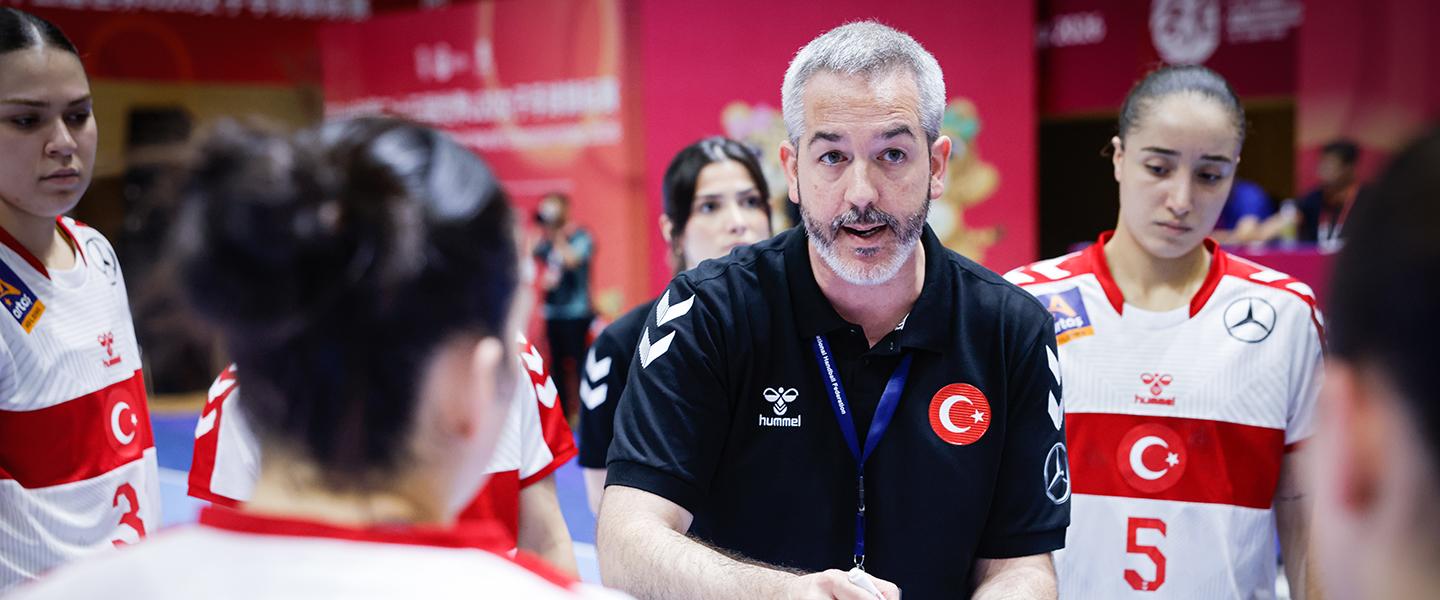
Handball in Türkiye is having a moment and the momentum shows no signs of slowing down.
Over the course of the past year, three separate milestones have signalled that handball is firmly on the rise in one of Europe's most passionate sporting nations.
The first milestone belonged to the junior women. After a 25-year absence from the world stage, the Türkiye women's junior national team secured their place at the IHF Women's Junior World Championship, a qualification which fueled the confidence for a programme working hard to build the next generation of players.
The second milestone was a historic one for the men's senior side, who were awarded a wild card for the 2027 IHF Men's World Championship. It will mark Türkiye's debut in the sport's flagship competition, a watershed moment for the handball community in the country.
And before that landmark occasion arrives, Türkiye will take centre stage as a co-host of the Women's EHF EURO 2026, yet another sign that the country is emerging as a serious destination for top-level handball.
What ties all three stories together is a distinctly Spanish touch. Oliver Roy Camino has been at the helm of the men's senior team, guiding them to their historic World Championship berth, while David Ginesta Montes, appointed as women's senior national team head coach in May 2025, is now also leading the junior side through their campaign at China 2026.
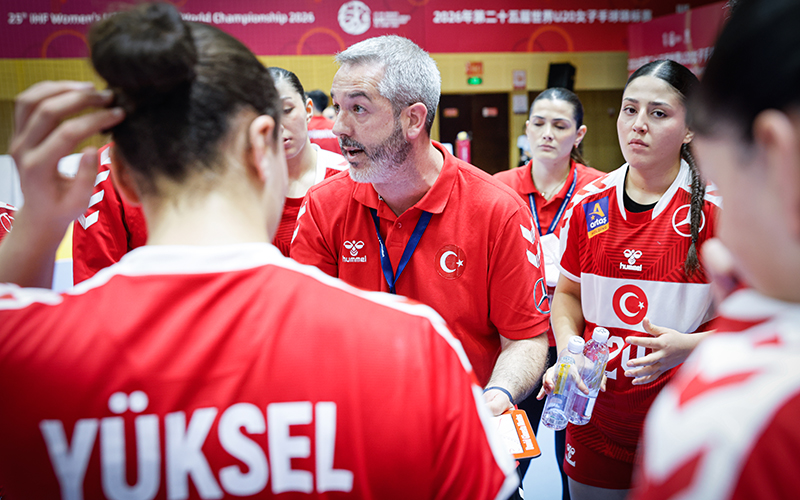
But why is Ginesta, the senior team coach, also overseeing the junior team at China 2026?
“We have a project within the federation focused on young players, and that is why I came here. I coach the senior team, but throughout this year, since we are also playing the European Championship at home, the idea has been to work with young players and bring as many as possible into the national team for the European Championship and for the future. That is why I have been working with them all year, and we will see how they develop and whether they can make it into the senior team,” says Ginesta.
The Spanish coach has plenty of experience. A former player for Spanish side Fraikin Granollers, Ginesta became a coach and he was an assistant at Granollers, before moving to Romania, to be Carlos Viver’s assistant at Rapid București.
Ginesta then led the Romanian side between 2023 and 2025, before being named as Türkiye’s head coach in May 2025, while also taking over club team Ankara Yurdum SK, to get even more acquainted to the reality of Turkish handball.
“The idea, when I arrived, was to work with young players. We have a technical director and a coach for the whole women's programme. The junior team, the youth team and the senior team all work in the same way. What we did was also open some training centres around Türkiye. We have people who are helping us identify talent, travelling around the country,” adds Ginesta.
“It is very difficult sometimes, because in the end you work a lot, but we are not yet at the level to compete against certain teams, like Spain, for example. We have to work twice as hard, and we are aware that the work is paying off, but progress is very slow when you go to a competition and there are top teams in your group.”
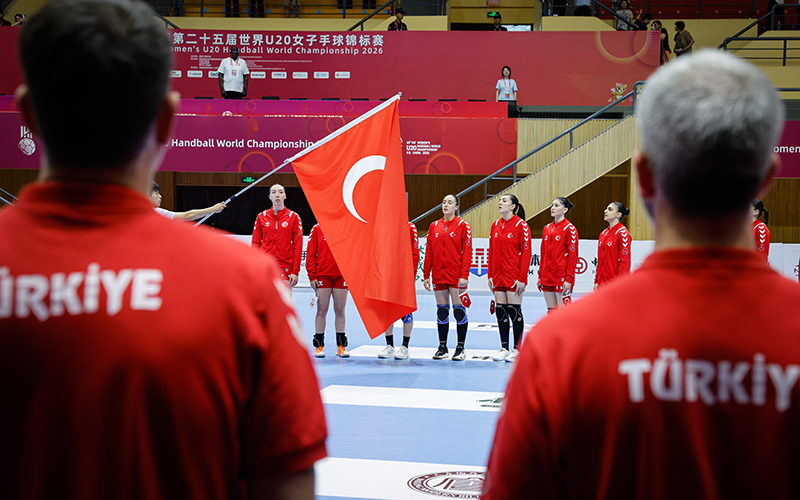
However, there are challenges, such as the area of the country, as well as having more sports – like football, basketball or volleyball – being more popular in the country.
“Once a month, we try to bring this entire age group together in Ankara, or in another city where we can gather many players at the same time, as Spain does, for example, and train. That is the only option: to train. And with the girls, we are also starting to work with the 2012–2013 generation, trying to increase the number of players. We just have to keep working. That is the only thing we can do,” adds Ginesta.
The results have been seen over the last year. Türkiye secured their participation at the 2026 IHF Women’s Junior World Championship by finishing 16th at the W19 EHF EURO 2025. There, in the preliminary round, they lost against Austria (24:34) and Croatia (21:30), but delivered a bombshell against the Netherlands, winning, 29:25.
Then, they beat Slovenia, 26:25, and lost against Portugal (30:38), conceding three big losses over the next three matches against Czechia, Sweden and Iceland. But the objective was complete.
They returned at the IHF Women’s Junior World Championship for the first time in 25 years, providing an unparalleled experience for the players, which are now getting more and more accustomed to high-profile competitions.
“We are happy because, in one year, we have worked with almost 440 players. The other day I counted them, I think it was 444. From the senior team, around 50 only, but from the grassroots level, imagine — around 390. And yes, we are happy because, in the end, we are managing to play international matches every international week, with other federations that we are in contact with. They come to Türkiye because the conditions there are very good,” adds Ginesta.
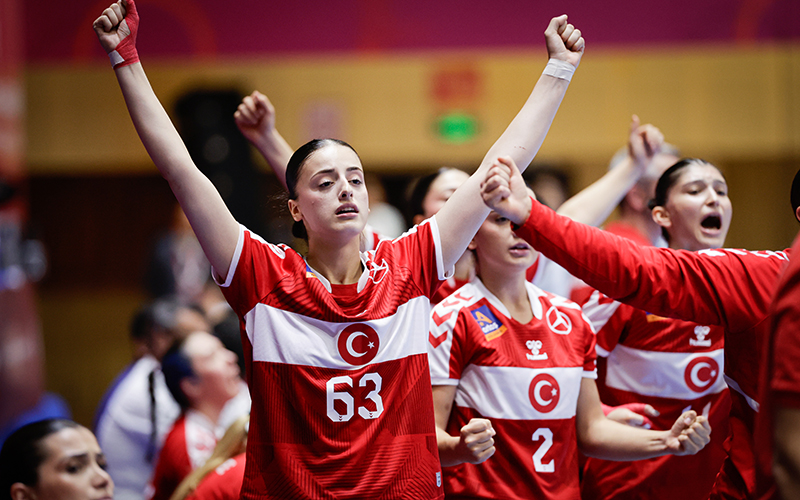
“The federation’s facility is excellent: in the same complex there are gyms, training halls, hotels, restaurants and so on, so it is easy for us to invite people who can stay with us and train.”
The younger age category teams of Czechia, Tunisia, Poland, Germany already came to play against Türkiye, while the senior teams of Slovenia, Egypt or Italy have also chosen to play against the up-and-coming Turkish senior team.
“It has been a great boost for the entire federation to be able to play in a World Championship or a European Championship. Unfortunately, we are not used to being in all the major competitions, so once you play in them — and in the case of the women’s team, it is in Türkiye — people are very motivated and involved in the project,” says Ginesta.
At China 2026, the European side has lost the first two matches against the Republic of Korea (29:32) and Spain (19:33), but Ginesta is still upbeat, as this is still a work in progress.
“What we believe is good has to continue, so we will always be positive.”
more topics



Top